

Become a MacRumors Supporter for $50/year with no ads, ability to filter front page stories, and private forums.

MacRumors

macrumors bot
Original poster


Samsung is planning to follow Apple in adding a variable aperture to its smartphone cameras, Korea's ET News reports.
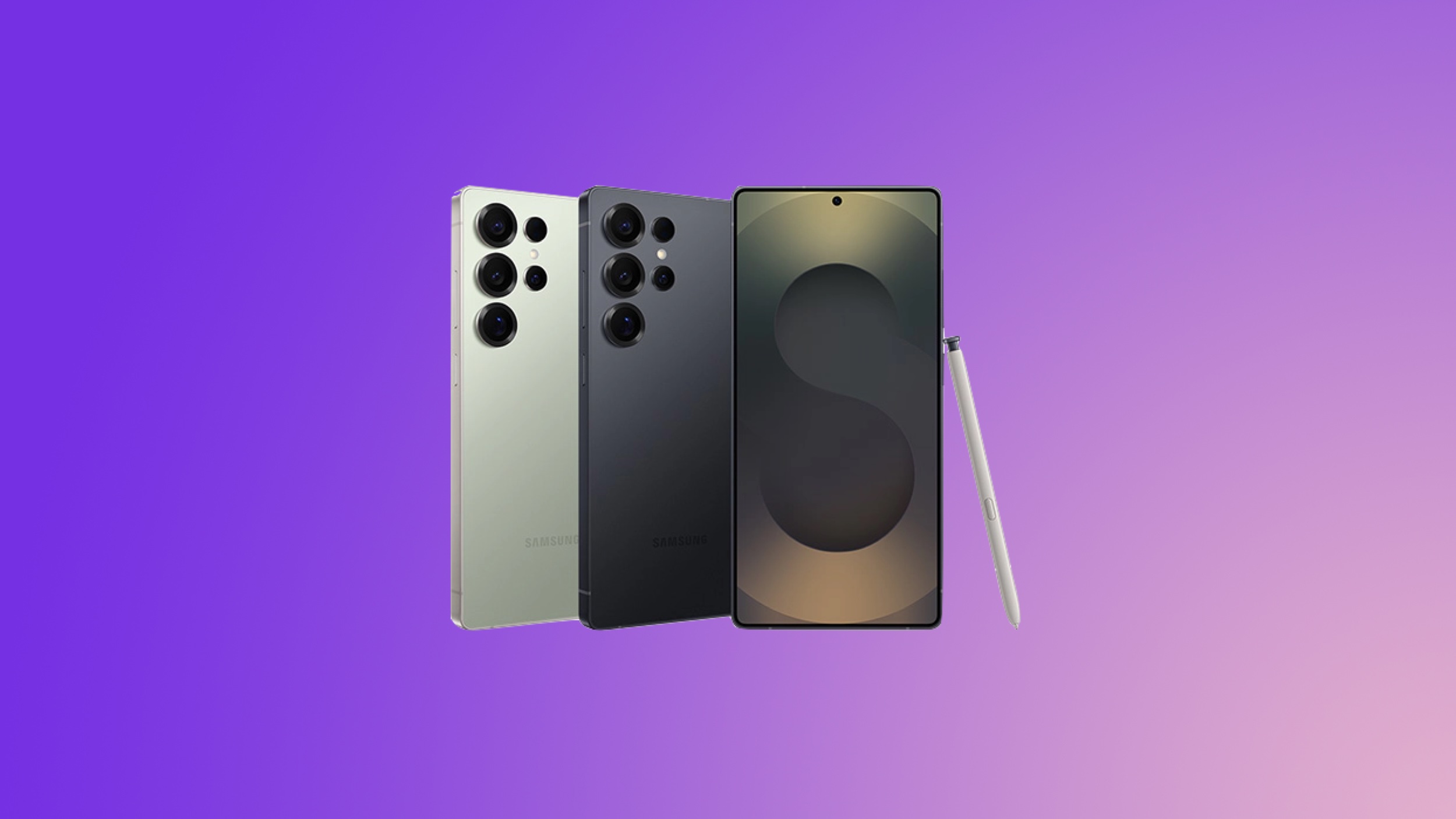
samsung-galaxy-s25-purple.jpeg

A variable aperture allows the camera to adjust the amount of light that reaches the sensor. This means that in dark environments, the aperture can be opened to receive more light, while in light environments, it can be closed to prevent over-exposure. It also should provide users with greater control over depth of field, which refers to how sharp a subject appears in the foreground compared to the background.

The iPhone 18 Pro and iPhone 18 Pro Max are now widely expected to feature an upgraded main camera with a variable aperture. In December 2024, Apple supply chain analyst Ming-Chi Kuo was first to say that that the main rear camera on both iPhone 18 Pro models will offer variable aperture. A more recent report from October 2025 said Apple was moving ahead with plans to bring the technology to next-generation iPhones and was discussing components with suppliers.

Apple has never used a variable aperture on an iPhone camera before. The main cameras on all of the iPhone 14 Pro through iPhone 17 Pro models have a fixed aperture of ƒ/1.78, and the lens is always fully open and shooting with this aperture. Samsung Electronics previously brought a variable aperture camera to its Galaxy S9 and Galaxy S10 models in 2018 and 2019, but due to increased thickness and high price, it dropped the feature in 2020.

In light of Apple's plans, Samsung has reportedly asked multiple camera module partners to develop variable apertures and provide samples. The feature is in early development and final installation has not yet been confirmed, but there is said to be a "strong will" to introduce it.

Samsung apparently sees adding a variable aperture as "necessary to increase camera competitiveness," replacing software correction with physical hardware. The company hopes that in investing in variable aperture camera technology, thickness can be reduced and costs will reduce over time. Apple's first variable aperture camera is expected to arrive in the iPhone 18 Pro models in the fall.

Article Link: Samsung Planning to Follow iPhone 18 Pro's Variable Aperture Camera
 
  • Haha
Reactions: miq and Z-4195
I know the best camera is what you have with you...but if you can...and you are serious about photography...and of course if you can afford it...try using a regular old camera and you'll be reminded how good a photo can look.

So glad to see mobile devices catching up, but I got a full frame camera and love, love, love the quality out f it.
 
Both to follow decades of small pocket digital cameras.

Happy for this to happen, but nobody really has lead here as I believe some of the Chinese phones already have this feature, as well as (may be wrong) some older legacy Android phones from manufacturers not on the scene as much today.

EDIT

SAMSUNG was already first!


Samsung had a dual aperture, so while it had two settings I wouldn’t call it “variable”. DPReview tested it and stated it had “dubious real-world benefit” with little change between them besides light sensitivity.

If you saw the blades operating you’d see it was just two halves that popped in front of the lens as opposed to the usual blades in a regular camera lens.

We don’t know what Apple might do, but I sure hope it’s not a gimmick like the Samsung version.
 

8 years ago, btw.

Here’s to the reasonable ones. The well-adjusted. The compliant. The managed. The square pegs in the square holes. The ones who see things the approved way. They’re fond of rules, and they trust the status quo.

You can categorize them, monitor them, credential or authorize them. About the only thing you can’t do is expect resistance. Because they don’t change things. They preserve processes. They keep the machinery running.

And while some see them as obedient, we see reliability. Because the people who are conditioned enough to believe the world shouldn’t change, are the ones who make sure it doesn’t.
 
Samsung is planning to follow Apple in adding a variable aperture to its smartphone cameras, Korea's ET News reports.
You note that Samsung had a variable aperature camera on one of their smartphones a long time ago (8 years ago), but the article still states that "Samsung is planning to follow Apple in adding a variable aperature to its smartphone cameras."

Article and title should be corrected to state that Samsung is following Samsung since they were technically first. If anything, Apple is the one who's following Samsung.
 
To all the people who think Samsung is copying Apple: Apple has been using Samsung cameras more and more in their latest phones although Sony is still the big suplier.

But these new cameras will be from LG Innotech.

It is the same with the screens; Apple does not make screens, they buy them from Samsung.
 
apple isn't getting a patent on this variable aperture, meaning they aren't the first to use it.
I think they have a couple actually, however there is obviously more than one way to achieve this. I have still yet to see a compelling argument for having one, my only conclusion is the sensor will be upgraded to be significantly more light sensitive to the one they use now, thus needing a way to control light intake. 🤷‍♂️

Link:
 
Note that this does not have to be a mechanical aperture. It could be an electrochromic or similar device that makes an area (ring) opaque or almost opaque with an electrical stimulus. This could operate in a failsafe mode, so that the aperture is full open on failure.
 
  • Like
Reactions: riverguide
Apple wasn’t the first smartphone with fingerprint or face unlock, but TouchID & FaceID were, by far, the best implementations and vastly superior to those who came “first”.

Being first doesn’t really mean much if your attempt was a failure. Too many companies are so concerned with being first that they release sub-standard products.
 
  • Like
Reactions: 840quadra
Makes sense as the camera they will be using in the iPhone is Chinese. Currently, the cameras are from Sony or Samsung.
Excuse me but the cameras that iPhone uses are from Sony so Japanese. Anyways I was talking about the idea...
 
I honestly don’t understand taking a really small lens & & CMOS and shrinking the lens even further, the loss of light… it makes no sense to me when Apple is already able to do everything in software. I guess if you want to take a picture of the sun mid day, that’ll help. 😂
 
Of course they are. Of course. No ideas from Samesung.
Samsung already had this in 2018.

To be fair, the invention is actually from the 1800s as CNET explains

Samsung had a dual aperture, so while it had two settings I wouldn’t call it “variable”. DPReview tested it and stated it had “dubious real-world benefit” with little change between them besides light sensitivity.

If you saw the blades operating you’d see it was just two halves that popped in front of the lens as opposed to the usual blades in a regular camera lens.

We don’t know what Apple might do, but I sure hope it’s not a gimmick like the Samsung version.
You are not wrong, however Regardless of our opinion, it changed with blades ( even if only locked to 2 F-stops), the fact of overall usefulness is irrelevant.

I am not saying it was a great system, only that it had been done previously.

Personally and professionally I shoot with mirrorless or portable cameras with low noise and 1" sensors. The capability of phones is quite good and I do actually get production keepers from them, but prefer the better optics, larger sensors and customization of specific gear.

I honestly don’t understand taking a really small lens & & CMOS and shrinking the lens even further, the loss of light… it makes no sense to me when Apple is already able to do everything in software. I guess if you want to take a picture of the sun mid day, that’ll help. 😂
Provides the ability to take longer exposure in brighter situations.

There are photographic styles that prefer that situation. Personally I prefer in some situations as shots look less artificial due to the longer exposure providing more data to the sensor.
 
Register on MacRumors! This sidebar will go away, and you'll see fewer ads.