Become a MacRumors Supporter for $50/year with no ads, ability to filter front page stories, and private forums.
I know the best camera is what you have with you...but if you can...and you are serious about photography...and of course if you can afford it...try using a regular old camera and you'll be reminded how good a photo can look.

So glad to see mobile devices catching up, but I got a full frame camera and love, love, love the quality out f it.

Even using a pro camera app that doesn't apply Apples image processing that turns nearly every photo flat and lifeless in their endless pursuit of zero shadow will have you taking photos you'll be surprised came from an iPhone.
 
Apple wasn’t the first smartphone with fingerprint or face unlock, but TouchID & FaceID were, by far, the best implementations and vastly superior to those who came “first”.

Being first doesn’t really mean much if your attempt was a failure. Too many companies are so concerned with being first that they release sub-standard products.
They are not the best either, there is nothing special about apple biometrics, (Face or Fingers),
 
Makes sense as the camera they will be using in the iPhone is Chinese. Currently, the cameras are from Sony or Samsung.
Almost every component in Electronic devices are Chinese, that doesn't mean that it was designed in China.
 
Even using a pro camera app that doesn't apply Apples image processing that turns nearly every photo flat and lifeless in their endless pursuit of zero shadow will have you taking photos you'll be surprised came from an iPhone.
People who say "Apples image processing that turns nearly every photo flat and lifeless" are simply wrong. Peruse the images in Apple's "shot on iPhone" marketing. Personally I have never needed "a pro camera app." Just set the iPhone Pro to RAW and hold the iPhone Pro still and you will not get "flat and lifeless" image captures.

The problem is that poor technique exacerbated by the terrible camera UI of all smartphones forces the iPhone Pro to use computational photography to try to correct for lousy photographic technique.

P.S. My repeated reference to iPhone Pro is intentional. My comments are intended to apply only to the iPhone Pro. My observations may or may not apply to the lesser cameras in the other iPhones but I lack experience with them.
 
Last edited:
  • Disagree
Reactions: Dr McKay
You note that Samsung had a variable aperature camera on one of their smartphones a long time ago (8 years ago), but the article still states that "Samsung is planning to follow Apple in adding a variable aperature to its smartphone cameras."

Article and title should be corrected to state that Samsung is following Samsung since they were technically first. If anything, Apple is the one who's following Samsung.
But Samsung was unsuccessful with it and Apple waited years until everyone had forgotten so now Samsung is really following Apple. The Pandemic cleaned the slate-- any tech that existed before that and was deleted doesn't count 🤣

Funny how Samsung is so insecure they have to do it again just because Apple is doing it.
 
But Samsung was unsuccessful with it and Apple waited years until everyone had forgotten so now Samsung is really following Apple. The Pandemic cleaned the slate-- any tech that existed before that and was deleted doesn't count 🤣

Funny how Samsung is so insecure they have to do it again just because Apple is doing it.
What has Apple done? Is there a production device you can buy today with variable aperture from Apple?

The only current phones shipping with this technology come from brands outside of Apple or Samsung. Also, Samsung S26 Ultra is expected to be unveiled later this month, months ahead of the next iPhone. If the S26 is released with the technology before the next iPhone, who copied who?

What would it be then? Samsung copied an, unannounced product form Apple, but actually re-released an improved version of their 2018 technology that was influenced by an 1800s invention that was a mechanical copy of what human and animal eyes do with an iris?
 
What has Apple done? Is there a production device you can buy today with variable aperture from Apple?

The only current phones shipping with this technology come from brands outside of Apple or Samsung. Also, Samsung S26 Ultra is expected to be unveiled later this month, months ahead of the next iPhone. If the S26 is released with the technology before the next iPhone, who copied who?

What would it be then? Samsung copied an, unannounced product form Apple, but actually re-released an improved version of their 2018 technology that was influenced by an 1800s invention that was a mechanical copy of what human and animal eyes do with an iris?
Haha, you're taking this all quite seriously.

I have no doubt that Samsung, being that they are a major supplier for Apple, knows exactly what hardware Apple is going to put out in the next iPhone before anyone else. Being a supplier to your competitor has its advantages.

So, to answer your question, yes: they are going to come out with it again simply because Apple is doing it; in fact, they have a history of doing this. Feature X is rumored in next iPhone; Samsung comes out with Feature X first; Apple releases new iPhone with Feature X and is more successful with it than Samsung.

In this case, it's much more interesting because Samsung actually had the feature first and then abandoned it, now they'll bring it back because they know Apple will have it.

Always remember: Apple is rarely first but they are usually best.
 
a slight tangent, but if we're talking about Samsung - a few things -

Samsung, please move the third lowest camera to a higher position and/to more fully embrace qi2. currently, the third lowest camera is in a place where square shaped magsafe accessories like batteries will not properly adhere because they're lifted up or they cover the third lowest camera. I think its time that qi2 should be more normalized. we can't carry around a spare battery like in the early 2010s anymore. so if qi2 battery packs are essentially the successor to that capability, then I feel that Samsung should embrace qi2 and embrace it in terms of the design of its phones.

another slightly related tangent, if i'm talking about qi2.

Could Apple/Google/Samsung/Moto etc put one small 3mm diameter direct contact metal spot right in the center of the magsafe qi2 ring? And then release a new magsafe battery with the corresponding metal ring / pogo pin to provide direct energy while still being backwards compatible + hybrid with qi2 magsafe? Could a single pogo pin or a small ring of pins and metal contact push 50 watts? This way, when we snap a magsafe battery on, we could get something more alike to when we used to be able to carry a spare battery in the early 2010s. Qi2 magsafe is good. But it could be better / more reliable if there were additional options for direct contact energy / data *without* having to use USBC cables that jut out and that are faster with less heat dissipation than standard qi2 magsafe. And if it's just one pogo pin or a small ring of a few pins, for direct contact energy and data right in the center of the larger circle, I feel like it could make a good "standard" across the entire industry for external batteries and even higher powered camera lenses and the like. Maybe even an indentation using the lower "key" mechanism magnet area (a la speck click lock) where it could be indented by a 1mm or 2mm in order to really snap into place physically. Even third party cases could add the direct contact area on the case itself and then send the energy + data through a ribbon wire right up into the phone USBC port.

on the software front, they actually used money and resources to remove a core android feature - multiple users. this is frustrating because its essentially the best method for keeping separate data and configuration settings on a mobile device. "stock android" devices like pixel, moto, and others retain this core functionality and its just frustrating that Samsung does not, because it works well. they now do have something called "secure folder", but its not quite as secure as "private space" which again, uses the multiple users functionality to create a separated space without having to actually logout of the default area. so I'd like to see Samsung bring both multiple users and private space to its line of phones. and then to that end, I'd like to see apple do the same for iOS27 and beyond.
 
Even using a pro camera app that doesn't apply Apples image processing that turns nearly every photo flat and lifeless in their endless pursuit of zero shadow will have you taking photos you'll be surprised came from an iPhone.

I think we'd all agree that the skill/natural ability of the photographer surely takes precedence over the equipment used ... camera phone or high-end digital camera.

Having said that, there are technical differences between the two. The small lens diameter and small pixels of the camera phone fundamentally affect the overall image quality. Another important distinction is the longer focal length of a typical digital camera gives a reduced depth of field, and can be controlled with the aperture stop to some degree.

In order to "compensate" for the downsides of a small camera, the default phone camera app usually uses (unknown to the photographer!) extensive amounts of machine learning to give a "better looking" photos. The example you give of the pursuit of zero-shadow is an example of the type of compensation that is default in many phone cameras. The image you see on the screen of your phone, when operated in default mode, is not exactly the image that falls on the detector: rather, it is the image that the phone camera team think you will like! As you say, there are several "pro" apps that give you more control.
 
  • Like
Reactions: Dr McKay
That variable aperture trend is a waste of money. For these small sensors and lenses it won’t make any difference, plus stopping the lens too much to have a reasonable shutter speed during video recording will create other issues. They should focus their research on a variable ND filter, that will better control the exposure while keeping the lens characteristics intact.
 
I think we'd all agree that the skill/natural ability of the photographer surely takes precedence over the equipment used ... camera phone or high-end digital camera.

Of course, but I’m not a professional photographer. I just wanted a photo that resembled reality. During a recent walk in the forest with my son, he stood at the clearing’s entrance, framed by dark trees on either side and bathed in sunlight. I thought it looked great and wanted a picture of it. No matter what I did with the Apple camera app, it processed the image so that there were no shadows in the dark areas and reduced the brightness in the clearing to the point where all light levels seemed equal. I tried every picture setting, but I couldn’t stop it. Even using ProRaw didn’t completely eliminate the effect; Apple processing still applied to the image, albeit to a lesser extent. When I used a camera app that accessed the raw image and was able to replicate what I saw with my own eyes easily. On other nature walks, I’ve been able to produce images very close to my wife’s Canon and pretty much eliminate any telltale signs that a phone took them.
 
Haha, you're taking this all quite seriously.

I have no doubt that Samsung, being that they are a major supplier for Apple, knows exactly what hardware Apple is going to put out in the next iPhone before anyone else. Being a supplier to your competitor has its advantages.

So, to answer your question, yes: they are going to come out with it again simply because Apple is doing it; in fact, they have a history of doing this. Feature X is rumored in next iPhone; Samsung comes out with Feature X first; Apple releases new iPhone with Feature X and is more successful with it than Samsung.

In this case, it's much more interesting because Samsung actually had the feature first and then abandoned it, now they'll bring it back because they know Apple will have it.

Always remember: Apple is rarely first but they are usually best.
If responding to rumor and opinion with facts is taking things seriously, well I guess I am guilty.

Please keep an open mind and see that the Chinese phones with these features are receiving rave photographic reviews and that could also be why Samsung is looking to bring it back into production.

Like Apple, Samsung sells vast quantities of products outside the US, and actually has stronger markets outside the US than Apple. With the Chinese brands eating their lunch in recent years, it is very likely they are doing this to stay relevant in markets where Huawei is taking away billions in reveuue.

Samsung had the feature first, but it was limited as pointed out by other members here, since then the Chinese have implemented versions and options more similar to what we see in small point and shoot cameras. One thing I wish BOTH Samsung and Apple adopted was the addition of 1" sensors, And I would REALLY love to see internal motorized zoom lenses.
 
If responding to rumor and opinion with facts is taking things seriously, well I guess I am guilty.

Please keep an open mind and see that the Chinese phones with these features are receiving rave photographic reviews and that could also be why Samsung is looking to bring it back into production.

Like Apple, Samsung sells vast quantities of products outside the US, and actually has stronger markets outside the US than Apple. With the Chinese brands eating their lunch in recent years, it is very likely they are doing this to stay relevant in markets where Huawei is taking away billions in reveuue.

Samsung had the feature first, but it was limited as pointed out by other members here, since then the Chinese have implemented versions and options more similar to what we see in small point and shoot cameras. One thing I wish BOTH Samsung and Apple adopted was the addition of 1" sensors, And I would REALLY love to see internal motorized zoom lenses.
Always keep an open mind!

I agree with you that Apple needs to get more competitive with the Chinese made phones. I'm envious of those camera features but will never trust a brand whose design is so closely subjected to CCP control. Samsung display tech has always tempted me.

1" sensors and internal motorized zoom lenses would be amazing. Apple has almost always lagged behind the forefront of technology (Mac, iPod, iPhone are exceptions) but that's the price we pay to have that bougie hardware 😉
 
Always keep an open mind!

I agree with you that Apple needs to get more competitive with the Chinese made phones. I'm envious of those camera features but will never trust a brand whose design is so closely subjected to CCP control. Samsung display tech has always tempted me.

1" sensors and internal motorized zoom lenses would be amazing. Apple has almost always lagged behind the forefront of technology (Mac, iPod, iPhone are exceptions) but that's the price we pay to have that bougie hardware 😉

"will never trust a brand whose design is so closely subjected to CCP control."

Well some of us are asked to trust brands with US control!

There's no question that Chinese phone hardware is the most innovative in recent years ... they have to innovate as there is a lot of competition outside the US for phones from Huawei, Oppo, Xiaomi/Redmi, Vivo and others. Remember the Worldwide market is far far bigger than the US one.
 
  • Like
Reactions: JohnWick1954


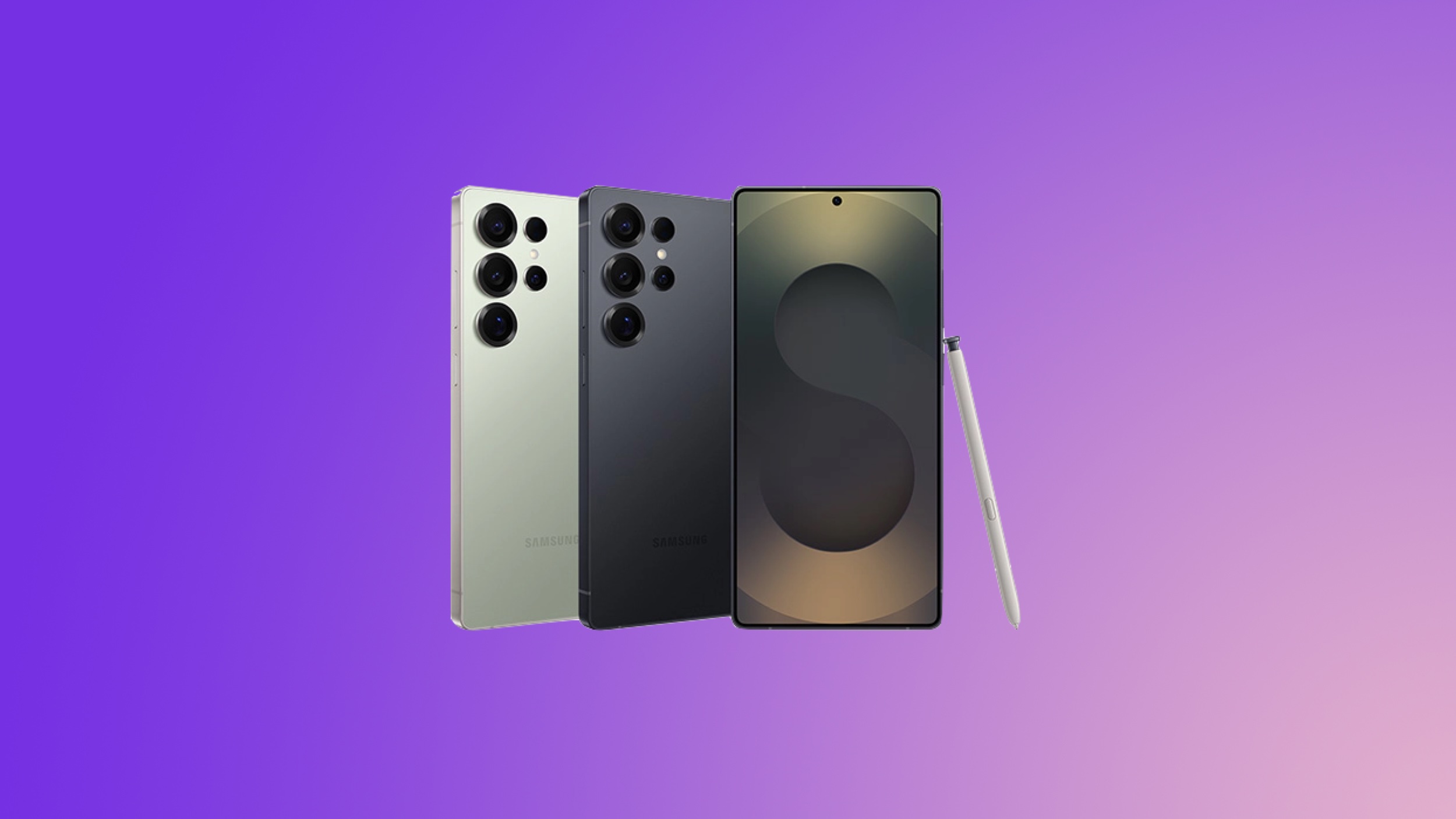
Samsung is planning to follow Apple in adding a variable aperture to its smartphone cameras, Korea's ET News reports.

samsung-galaxy-s25-purple.jpeg

A variable aperture allows the camera to adjust the amount of light that reaches the sensor. This means that in dark environments, the aperture can be opened to receive more light, while in light environments, it can be closed to prevent over-exposure. It also should provide users with greater control over depth of field, which refers to how sharp a subject appears in the foreground compared to the background.

The iPhone 18 Pro and iPhone 18 Pro Max are now widely expected to feature an upgraded main camera with a variable aperture. In December 2024, Apple supply chain analyst Ming-Chi Kuo was first to say that that the main rear camera on both iPhone 18 Pro models will offer variable aperture. A more recent report from October 2025 said Apple was moving ahead with plans to bring the technology to next-generation iPhones and was discussing components with suppliers.

Apple has never used a variable aperture on an iPhone camera before. The main cameras on all of the iPhone 14 Pro through iPhone 17 Pro models have a fixed aperture of ƒ/1.78, and the lens is always fully open and shooting with this aperture. Samsung Electronics previously brought a variable aperture camera to its Galaxy S9 and Galaxy S10 models in 2018 and 2019, but due to increased thickness and high price, it dropped the feature in 2020.

In light of Apple's plans, Samsung has reportedly asked multiple camera module partners to develop variable apertures and provide samples. The feature is in early development and final installation has not yet been confirmed, but there is said to be a "strong will" to introduce it.

Samsung apparently sees adding a variable aperture as "necessary to increase camera competitiveness," replacing software correction with physical hardware. The company hopes that in investing in variable aperture camera technology, thickness can be reduced and costs will reduce over time. Apple's first variable aperture camera is expected to arrive in the iPhone 18 Pro models in the fall.

Article Link: Samsung Planning to Follow iPhone 18 Pro's Variable Aperture Camera

"the aperture can be opened to receive more light" is non-sense of course. Because it's currently always fully open already because all smartphones are using fixed apertures as they state later in the article.

The biggest advantage which even hasn't been mentioned will be: natural motion blur when taking videos. let's say you record in 30fps then the shutter speed should be 1/60th (or 1/120th if you record at 60fps) to record with a natural motionblur. But with fixed aperture the image will be too bright. With a variable aperture the iPhone can then close it so that the image will be properly exposed.

I am very much looking forward to this. With the already great video stabilization the videos will look even smoother now.
 
  • Like
Reactions: ChrisMac47
"will never trust a brand whose design is so closely subjected to CCP control."

Well some of us are asked to trust brands with US control!

There's no question that Chinese phone hardware is the most innovative in recent years ... they have to innovate as there is a lot of competition outside the US for phones from Huawei, Oppo, Xiaomi/Redmi, Vivo and others. Remember the Worldwide market is far far bigger than the US one.
Yes, without getting into politics, I don’t like any government intervention in my devices which is why I lean towards Apple for their emphasis on privacy. But there is a big difference between those two governments you mentioned.

I’m well aware of the world market and it’s really quite incredible the progress the Chinese phone manufacturers have made but— being that most of the skilled manufacturing engineers are in China it’s not a surprise.

What is a surprise is that it’s just now reported that 1 in 4 active smartphones worldwide is an iPhone. Pretty amazing. No matter what features Samsung and Chinese brands put into their phones, there’s just something about the Apple design/software ethos that people love. Apple can’t get complacent, though, and that’s why they need to continue to cram more of these photographic and many other features into their latest devices.
 
  • Like
Reactions: ChrisMac47
Register on MacRumors! This sidebar will go away, and you'll see fewer ads.