
Got a tip for us?
Let us know
Become a MacRumors Supporter for $50/year with no ads, ability to filter front page stories, and private forums.
The Car Thread ... !
- Thread starter D.T.
- Start date
-
- Tags
- car
- Sort by reaction score
You are using an out of date browser. It may not display this or other websites correctly.
You should upgrade or use an alternative browser.
You should upgrade or use an alternative browser.

lowendlinux
macrumors 603

Lord Blackadder
macrumors P6
Or, even more humbly:

Peugeot 106 GTi

Original Mini
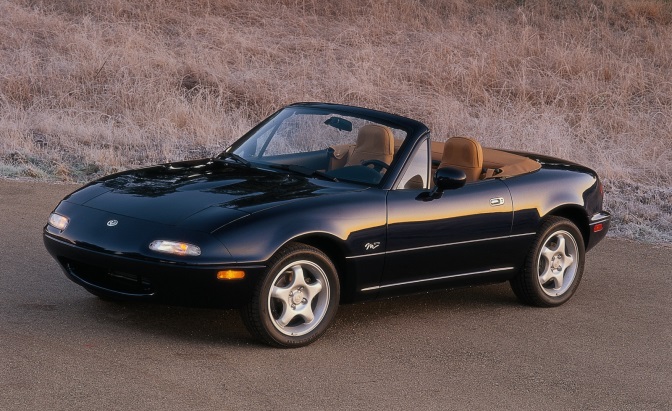
Early MX-5 (most versions of the MX-5 have been great to drive though)
Peugeot 106 GTi
Original Mini
Early MX-5 (most versions of the MX-5 have been great to drive though)

bunnspecial
macrumors G3
If you're going to pull the motor and put a cam in it I'd just freshen the whole engine even better would be to buy a second and go through that engine then just swap it in when you're ready
Honestly, I don't want to have the car down that long. The rings are a little loose, but I think with fresh bearings it has another 50,000 miles in it. I've already done the head, so it's a matter of doing it in stages.
It's not the first time the engine has been out either, so it should go fairly smoothly. All the mounts are in good shape, and all the rusted stubborn stuff that could break has already broken and been fixed 🙂
I do have two engines here, but one is a late 18V with a cracked block(actually quite rare). It's been a parts donor for a while. The other is a 3-main 18GA engine from a 1963 MGB that's going to get a full rebuild, compression bump, ported and polished head, and the D9 camshaft also. It's destined for my MGA. I actually bought it as more or less a disassembled short block-I have the block, rods, and an NOS crank so it will be up to me to get all the other major parts like pistons and a head as well as all the piddly minor parts. I'm going to probably have it machined sometime this winter and will take my time to do it right.
Lord Blackadder
macrumors P6
I do have two engines here, but one is a late 18V with a cracked block(actually quite rare). It's been a parts donor for a while. The other is a 3-main 18GA engine from a 1963 MGB that's going to get a full rebuild, compression bump, ported and polished head, and the D9 camshaft also. It's destined for my MGA. I actually bought it as more or less a disassembled short block-I have the block, rods, and an NOS crank so it will be up to me to get all the other major parts like pistons and a head as well as all the piddly minor parts. I'm going to probably have it machined sometime this winter and will take my time to do it right.
Have you ever driven one of the MG T-series cars? Those look like a fun, affordable little classic with interwar period looks.

Feenician
macrumors 603
Not all great cars are fast, but calling a car with over 300 hp "weak"?
It's not really slow, it's just this thread gives me a severe case of envy/competitiveness.
Original Mini
My ex had one of these minis. We made it from Glasgow to Aberdeen in a snow storm where SUVs and 18 wheelers were pulled up on the side. It was so low that it was digging in to the snow. 😀
And you're right, fast isn't everything. In my twenties I had one of these, a Smart Roadster Coupe, 3 cylinders/700cc/80hp (with a tiny turbo that sounds like a gerbil sneezing) of German fury 😛 Such a fun little car though. Basically a road legal go-kart.

(not mine, but looked identical)
Last edited:
Lord Blackadder
macrumors P6
It's not really slow, it's just this thread gives me a severe case of envy/competitiveness.
No matter how much you spend on your ride, there will always be someone with a bigger/faster/rarer/more expensive car. So relax, and enjoy your Mustang - I sure as heck can't afford one. 😉
[doublepost=1512078473][/doublepost]My old man had a TVR Vixen S1 when I was a small child:

Not a "fast" car ("quick" is perhaps a better term), but I am still bitter that they sold it long before I was old enough to drive. As a toddler I used to sit in it, making motor noises.
The car was sold because it had a cracked rear window, and dad thought the cost of shipping a replacement overseas from Blackpool was too much. 🙁

Apple fanboy
macrumors Ivy Bridge
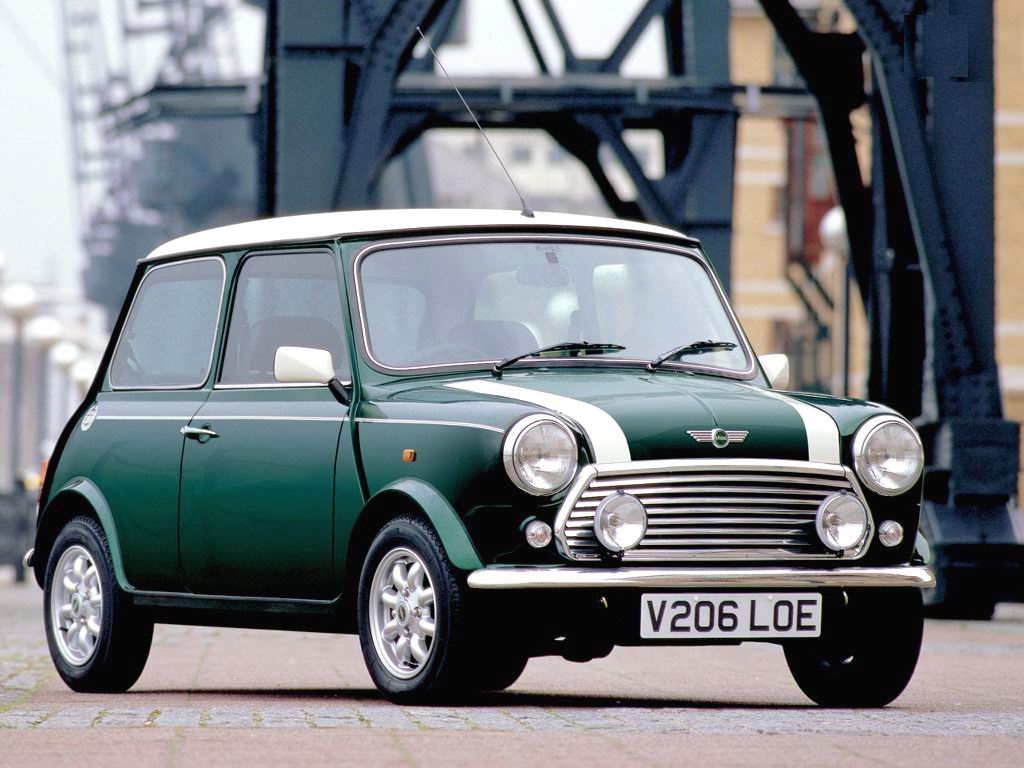
I'm sorry but if you're going to post mini pictures, please make it a cooper!Or, even more humbly:
Peugeot 106 GTi
Original Mini
Early MX-5 (most versions of the MX-5 have been great to drive though)
[doublepost=1512078669][/doublepost]
I used to work in engineering and we used to make replica hubs for those MG's. The second hardest piece of spinning we ever used to do!View attachment 739376
View attachment 739377
View attachment 739381
View attachment 739382
There's a couple great cars that aren't fast
The first? Two ft long triangular cones formed out of 10mm thick steel in one run. Used to fill the place with smoke!

lowendlinux
macrumors 603
None of the cars I loved as a teen were all that fast
The most important to me was the MKII big bumper GTI

Then the Katana's


The most important to me was the MKII big bumper GTI
Then the Katana's
bunnspecial
macrumors G3
Have you ever driven one of the MG T-series cars? Those look like a fun, affordable little classic with interwar period looks.
I would love a TD, but my heart(and money) is set/locked in to an MGA now.
One of these days on a TD...
The advantage of an A over a T-series is that there's actually a decent amount of component crossover with the B. They use the same basic engine(BMC B-series block) just with different displacements. MGAs came in 1500(1488), 1588, and 1622 while all MGBs were 1800(1798).
The earliest MGB engines use three main bearings like the MGA engines-sometime around 1964 this was changed to 5 main bearings with the 18GB series engines. The 3-mains especially take minimal work to fit in an MGA. An MGA front and rear plate are needed to mate up with the bell housing and engine mounts, while the flywheel and starter from an MGA are needed-the former to match the transmission input shaft, and the latter to mesh with the flywheel correctly. That's all if you keep an MGA transmission-all bets are off if you do an MGB transmission also.
You can drop in an MGB front axle in an A to get disk brakes(although the Mk II MGA also had front disks) but I'm not planning on doing that. The rear axle shares the same "banjo" configuration of early MGBs, which makes differential swaps easy-mine might get a 3.95 MGB rear end rather than the 4.55 MGA stock.
BTW, if I could afford one, there's also the MGA "Twin Cam." It's a 1600cc DOHC engine. The guy building my MGA knows of a Twin Cam engine for sale, but that's easily a $10K engine. Unfortunately, the guy who owns it also has the car it came out of, but won't part with the car. The Twin-Cams were different in more ways than just the engine(they had 4-wheel disks and some suspension upgrades) and it would seem a shame to put the engine in a "regular" MGA. There's also the "Deluxe" which has the Twin Cam upgrades but a standard 1622 engine, although I think they're even more rare than a proper Twin Cam.
The XPAG and XPEG engines on the T-types are a weird beast. BMC actually bought a factory in France and brought the tooling in to build the engines for those cars. Since it was a French design, all the fasteners were metric. For a variety of official and speculative reasons, BMC didn't want to ship such an engine, so the bolts and nuts are all metric threads with a Whitworth/BSF head.
Fortunately the A and B series blocks and the cars that use them almost entirely ditched Whitworth/BSF for SAE. There are about a half dozen Whitworth fasteners on an MGB-most are on the carbs, and the rest on hydraulic lines.
Subaru is coming out with a new SUV next year. I saw a promo video of it. Looks alright, actually. It bit of curve, bit of boxiness. Though I wonder about its long term reliability, and not because it's a turbo four. It's being hailed as a cheaper and better Highlander or Pilot. I don't really see it from a long term ownership and depreciation standpoint.
What's holding the Pilot and Highlander back in 2018 is better, more efficient engines with power on demand. Better materials quality inside the vehicles. And, of course, better infotainment. Entune/Enform and Honda's are god awful. Toyota screwed the pooch with their latest form of Entune. There was a scathing article on it a while back.
I really love BMW's take on it. I used the system in the test drive I took the new 5er on earlier in the year. So good, so simple, and so damn intuitive! I'm sure the Audi MIME is just as good. The new MBZ system in their newer cars with the new setups is great, too.
Is it bad I expected the Japanese to come up with something better than the Germans when it came to their car infotainment?
The newest Lexus Enform is on the LC500, which I'm not in the market for because I'm not a 70 year old retiree looking for a cruiser. Though I've read it has its shortfalls that cause it to face plant.
Do you think the GT86 or whatever Toyota calls it will become a future must-have? Despite its laughably slow engine?
What's holding the Pilot and Highlander back in 2018 is better, more efficient engines with power on demand. Better materials quality inside the vehicles. And, of course, better infotainment. Entune/Enform and Honda's are god awful. Toyota screwed the pooch with their latest form of Entune. There was a scathing article on it a while back.
I really love BMW's take on it. I used the system in the test drive I took the new 5er on earlier in the year. So good, so simple, and so damn intuitive! I'm sure the Audi MIME is just as good. The new MBZ system in their newer cars with the new setups is great, too.
Is it bad I expected the Japanese to come up with something better than the Germans when it came to their car infotainment?
The newest Lexus Enform is on the LC500, which I'm not in the market for because I'm not a 70 year old retiree looking for a cruiser. Though I've read it has its shortfalls that cause it to face plant.
Didn't you say you had a MKIII Supra, too?3rd Gen RX7, I had one, fantastic execution of a light weight, sports coupe. I wound up selling it without owning it for long, kind of helping out a guy who needed a fresh car to migrate his parts over to (long story ...).
Do you think the GT86 or whatever Toyota calls it will become a future must-have? Despite its laughably slow engine?
Last edited:

Didn't you say you had a MKIII Supra, too?
Do you think the GT86 or whatever Toyota calls it will become a future must-have? Despite its laughably slow engine?
It was a MKIV, I'd say, it was THE MKIV 😀
The GT86/BRZ didn't have the success they were hoping for, despite tapping into a classic namesake (the AE86). It's funny, it's not unlike people wanting "original films from Hollywood", and then subsequently, not supporting them. There was a decent amount of noise about an "affordable, lightweight, drivers car", they make it, nobody buys it.
I think people want that kind of car in a roadster, and that market is basically _owned_ by the Miata, and all the "drivers car" talk is just that, talk, at the end of the day, in the US at least, people want decent power. I mean, I get the handling angle, I used to do a significant number of track events, I saw how much handling and balance played into an effective track car (vs. HP), but on the street? Combine that with it not being all that cheap, etc.
Last edited:
bunnspecial
macrumors G3
I think people want that kind of car in a roadster, and that market is basically _owned_ by the Miata, and all the "drivers car" talk is just that, talk, at the end of the day, in the US at least, people want decent power.
I own one of the cars that was the inspiration for the Miata. It's a hoot and a half to drive and really feels "connected" to the road especially considering the lack of power...anything. Still, it's pretty darn slow by modern standards(even by 1970s standards). It does have enough low end torque to pull out of corners nicely, but that's about it. That's why I'm constantly searching for(in my best Tim Taylor grunt) MORE POWER but there's only so much I can do.
If I had $4K lying around, a supercharger is the fastest and easiest way to get about a 50% increase in horsepower(~90 to 130-150 depending on how it's set up) while also keeping the low end torque I value and can also be installed with the engine in over a long weekend. Even though those aren't super impressive numbers on paper, they can make a car that's only a little over 1 ton scoot pretty well.
That's also why the Rover V8 is so incredibly popular in these cars, whether you buy a real one from England or put your own in it. The net change in weight is neglible(a dressed Buick/Rover 215 is 40lbs less, but you have to do some other stuff to complete the conversion) and on a '73 or later LHD drive body it only takes a bit of work and part scavenging to make it fit(engine mounts are the same). RHDs are even easier since the steering column doesn't get in the way in the same way it does on an LHD car.
The MGC(I-6 MGB) gives similar crank torque and horsepower figures to the I-4, but the 700lb cast iron block that is basically a B block with 2 extra cylinders incurs both a significant weight and handling penalty since it hangs some of that weight past the front axle. The front suspension is quite different from the MGB as a result, the weight distribution gets shifted to about 55/45(as opposed to a nearly dead-on 50/50 in the MGB) and the end result is a car that's not as "lively" feeling as a B. Not only that, but a seasoned B driver who's not taking it carefully can get themselves into trouble pretty quickly in a C as you can find yourself going a lot faster than you feel a lot easier and won't be use to how the C responds in corners. That's why a lot of folks consider the MGC a touring car/highway cruiser rather than an all-out sports car. It's also why there were under 1000 MGBs made world-wide with the BW35 slushbox and only a handful made it to the US, while about half of the MGCs had them.
Last edited:

AustinIllini
macrumors G5
I can't figure out the BRZ/GT86 issues. The only thing I can think is that enthusiasts who want a fun to drive car want a Miata or a car with a bit more power.
I think an updated S2K would sell quite well here.
I think an updated S2K would sell quite well here.
bunnspecial
macrumors G3
I think an updated S2K would sell quite well here.
No argument from me.
I have a colleague who has over 300K on a DD S2K(original clutch, BTW) and he's planning on driving it into the ground with the hope that there will be a replacement when the day comes.
I think @D.T. had one, and from my experience driving them and talking to owners it's basically everything great about a Miata made even better.
I can't figure out the BRZ/GT86 issues. The only thing I can think is that enthusiasts who want a fun to drive car want a Miata or a car with a bit more power.
I think an updated S2K would sell quite well here.
I think part of it is those kind of cars are so low on utility, they're really targeted as a second/third car, a "weekend driver", but that's also targeting a demographic that sees them as sort of kiddy, or has the financial wherewithal to step up to something else: a Z4, Boxster, even a whole range of domestic options.
The problem with a new S2K, is partially what I suggested above, and the price point. For a limited use type vehicle, they were pretty expensive at the time (right around $35K). That's high for a college kid who wants to get 30MPG and take long road trips with his buddies (they'll get a Civic) and encroaching on upmarket options (Boxster, even a Corvette).
So many more people opted for a Miata over a S2000, even though the latter was "better", the Miata was the perfect price point for that kind of car (and now it has really powerful brand equity and occupies the market segment all to its own ...)
No argument from me.
I have a colleague who has over 300K on a DD S2K(original clutch, BTW) and he's planning on driving it into the ground with the hope that there will be a replacement when the day comes.
I think @D.T. had one, and from my experience driving them and talking to owners it's basically everything great about a Miata made even better.
I did, I had an '07, some aftermarket, it's a beautiful execution of the small roadster, but vs. a Miata it was a little bigger, a little faster, a little more of everything better (subjective, but way better looking). That being said, it was still a small two-seater, with limited creature comforts, slightly debilitating to drive (buzzy, a bit harsh, noisy), so like I said above, it would've been a great 3rd car for us, but as a "multi-duty" vehicle, it fell way short.
[doublepost=1512139618][/doublepost]😎
Lord Blackadder
macrumors P6
I would love a TD, but my heart(and money) is set/locked in to an MGA now.
One of these days on a TD...
...
The XPAG and XPEG engines on the T-types are a weird beast. BMC actually bought a factory in France and brought the tooling in to build the engines for those cars. Since it was a French design, all the fasteners were metric. For a variety of official and speculative reasons, BMC didn't want to ship such an engine, so the bolts and nuts are all metric threads with a Whitworth/BSF head.
Fortunately the A and B series blocks and the cars that use them almost entirely ditched Whitworth/BSF for SAE. There are about a half dozen Whitworth fasteners on an MGB-most are on the carbs, and the rest on hydraulic lines.
Thanks for an informative post! I've always had a big soft spot for the T-series, since I love interwar period cars and they are all but unaffordable.
Fascinating stuff. On paper something like a T-series might seem utterly uninteresting to the modern car enthusiast (in terms of performance), but as with most pre-WWII auto technology (which the T series more or less is) the knowledge involved in properly restoring/maintaining them is a fascinating hobby unto itself, and you are rewarded with a much more exclusive experience (for those who are into it!).
I remember first discovering the existence of British Association standard screws while tinkering with an Enfield No 4 Mk I rifle, and I realized I was in for an adventure.
It was a MKIV, I'd say, it was THE MKIV 😀
The GT86/BRZ didn't have the success they were hoping for, despite tapping into a classic namesake (the AE86). It's funny, it's not unlike people wanting "original films from Hollywood", and then subsequently, not supporting them. There was a decent amount of noise about an "affordable, lightweight, drivers car", they make it, nobody buys it.
I think people want that kind of car in a roadster, and that market is basically _owned_ by the Miata, and all the "drivers car" talk is just that, talk, at the end of the day, in the US at least, people want decent power. I mean, I get the handling angle, I used to do a significant number of track events, I saw how much handling and balance played into an effective track car (vs. HP), but on the street? Combine that with it not being all that cheap, etc.
I agree. The GT86/BRZ is a classic case of people clamoring for something, and when they get it realizing that it is not, in fact, what they thought they wanted. When most people say they want a "sports car", I think what they really mean is grand tourer (or perhaps a muscle car) - quite powerful, fast, sporty-looking but roomy and with a comfortable ride.
I love the GT86/BRZ's simplicity and lack of fussiness; you get what you need and little more. It's sharp looking without being beautiful, the basic layout is classic and the motor is more than adequate, despite what everyone claims. Modern engineering makes it all too easy to over-power cars these days, and while I would not have a problem with a more powerful GT86/BRZ, I don't think it's anemic by any stretch. 200 honest, reliable horsepower in a 4 cylinder was almost unheard of not that long ago.
At the end of the day, people shopping the GT86 probably up going for a sporty sedan like the WRX or Civic Si, a hot hatch like the Focus ST, or, as you pointed out, a roadster.
I own one of the cars that was the inspiration for the Miata. It's a hoot and a half to drive and really feels "connected" to the road especially considering the lack of power...anything. Still, it's pretty darn slow by modern standards(even by 1970s standards). It does have enough low end torque to pull out of corners nicely, but that's about it. That's why I'm constantly searching for(in my best Tim Taylor grunt) MORE POWER but there's only so much I can do.
If I had $4K lying around, a supercharger is the fastest and easiest way to get about a 50% increase in horsepower(~90 to 130-150 depending on how it's set up) while also keeping the low end torque I value and can also be installed with the engine in over a long weekend. Even though those aren't super impressive numbers on paper, they can make a car that's only a little over 1 ton scoot pretty well.
If I recall, classic British engines tend towards long strokes limiting the safe rev range ?(I am emphatically not an engine mechanic, so pardon any misuse of jargon) - at least until you get into the 70s and race-derived twincams (again, I'm no expert). But, as you point out, most little classic British roadsters weigh nothing, so you don't need a lot of power to have fun. Plus, doing 50mph in an MG roadster probably "feels" faster, if my experiences with a Triumph Spitfire are anything to go on.
I love the GT86/BRZ's simplicity and lack of fussiness; you get what you need and little more. It's sharp looking without being beautiful, the basic layout is classic and the motor is more than adequate, despite what everyone claims. Modern engineering makes it all too easy to over-power cars these days, and while I would not have a problem with a more powerful GT86/BRZ, I don't think it's anemic by any stretch. 200 honest, reliable horsepower in a 4 cylinder was almost unheard of not that long ago.
Yeah, they pretty much hits all the right design goals, it just wound up not having a great market. I don't know if you've ever driven one, but they're fun, lots of folks on the S2K boards think of it as the "hardtop S2000", it does have that sort of kinetic immediateness, aka, it's a go-kart 😀
I agree, from a pure design standpoint, 200HP is plenty in that sized car (look at the Miata output, the S2K was 236HP with a little more weight during the final run). It didn't really need that much higher output like some of the super hot hatches (Civic Type-R, Focus RS) and to be honest, I don't believe that would've made a difference in the market viability (probably some magazine accolades, young kids lusting after one, but ultimately selling very few).
The GT86 is a looker in real life. I've seen a handful and they do stand out. Getting into bed with Subaru was a bad idea. I seem to recall the two writing up a clause where they have to ask the other company for permission to do things.
If Toyota used the turbo four from the IS200t/IS300 (now) and opened it up to tuning, I'd think it'd sell really well. Maybe I've grown too accustomed to faster vehicles.
If Toyota used the turbo four from the IS200t/IS300 (now) and opened it up to tuning, I'd think it'd sell really well. Maybe I've grown too accustomed to faster vehicles.
Bone stock 2018 Mustang GT, Auto 10-speed, 12.00 @ 118.44 (I think Ford's being a little conservative with the rating on the new motor ...!)
11.9 at 119.8 with a drag pack, that's only a wheel/tire swap, _wow_, that's some stout MPH (let alone the ET)
Tune only! 11.56 @ 122 with drag pack - holy smokes!
11.9 at 119.8 with a drag pack, that's only a wheel/tire swap, _wow_, that's some stout MPH (let alone the ET)
Tune only! 11.56 @ 122 with drag pack - holy smokes!
bunnspecial
macrumors G3
If I recall, classic British engines tend towards long strokes limiting the safe rev range ?(I am emphatically not an engine mechanic, so pardon any misuse of jargon) - at least until you get into the 70s and race-derived twincams (again, I'm no expert). But, as you point out, most little classic British roadsters weigh nothing, so you don't need a lot of power to have fun. Plus, doing 50mph in an MG roadster probably "feels" faster, if my experiences with a Triumph Spitfire are anything to go on.
Yes, traditional British engines are under square. I'll talk in terms of the B series engine since I know it best, but it's generally applicable to things like the Ferguson tractor engine that was adapted for use in the Triumph TR2/3/4.
An 1800cc B-series engine has a 3.16" bore with a 3.50" stroke. There's honestly not a lot of room even for wear boring the engine-past 80 over or so, you should probably sleeve the engine.
That's in contrast to something like a small block Chevy, which I think is square in certain displacements and very close in others. High revving Japanese engines tend to be fairly oversquare, which is why you have to rev the heck out of them to get any torque.
A stock MGB engine has a redline of 6-6.5K. The AJ-V8 in my LS(3.9L DOHC) could go up to 7K, although I never had it there. On an MGB engine, a cam like the one I'm putting in will let you get close to 7K without floating the valves, but I still wouldn't want to make a habit of doing it. Of course, if you have 50 year old valve springs, you might start floating them at 6K or even lower. Mine will spool up to 6.5K now, but I've never done it intentionally and never for more than a second.
But yes, the peak torque of most British sportscar engines in ft-lbs is nearly equal to if not higher than the peak horsepower. A stock early MGB engine is rated between 90 and 95hp(crank) depending on your reference, while I think the peak torque is given as somewhere around 110ft-lbs.
And, yes, 50-60 is a fun speed in an MG. Things start to get squirely over 90 or so, and downright scary past 100. There's just not enough weight upfront. Supposedly the factory front spoiler used on the 1980 LE is actually somewhat effective around 100-110 at keeping things planted(no stock MGB will do 110). Unfortunately, they put on the lowest compression, heaviest, and most smog-choked MGB made that struggles to break 80. Of course, that doesn't stop you from putting it on earlier cars(or getting an 1980 back to earlier performance standard, although you can't do a lot about the weight from the rubber bumpers) although IMO it looks out of place on a CB car.