Become a MacRumors Supporter for $50/year with no ads, ability to filter front page stories, and private forums.
When I read this I thought of "Minority Report"...

re: one-handed typing: http://www.onehandedkeyboard.com/bat.html

I saw a guy demo the Bat - pretty amazing. Just like anything, you need to use it and practice but evidently it didn't take long to get the hang of it. It works with "chording", like playing a guitar, so you hit combinations of keys for characters. I started learning guitar last year and the chords came fairly quickly, even at my age (50). I would think this sort of chording for typing would be similar.
 
1 handed this is totally usable for the mouse two - how many times would you normally have your palm on a multitouch unless you were resting it like typing on a laptop? The angles don't work right really for typing on a tablet and viewing the tablet, unless teh tablet is linked to an external monitor.

Seems this fits more for a mouse in 1 handed touch control, and expansion on Macs laptops etc. WIll be interesting to see if there's a low end touch sensitive pressure sensitive pad for Mac Pros too.
 
My iPhone have given me arthritis. This nonscence will not help. I like the idea. I like the LCARS computer on Star Trek. But it really does strain my hands.

Yeah, I feel for you. My iPhone gave me brain cancer and I think it's responsible for my neighbor's dog continual barking.
 
Sidenote: that's a common myth.

QWERTY was invented to SPEED up typing, not slow it down. The whole point was to put the keys in an arrangement so that their arms wouldn't hit each other... therefore the typist could go faster.

The "point" you made in your last sentence is correct, however since the action required a certain amount of time for the type bar to rise and fall, it because important to arrange the keyboard to prevent bursts of letters from causing type bar clash. So, in fact, slowing down the typist.

The type face letter could be placed on any type bar, so moving the key location was not necessary unless it was to slow down a typist. By moving the keys into the QWERTY configuration all the vowels were moved off the home row except the "a' which was operated by the weakest finger of the left hand. Finally, if they wanted to be able to demonstrate speed by typing the word "typewriter", they would have put those letters on the home row.
 
This technology has the potential to revolutionize how we interface with machines.

In the future I see input devices for our hands as two separated devices with multi-touch sense. The device would be located were your hands naturally rest when sitting in a chair with armrests (sit back, place your hands on the touchpad to activate the machine and begin). These touch devices will have something like many tiny rods which can move vertically against a soft conforming cover offering an infinite amount of adjustability to fit your hand perfectly. This movement could add ultimate tactile feedback by offering button options one a screen, then disappearing to add other button options for the next screen. The ergonomics will be more suitable for long-term human comfort also.

The key here is that input devices today are outdated. Engineers can improve ergonomics, intuitiveness and functionality of input devices and it looks like the beginning is right around the corner (maybe)

The keyboard layout will eventually be re-invented, but with hardware such as this many different keyboard options could be selected from software.

This could also be the "functionality never seen before on other netbook devices" for the tablet.;)


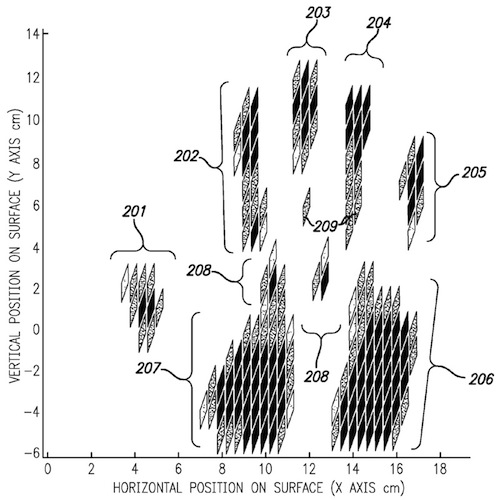
AppleInsider points to a patent application filed in June and released yesterday that brings renewed attention to two-handed multi-touch capabilities previously included in patent applications from Apple and Fingerworks, the company acquired by Apple in 2005 for its multi-touch technology.


124928-two_hand_sensing.jpg


The latest patent application appears to be a slightly edited version of content found in several patent applications made by Fingerworks in mid-2006.

The technology has gained renewed interest as a rumored launch of Apple's much-anticipated tablet computer appears to be approaching and speculation mounts about how the device will function. In brief, the Fingerworks patent application addresses multi-touch functionality extended to be able to sense full touch input from ten fingers, as well as the palms of the hands. The complex touch sensing would allow for such features as intelligent typing capabilities and graphical manipulation abilities more sophisticated than the "pinch and zoom" found on the iPhone and multi-touch trackpads, and provide the versatility for multiple types of input without the need for multiple input devices.


124928-full_hand_sensing.jpg


Article Link: Two-Handed Multi-Touch Technology Gains Renewed Exposure

Reminds me of one of these Alien Artefacts of the Roswell Crash...
 

Attachments

  • alien-panel.jpg
    alien-panel.jpg
    9.8 KB · Views: 150
Register on MacRumors! This sidebar will go away, and you'll see fewer ads.