
Got a tip for us?
Let us know
Become a MacRumors Supporter for $50/year with no ads, ability to filter front page stories, and private forums.
2019 Formula 1 Season Thread
- Thread starter MOFS
- Start date
- Sort by reaction score
You are using an out of date browser. It may not display this or other websites correctly.
You should upgrade or use an alternative browser.
You should upgrade or use an alternative browser.

I agree with the ten points he got for driving with a dangerous car after the incident. There were pieces flying everywhere and Lewis was definitely in danger, he had both the opportunity to pit and an instruction from his team to pit. Not sure i agree with the five points for the contact. This type of incident was inevitable after recent inconsistent decisions of the stewards. i expected these two to tangle before today.

Apple fanboy
macrumors Ivy Bridge
Not the result I expected! I was thinking a Ferrari 1-2.
Entertaining at the end with Vettel and Lewis. Just never really looked like passing the Ferrari.
I wonder if they had left him out things might have been different? I suspect Vettel would have passed him.
Still the interesting part of the race was really due to Vettel having issues on the line and Leclerc coming together with Max.
Ultimately the result gave Toto what he needed. The constructors.
They can’t lose the drivers either.
But I suspect next year will be a red one.
Entertaining at the end with Vettel and Lewis. Just never really looked like passing the Ferrari.
I wonder if they had left him out things might have been different? I suspect Vettel would have passed him.
Still the interesting part of the race was really due to Vettel having issues on the line and Leclerc coming together with Max.
Ultimately the result gave Toto what he needed. The constructors.
They can’t lose the drivers either.
But I suspect next year will be a red one.

CWallace
macrumors G5
I'm still watching the race (I knew it was going to be a Mercedes win after the first corner, so no worries about spoilers) and I see LeClerc's and Verstappen's coming together as a Racing Incident. To Max's credit, he gave room (which is a nice change) and I think LeClerc lost downforce as Vettel went across and he just washed into Max so I do not agree with that time penalty.
The above being said, I do agree Charles should have immediately pitted for damage so that time penalty was warranted, IMO.
I will say all these penalties for Ferrari in 2019 makes me chuckle about the old saw that FIA stood for "Ferrari International Assistance". 😛
The above being said, I do agree Charles should have immediately pitted for damage so that time penalty was warranted, IMO.
I will say all these penalties for Ferrari in 2019 makes me chuckle about the old saw that FIA stood for "Ferrari International Assistance". 😛

Well it’s pretty much all over now, so Lewis has decided to tweet how he’s upset with people not being vegans and not taking climate change seriously... yeah Lewis I’m sure F1 is carbon neutral.... perhaps he’s beginning to lose his mind?
I also heard that they are thinking of next year changing qualifying I to a sprint race! Not sure about that one..
I also heard that they are thinking of next year changing qualifying I to a sprint race! Not sure about that one..

The-Real-Deal82
macrumors P6
Probably because being vegan is suddenly really trendy lol. Lewis is my favourite driver as he’s a pleasure to watch racing but he’s such a cock away from the track.Well it’s pretty much all over now, so Lewis has decided to tweet how he’s upset with people not being vegans and not taking climate change seriously... yeah Lewis I’m sure F1 is carbon neutral.... perhaps he’s beginning to lose his mind?
I also heard that they are thinking of next year changing qualifying I to a sprint race! Not sure about that one..
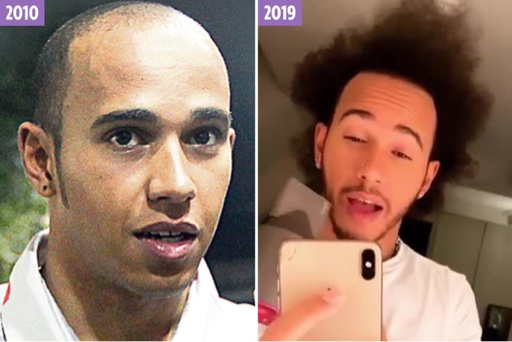
My favourite Instagram post was the one about looking after his hair to make it strong. Yeah Lewis you’ve also had a hair transplant!! 😛
Has he? Over the years, and this is absolutely unrelated, I hadn't noticed how Brydon's hair was. I went back to watching old QI episodes a while back and I was surprised at how awful his hair looked years ago.
Edit: He may have, but considering he's black, his hair is different than a non-black person's. Stress can cause balding and thinning that'll bounce back once the stress is removed. Can't say I care. He goes from being a ****y prat to a good guy and back so often it's annoying.
Edit: He may have, but considering he's black, his hair is different than a non-black person's. Stress can cause balding and thinning that'll bounce back once the stress is removed. Can't say I care. He goes from being a ****y prat to a good guy and back so often it's annoying.
The-Real-Deal82
macrumors P6
Oh he definitely has lol. Love him as a driver though but his fashion posts and philosophical god posts do my head in a bit.Has he? Over the years, and this is absolutely unrelated, I hadn't noticed how Brydon's hair was. I went back to watching old QI episodes a while back and I was surprised at how awful his hair looked years ago.
Edit: He may have, but considering he's black, his hair is different than a non-black person's. Stress can cause balding and thinning that'll bounce back once the stress is removed. Can't say I care. He goes from being a ****y prat to a good guy and back so often it's annoying.
Probably because being vegan is suddenly really trendy lol. Lewis is my favourite driver as he’s a pleasure to watch racing but he’s such a cock away from the track.
My favourite Instagram post was the one about looking after his hair to make it strong. Yeah Lewis you’ve also had a hair transplant!! 😛
Yeah a bit like he’s utterly daft awkward modelling career... NO Lewis, you are NOT a model and really cannot pull it off..save your dignity and stop advertising clothes etc like you are one! Theirs a reason you drive race cars for a living.....

BenTrovato
macrumors 68040
Lol that pic is funny. There's a few threads on the web making fun of lewis and all the pics of him balding a few years ago and now all of a sudden he has a full fro. I used to dislike him in the pussycat dolls era, now he's grown on me. He's an F1 driver, they all have massive egos.. some hide it better.
The-Real-Deal82
macrumors P6
He’s been recording music so you might get your wish there lol. I’m hoping it’s along the lines of the John Barnes rap.Could be worse. He could release an album like Jacques Villeneuve.
I don't really mind what Lewis is up to. I'll poke fun at them all, and praise them all.

Akrapovic
macrumors 65816
He’s been recording music so you might get your wish there lol. I’m hoping it’s along the lines of the John Barnes rap.
With his recent environmental stance I'm expecting something like this:
😁😁
It is interesting. Very few cars had them. Maybe F1 would create a V4 road car trend.Porsche 919 had one. It wasn't interesting.
Akrapovic
macrumors 65816
No they won't. Very few cars had them for good reason. V layout engines are more expensive to produce than an inline 4. You're duplicating some of the parts required, and making packaging the engine more difficult. There is also a problem with vibrations - V4s need balance shafts to stop it from absolutely destroying itself.
Porsche used the V4 in the 919 because they wanted to use the maximum allowed hybrid power output that the ACO regulations allowed (8MJ). To do that, they had to use a smaller ICE. Costs of producing the engine were a non-factor, and the car wasn't being mass produced, so that didn't matter. Vibrations were still a problem, but Porsche threw millions at development to get around that. The reason they picked V4 over an I4 is because it lowered the centre of gravity of the car - something makes a huge difference to race cars, but doesn't mean much to road cars, especially with the SUV trend that's going on.
The V4 engine layout doesn't bring any advantages to road cars. It was phased out a long time ago, and won't be back. It offers some benefits to racing engines, but only if the regulations are designed in a way that makes it viable. The Le Mans regulations were setup to make that an option. Should the regulations be equal (rather than offsetting hybrid v ICE, as ACO regulations did), then the V4 is less viable than the V6 or V8.
The Porsche 919 wasn't particularly interesting on its own. The 919, TS050 and R18 together on track were interesting because they all had different power solutions. That was the beauty of the ACO Le Mans regulations. Unfortunately, costs got out of hand extremely quickly.
Porsche used the V4 in the 919 because they wanted to use the maximum allowed hybrid power output that the ACO regulations allowed (8MJ). To do that, they had to use a smaller ICE. Costs of producing the engine were a non-factor, and the car wasn't being mass produced, so that didn't matter. Vibrations were still a problem, but Porsche threw millions at development to get around that. The reason they picked V4 over an I4 is because it lowered the centre of gravity of the car - something makes a huge difference to race cars, but doesn't mean much to road cars, especially with the SUV trend that's going on.
The V4 engine layout doesn't bring any advantages to road cars. It was phased out a long time ago, and won't be back. It offers some benefits to racing engines, but only if the regulations are designed in a way that makes it viable. The Le Mans regulations were setup to make that an option. Should the regulations be equal (rather than offsetting hybrid v ICE, as ACO regulations did), then the V4 is less viable than the V6 or V8.
The Porsche 919 wasn't particularly interesting on its own. The 919, TS050 and R18 together on track were interesting because they all had different power solutions. That was the beauty of the ACO Le Mans regulations. Unfortunately, costs got out of hand extremely quickly.
There would be a market for people that think that 6 cylinders is too much but like V. It would hopefully also make some people buy smaller engines. I don't think it is true that it brings no advantages (that does not mean V does not have drawbacks).
One of the attractions of Subaru is the lower center of gravity. SUVs should be largely eliminated.
F1 has money to spend on vibration reduction.
F1 should get more electrification and smaller engines.
V4 could get other motorcycle companies involved.
One of the attractions of Subaru is the lower center of gravity. SUVs should be largely eliminated.
F1 has money to spend on vibration reduction.
F1 should get more electrification and smaller engines.
V4 could get other motorcycle companies involved.
Last edited:
Akrapovic
macrumors 65816
There would be a market for people that think that 6 cylinders is too much but like V. It would hopefully also make some people buy smaller engines. I don't think it is true that it brings no advantages (that does not mean V does not have drawbacks).
One of the attractions of Subaru is the lower center of gravity. SUVs should be largely eliminated.
F1 has money to spend on vibration reduction.
F1 should get more electrification and smaller engines.
V4 could get other motorcycle companies involved.
You're inventing a need for something that isn't there. Anyone who wants an engine smaller than a V6 can already get an I4 or boxer engine. Nobody specifically wants a V4. You can not think it's true if you want, but the fact is, nobody builds these engines for a reason.
The Subaru does have a lower CoG. Yet they aren't that popular. Because most people don't care. Only car nuts care. And car nuts won't buy a V4 because they know about the issues.
Getting rid of SUVs is a ridiculous idea. You may not like them, but it's such a massive market that everyone builds several variations of them now. SUVs will not be eliminated...especially by a V4 engine.
The vibration reduction is already "solved". It's expensive. It requires a balance shaft. This is a solved problem. But it is an expensive thing to add, that isn't required on an I4. You also need 2 cylinder heads, 2 exhuast manifolds etc. You're basically making an expensive, worse engine, to lower the CoG a tiny bit.
Motorcycle companies largely binned V4s.
The V4 has no future. Nobody is investing huge amounts of money in ICE engines. By the time the V4 has had enough engineering resources thrown at it to make it viable in a road car (which it will never be), we'll be on fully electric vehicles.
You could buy a V4 engine that is smaller than an I4 engine and some people do like the V, so they could be brought down from V6. They buy them even if inline is more practical and less expensive.
Governments can just ban SUVs. Citizens are already mobilising for this in some countries. V4 is not about eliminating them.
It is not that people don't care about boxer engines. It is that they don't know about the CoG or even the type.
F1 has had V6 for a long time. I doubt it would be really useful to continue with it. It would be similarly uninteresting to go for I6 or I4.
It will be a long time until ICE is eliminated. Even then, it does not mean 100% of new cars will be EVs.
Motorcycle companies still sell V4s and they have the experience.
That V4 is not viable in road cars is only your opinion. It is likely easier than getting fuel cells or turbines into the mainstream.
Governments can just ban SUVs. Citizens are already mobilising for this in some countries. V4 is not about eliminating them.
It is not that people don't care about boxer engines. It is that they don't know about the CoG or even the type.
F1 has had V6 for a long time. I doubt it would be really useful to continue with it. It would be similarly uninteresting to go for I6 or I4.
It will be a long time until ICE is eliminated. Even then, it does not mean 100% of new cars will be EVs.
Motorcycle companies still sell V4s and they have the experience.
That V4 is not viable in road cars is only your opinion. It is likely easier than getting fuel cells or turbines into the mainstream.
Last edited:
Akrapovic
macrumors 65816
They buy a V6 because it has more power. A V4 wouldn’t have more than an I4.
Governments will not ban SUVs. There is no reason to.
F1 has not used a V6 for a long time.
V4 is not viable in a road car. It is not my opinion. It is the opinion of the engineers who develop these engines and cars. That it is why no road car currently uses a V4. If you think they’re wrong then you’re free to tell them why they are wrong and that they should stop making their best selling SUVs.
The only way F1 will get V4s is if it’s legislation. Road cars will not get them. Simple as that.
Governments will not ban SUVs. There is no reason to.
F1 has not used a V6 for a long time.
V4 is not viable in a road car. It is not my opinion. It is the opinion of the engineers who develop these engines and cars. That it is why no road car currently uses a V4. If you think they’re wrong then you’re free to tell them why they are wrong and that they should stop making their best selling SUVs.
The only way F1 will get V4s is if it’s legislation. Road cars will not get them. Simple as that.
Probably because being vegan is suddenly really trendy lol. Lewis is my favourite driver as he’s a pleasure to watch racing but he’s such a cock away from the track.
My favourite Instagram post was the one about looking after his hair to make it strong. Yeah Lewis you’ve also had a hair transplant!! 😛
I generally like Hamilton, but he really acts like a 16 year old on social media, complete with overly simplified moral causes. Everything is always against him but #stillirise or whatever. When he is interviewed spontaneously, he seems totally likeable and normal, but he is way too image-conscious for anything he puts a lot thought into.
I think it has to do with being in the global spotlight at an age where we are trying to figure out who we are. He had that time filled for him by sponsors, intense media scrutiny, massive pressure to perform, huge expectations, and an incredibly busy schedule that never let him get settled. It's no wonder that he sometimes comes across as a 16 year old; he's probably still at that stage of figuring out who he is.
A V4 would have more torque than a I4 and be more compact.
Cities are already banning diesels which killed their sales. The same can be done with SUVs, as it is being called for.
F1 already used V6 in the eighties.
Why would V4 be viable in motorcycles but not in cars?
The point is precisely that the next F1 rules should downsize from V6 to V4.
That road cars will not get V4s is just your opinion, again.
Cities are already banning diesels which killed their sales. The same can be done with SUVs, as it is being called for.
F1 already used V6 in the eighties.
Why would V4 be viable in motorcycles but not in cars?
The point is precisely that the next F1 rules should downsize from V6 to V4.
That road cars will not get V4s is just your opinion, again.