

Become a MacRumors Supporter for $50/year with no ads, ability to filter front page stories, and private forums.

MacRumors

macrumors bot
Original poster


Apple has agreed to make changes to its App Tracking Transparency feature in Germany, according to the country's competition regulator.
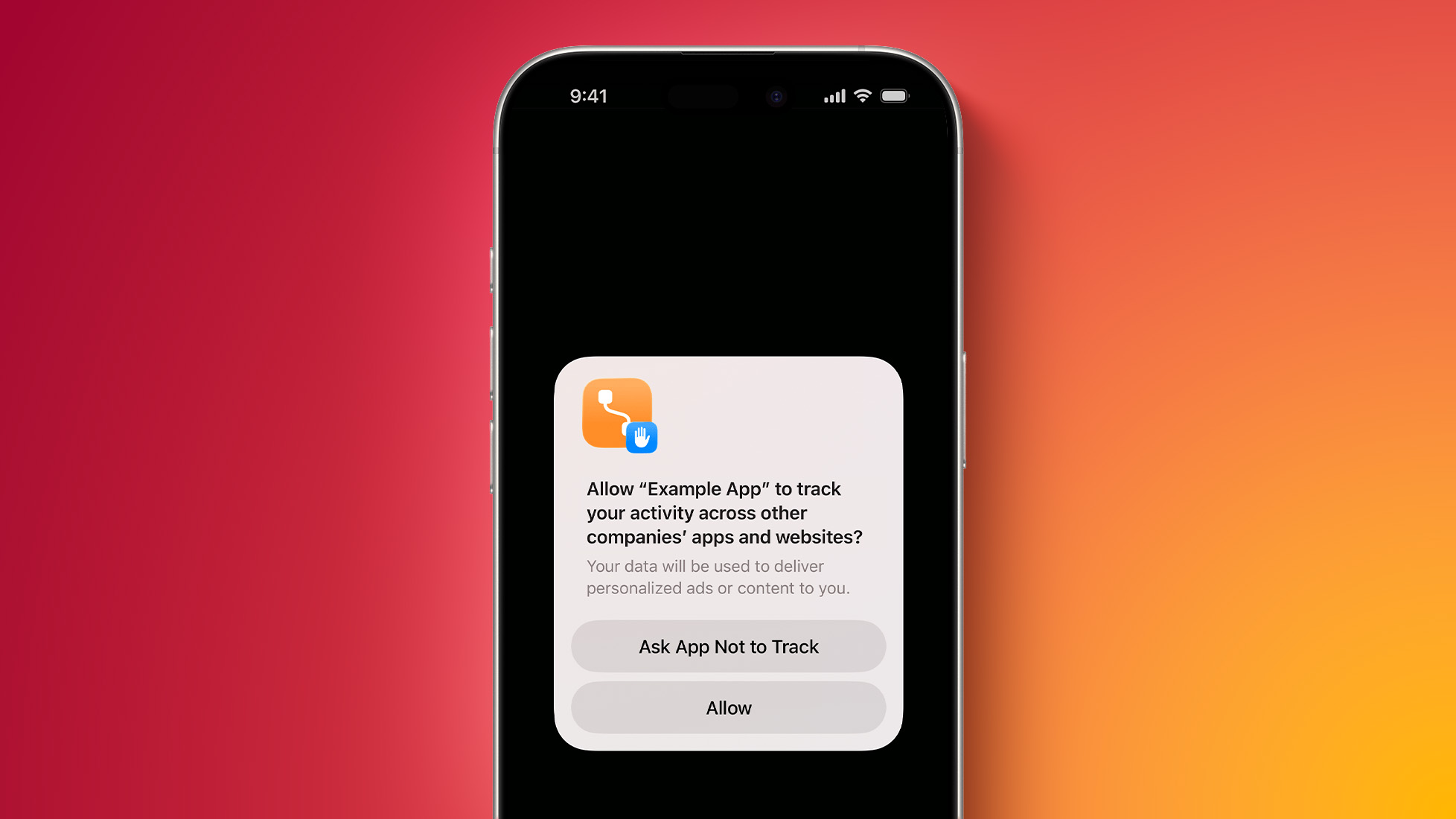
generic-tracking-prompt-orange.jpg

Since the release of iOS 14.5 in April 2021, Apple has required apps to ask for permission before tracking a user's activity across other apps and websites for personalized advertising. If a user selects the "Ask App Not to Track" option, the app is unable to access the device's advertising identifier. Apple says the feature is designed to enhance user privacy, but some advertisers have complained that it has significantly impacted their revenue.

In Germany, Apple has agreed to remove "possibly discouraging symbols and wording" from the App Tracking Transparency prompt, the regulator said. Apps will also be "given more scope to explain to users what significance personalized advertising has for their offering and their business model," and the "freedom to combine the consent request required by Apple with the consent requests required under data protection law."

Apple has four months starting on the date it is formally served with the decision to implement the changes in Germany, and it will test them with app developers first, the regulator said. The changes will apply for seven years.

Over the past few years, Apple has faced similar regulatory pressures over the App Tracking Transparency feature in other EU countries, such as France, Italy, and Poland, and from the overarching European Commission.

Apple has maintained that App Tracking Transparency protects user privacy and is compliant with competition law in Germany. Nevertheless, it agreed to make the changes, and the regulator said the proceedings have thus concluded.

Apple issued the following statement regarding the changes:
At Apple, we believe privacy is a fundamental human right, and we introduced App Tracking Transparency to give users a simple way to control whether apps have permission to track their activity across other companies' apps and websites. While we believe the current ATT prompt provides a clear, easy-to-understand and effective way to keep users in control of their data—an opinion shared by the German data protection authorities—we have agreed to make changes to the text and formatting of the prompt at the FCO's request. These commitments ensure we can continue to provide this important privacy tool in Europe and keep users, not ad tech companies and data brokers, in control of their data.

Note: Due to the political or social nature of the discussion regarding this topic, the discussion thread is located in our Political News forum. All forum members and site visitors are welcome to read and follow the thread, but posting is limited to forum members with at least 100 posts.

Article Link: Apple Agrees to Make 'App Tracking Transparency' Changes in Germany
 
Last edited:
This is an odd one. I agree that the phrasing should change. "Ask App Not to Track?" That sounds like the HTTP DNT header that was completely voluntary and basically did nothing in practice. If Apple is actually blocking access to the device identifier, then it is doing more than just "asking" the app not to track -- it's imposing an actual limit to tracking.

On the other hand, the changes that Germany seems to want don't actually benefit consumers in the language shown nor in practice. Go figure...
 
  • Like
Reactions: Dj64Mk7
This is an odd one. I agree that the phrasing should change. "Ask App Not to Track?" That sounds like the HTTP DNT header that was completely voluntary and basically did nothing in practice. If Apple is actually blocking access to the device identifier, then it is doing more than just "asking" the app not to track -- it's imposing an actual limit to tracking.

On the other hand, the changes that Germany seems to want don't actually benefit consumers in the language shown nor in practice. Go figure...
With the consumer protections in the EU it was VERY important for allowing a consumer to clearly indicate intent. If the EU ad company were to go ahead and track them anyway after that clear intent and it were to be discovered (not hard to create a test case to catch a company), the users and regulators would have cause to go after the company. They likely want Apple to change it to something that does not clearly state, "Don't track me" so that they've got a gray area which would allow them to return to tracking users if they so desire.

I've always felt that a simple solution would be to force users to communicate their intent to be tracked by having them create an account on all the 400+ tracking services that are currently tracking them via third-party tracking. It's no longer third-party tracking, it's first party as they're logged into each one of the services. With today's password managers, the user wouldn't even have to remember a bunch of passwords or use the same password over and over.
 
  • Haha
Reactions: pianostar9
So much for German regulations protecting your privacy. It's always about who pays the regulators.
As I understand it, Apple and App Developers are asked to clarify the wording on the dialog(s) and explain all the possible pro's and con's.
So the user is properly informed about what he is about to consent to (or not).

Is that a bad thing?


EDIT:
I have now read the official press release of the Bundeskartellamt. Their problem was NOT the wording itself, but the DIFFERENCE that Apple made between their own Apps and Apps from other developers.

"The Bundeskartellamt objected to the way in which Apple had designed different consent requests for Apple’s own offerings and third-party apps."

"Apple’s ATTF introduced rules for third-party app providers on the use of data on iPhones and iPads. For specific forms of cross-company data use, third-party app providers must obtain not only user consent under data protection law, but also additional consent through a prompt that is predefined by Apple. However, these ATTF rules do not apply to Apple’s own offerings; Apple uses user data from its own ecosystem and therefore its own prompt to request user consent to personalised advertising."

"Under the commitments that have now been declared binding, Apple will align the consent prompts for its own offerings and for third-party apps much more closely. This involves removing possibly discouraging symbols and wording in Apple’s predefined requests for third-party providers. The design of the consent prompts will be neutral in terms of content, wording and layout."


EDIT 2:
@Joe Rossignol
The Macrumors article should be modified to reflect that the changes Apple agreed to, are not made becuase Germany wanted to weaken the language, but because Apple choose to change the language to not make their own tracking inside their own appe look so bad.
 
Last edited:
  • Like
  • Disagree
Reactions: I7guy and Etc_
all the possible pro's and con's.
What’s the pro’s of being tracked across apps and websites? 🙂

What the article doesn’t say is that applications can avoid that dialog by not tracking users across websites/apps. There are apps plenty of apps that respect user’s privacy on the App Store that doesn’t show this dialog when they’re installed. So, it’s not even separate standards. The only standard is between Apps that respect the privacy of their users and not track them across apps/websites and Apps that want to monetize their users by profiling them then selling that data to third parties.
 
EDIT: I have now read the official press release of the Bundeskartellamt. Their problem was NOT the wording itself, but the DIFFERENCE that Apple made between their own Apps and Apps from other developers. (emphasis added)

"The Bundeskartellamt objected to the way in which Apple had designed different consent requests for Apple’s own offerings and third-party apps."

"Apple’s ATTF introduced rules for third-party app providers on the use of data on iPhones and iPads. For specific forms of cross-company data use, third-party app providers must obtain not only user consent under data protection law, but also additional consent through a prompt that is predefined by Apple. However, these ATTF rules do not apply to Apple’s own offerings; Apple uses user data from its own ecosystem and therefore its own prompt to request user consent to personalised advertising."

"Under the commitments that have now been declared binding, Apple will align the consent prompts for its own offerings and for third-party apps much more closely. This involves removing possibly discouraging symbols and wording in Apple’s predefined requests for third-party providers. The design of the consent prompts will be neutral in terms of content, wording and layout."

So they have no idea what they're talking about. The wording is different because Apple doesn't track user activity across other company's apps, which is what App Tracking Transparency is designed for. You can see what data they use here. Notice all of it is your usage from Apple's own services.

Apple’s advertising platform does not track you, meaning that it does not link user or device data collected from our apps with user or device data collected from third parties for targeted advertising or advertising measurement purposes, and does not share user or device data with data brokers

Companies aren't required to gain consent to track its own users across its own apps. Meta can track your usage across Facebook, Instagram, and WhatsApp with no ATTF consent required.

Apple does generally follow the same privacy restrictions that third party apps do. Apple apps show the same permission prompts for location, notifications, etc.
 
Last edited:
Meta can track your usage across Facebook, Instagram, and WhatsApp with no ATTF consent required.
If Meta would acutally do that, they would be in direct violation of the DMA.
Article 5(2) of the Digital Markets Act explicitly prohibits designated gatekeepers like Meta from combining personal data across core platform services without presenting a specific choice and obtaining user consent.

ATTF rules do apply to Apple. The wording is different because Apple doesn't track user activity across other company's apps, which is what App Tracking Transparency is designed for.
This was the double standard the Bundeskartellamt was objecting to. Apple should not be able to use a loophole to make their own offerings look so much better.
 
I'm actually a bit torn on this one as a developer. The device identifier is not ONLY used in advertising, it is also a critical tool for analytics. When users have it enabled I can see and track app issues, problem spots, and places of improvements far better than when its disabled. It would be nice if there was an "analytics only" option since I have zero intention of ever putting ads in our apps and I dont want to pester our user with scary tracking messages vs "Would you like to enable app analytics to help us improve your user experience"
 
  • Like
Reactions: turbineseaplane
It kind of makes sense when we really only talk about semantics and the specific wording. Currently it implies that you are not gonna get tracked at all, which unfortunately isn't the case when every app still includes "spyware" SDKs of META, CleverTap etc
 
This was the double standard the Bundeskartellamt was objecting to. Apple should not be able to use a loophole to make their own offerings look so much better.
This indicates, as an assumption, that offerings that track users across apps/websites by using third party trackers are "so much worse". Here's the thing, though, they could simply NOT track users and be on the same level as may other apps that don't track users and, as a result, look so much better!

Why won't they do that, though? Why won't they NOT track users?
 
As I understand it, Apple and App Developers are asked to clarify the wording on the dialog(s) and explain all the possible pro's and con's.
So the user is properly informed about what he is about to consent to (or not).

Is that a bad thing?


EDIT:
I have now read the official press release of the Bundeskartellamt. Their problem was NOT the wording itself, but the DIFFERENCE that Apple made between their own Apps and Apps from other developers.

"The Bundeskartellamt objected to the way in which Apple had designed different consent requests for Apple’s own offerings and third-party apps."

"Apple’s ATTF introduced rules for third-party app providers on the use of data on iPhones and iPads. For specific forms of cross-company data use, third-party app providers must obtain not only user consent under data protection law, but also additional consent through a prompt that is predefined by Apple. However, these ATTF rules do not apply to Apple’s own offerings; Apple uses user data from its own ecosystem and therefore its own prompt to request user consent to personalised advertising."

"Under the commitments that have now been declared binding, Apple will align the consent prompts for its own offerings and for third-party apps much more closely. This involves removing possibly discouraging symbols and wording in Apple’s predefined requests for third-party providers. The design of the consent prompts will be neutral in terms of content, wording and layout."


EDIT 2:
@Joe Rossignol
The Macrumors article should be modified to reflect that the changes Apple agreed to, are not made becuase Germany wanted to weaken the language, but because Apple choose to change the language to not make their own tracking inside their own appe look so bad.
The idea that they are aligning prompts is nothing but obfuscation. Apple doesn’t track across third parties, so there’s no need for a prompt to track across third parties.

When you look at the described changes, this is about trying to make it more likely that people will consent. They are removing negative language about tracking and adding positive language about tracking and pretending that’s “neutral”.
 
  • Like
Reactions: Unregistered 4U
It would be nice if there was an "analytics only" option since I have zero intention of ever putting ads in our apps and I dont want to pester our user with scary tracking messages vs "Would you like to enable app analytics to help us improve your user experience"

Agreed. That would be a nice option to have.
 
If Meta would acutally do that, they would be in direct violation of the DMA.
Article 5(2) of the Digital Markets Act explicitly prohibits designated gatekeepers like Meta from combining personal data across core platform services without presenting a specific choice and obtaining user consent.
"Combining user data" is different from "logging into a first party service". The problem has never been with first party services, that's literally how the internet works. The problem is only when companies that a user has no business first party relationship with is using methods to track them against their desire. Someone having a Facebook account and Facebook having data on them isn't a problem. It's expected. Someone NOT having a Facebook account but Meta having TONS of data on them via third-party tracking, that's the problem.
 
I'm actually a bit torn on this one as a developer. The device identifier is not ONLY used in advertising, it is also a critical tool for analytics. When users have it enabled I can see and track app issues, problem spots, and places of improvements far better than when its disabled. It would be nice if there was an "analytics only" option since I have zero intention of ever putting ads in our apps and I dont want to pester our user with scary tracking messages vs "Would you like to enable app analytics to help us improve your user experience"
You can get that information anyway. Ask not to Track as I understand it doesn't block you from still using the device identifiers. You're just not supposed to.
 
When you look at the described changes, this is about trying to make it more likely that people will consent. They are removing negative language about tracking and adding positive language about tracking and pretending that’s “neutral”.
Correct.
However, the article makes it look like the Bundeskartellamt requested positive language be added.
Which is FALSE.

They only asked for the same prompt for all the apps. Apple then chose to change the language to not make their own apps look so bad.
 
Register on MacRumors! This sidebar will go away, and you'll see fewer ads.