Become a MacRumors Supporter for $50/year with no ads, ability to filter front page stories, and private forums.
Current phase of the AI companies trying to figure out where to put data centers (since nobody wants them).

View attachment 2644279


One co-sponsor, State Representative Amanda Clinton, a Tulsa Democrat and Cherokee, called the frenzy “the new land run.” Still, she understands the appeal.

“I think Oklahoma is so strained for jobs and economic development that we will roll over too easily and give away the farm,” she said while driving around the perimeter of Project Clydesdale, a $1 billion, 500-acre data center now under construction in Tulsa County.

It's so sad to me to see the misrepresentation of what these data centers are actually bringing to communities.
The "jobs" are just for construction. Once the centers open, the jobs numbers are absolutely tiny.

They want all your resources and somewhere to stick all the externalities.
One county in Virginia has 37 data centers. I'm sure they didn't consider the implications of all those data centers when it came to their electricity bills. There is short term gain in jobs building the data centers.


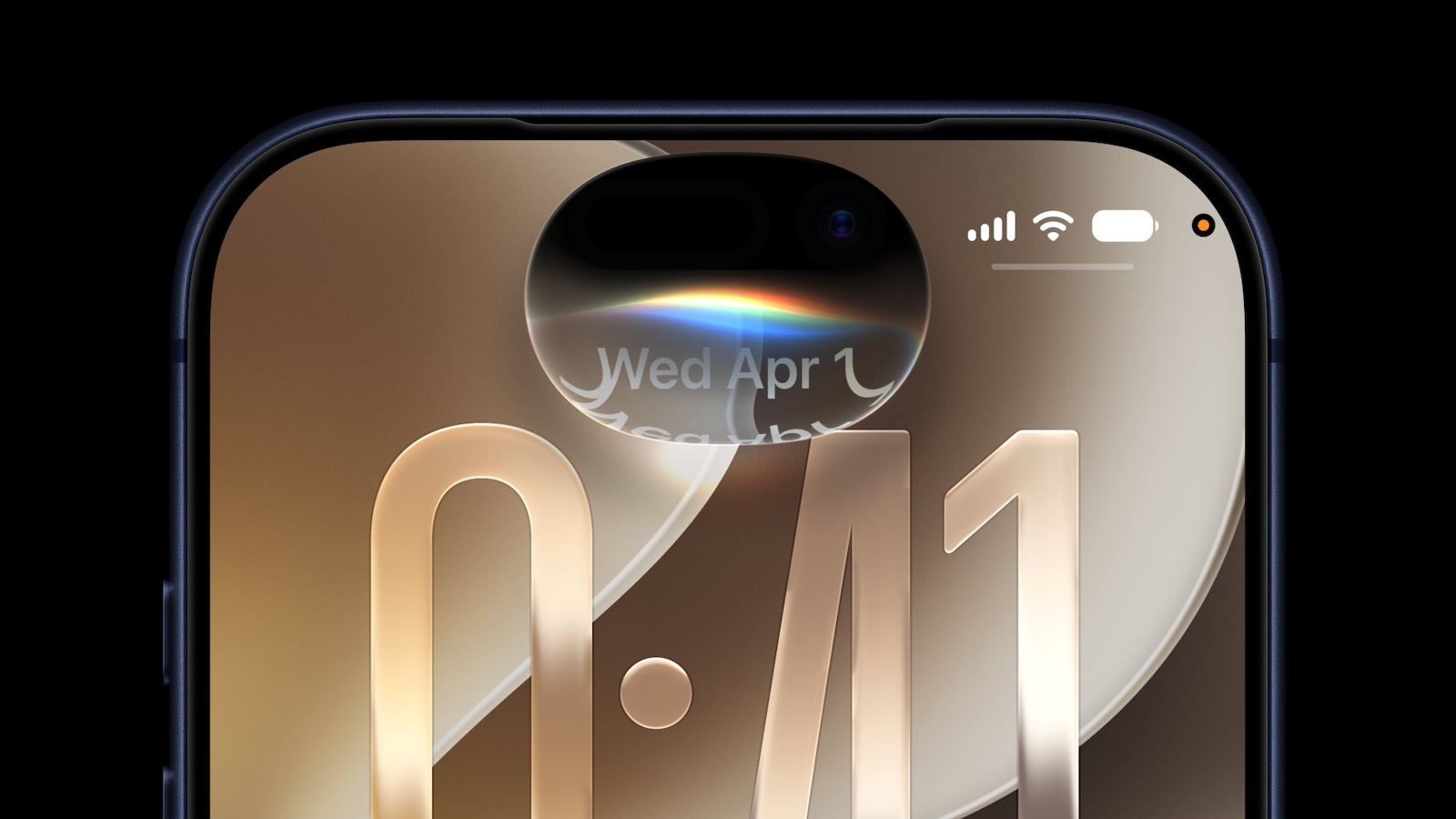
Apple has held meetings with PrismML about ways it could use the startup's technology to run much larger AI models directly on iPhones, according to The Information.

ios-27-siri-animation.jpg

The report said PrismML has managed to shrink down Alibaba's open-source large language model Qwen 3.6 to run entirely on an iPhone 17 Pro. The model has 27 billion parameters, which is larger than Apple's on-device AFM 3 Core Advanced model with 20 billion parameters. Apple's model powers iOS 27 enhancements such as Siri AI's more expressive voices and improved systemwide dictation on iPhone 17 Pro and iPhone Air models.

Unlike with AFM 3 Core Advanced, all of Qwen 3.6's parameters can be active at the same time.

"One new on-device Apple model has 20 billion parameters but uses a so-called sparse architecture, in which only 1 billion to 4 billion parameters are active at a time," the report said, in reference to AFM 3 Core Advanced. "In the case of PrismML's on-device model, all 27 billion parameters are active at the same time."

Larger models running directly on iPhones would allow for more Apple Intelligence features to run on device instead of on Apple's Private Cloud Compute servers, which could reduce Apple's costs and further enhance user privacy.

Article Link: Apple Exploring Ways to Run Much Larger AI Models Directly on iPhones

Just don’t remove the Kill switch, because the first thing I do is turn off AI. It drains the battery and it drains humanity.
 
  • Like
Reactions: HVDynamo
Apple and Google have quietly just taken over the consumer market for AI. Regardless of your feelings towards AI on your phone, having all of you content to create content aware actions is the true value add over a standard chatbot like OpenAI. This will only improve over time. Johnny Ive can fart out any device he wants, but without user data, it's still just a chatbot. Outside of some vibe coding, consumer AI will fall to the easiest and most convenient use case, which will be our personal devices.

Now with metering, pro-sumer/enterprise users have quickly found out it's basically cheaper to higher a worker than to use AI and have basically admitted they can't even monitor their ROI on their spend.

Hospitals, banks, law firms, etc., all need in house LLMs due to privacy concerns. in Europe, most are using open-source LLMs.

The only real market left for these AI companies is the research fields. And if you were really worth a trillion dollars bc your product worked, you wouldn't just lease them the LLM and say "Good luck, hope you can make something!". You would tell them you want a percentage of whatever you make. A drug company develops a new drug, OpenAi would get a cut of that drug. That would show the product works and is worth the supposed valuation. The fact that they don't do that kinda lets the cat out of the bag.

And ultimately, it leaves them with a product that will only get more expensive and will probably find itself with less and less users as we move to on device and open source that are good enough in the coming years.

Fewer and fewer. Just saying..
 
Regardless of how you feel about AI, I do think that if you're going to run them for simple tasks, running them on the device is better anyway. It works offline, uses less electricity (compared to spinning up a model at a datacenter to ask for the nearest grocery store), is possibly more private, lower latency for back-and-forth device tool calling APIs, doesn't cut into your mobile data, and doesn't depend on cloud providers.

So in that way, I am happy that the AI is on device. However, non-technical people won't understand why there's so much storage in use, so It would be nice if Apple added a hidden partition somewhere that could store the models needed for various tasks without cutting down your storage.
 
Ultimately, Apple shot themselves in the foot by either being stingy with RAM across all devices for decades, or by upgrading to higher capacity memory prohibitively expensive in the name of profits, saying nonsense like 8GB on an Apple device is like 16GB for everyone else. AI came along and told the truth, 8GB is 8GB.

It was for Macs.

The 8Gb of RAM working as 16Gb of RAM was for workloads typically encountered by most users:
1Gb*5 + 0,5Gb*22 =16 GB

Such workload was great for Apple Silicon Macs due to changes in the memory architecture and macOS.

Where this didn't work was for workload where one application needed a lot of RAM. This worked poorly:
5Gb*1 + 3Gb*1 + 0,5Gb*16 =16 GB

LLMs fall in the latter category.
 
  • Like
Reactions: Andy_2341


Apple has held meetings with PrismML about ways it could use the startup's technology to run much larger AI models directly on iPhones, according to The Information.

ios-27-siri-animation.jpg

The report said PrismML has managed to shrink down Alibaba's open-source large language model Qwen 3.6 to run entirely on an iPhone 17 Pro. The model has 27 billion parameters, which is larger than Apple's on-device AFM 3 Core Advanced model with 20 billion parameters. Apple's model powers iOS 27 enhancements such as Siri AI's more expressive voices and improved systemwide dictation on iPhone 17 Pro and iPhone Air models.

Unlike with AFM 3 Core Advanced, all of Qwen 3.6's parameters can be active at the same time.

"One new on-device Apple model has 20 billion parameters but uses a so-called sparse architecture, in which only 1 billion to 4 billion parameters are active at a time," the report said, in reference to AFM 3 Core Advanced. "In the case of PrismML's on-device model, all 27 billion parameters are active at the same time."

Larger models running directly on iPhones would allow for more Apple Intelligence features to run on device instead of on Apple's Private Cloud Compute servers, which could reduce Apple's costs and further enhance user privacy.

Article Link: Apple Exploring Ways to Run Much Larger AI Models Directly on iPhones
Apple already has the tech to do this- they don’t need Prism or a Chinese model.

But running a dense 27B model on a phone just makes it slow and energy-hungry while offering little benefit. Contrary to common belief, bigger isn’t necessarily better with LLMs for most use cases.
 
You can’t run full 27 billion parameters on a 12-16GB RAM phone unless you reduce quality a lot to something like 1 bit or reduce active params.

There’s no magic sauce otherwise everyone would be doing it with PrismML.

If true, this isn't something which is publicly available, so everyone can't do it.

What PrismML has available for the public is an 1-bit 8 billion parameters model.
 
Remember my post few years ago, about not able to turn off your iPhone or you might pay an additional fee?

They will implement the Find My network like they did for Airtags so every iPhone nearby will help generate AI content when nearby for extra compute power.
 
  • Disagree
Reactions: Tagbert
Is it more about "user privacy" or more about the "reduce Apple's costs" part?

🤨 🤔

I think they'll want to talk about the privacy part while really doing it for the reduced costs part.
Moving the processing from Private Cloud Compute to the device should not meaningfully change the privacy risk but it would change the cost structure significantly.
 
They don't care about customer privacy (see the NHS in the UK for example), and western governments *love* Anthropic and OpenAI. They're eager to work with governments and governments can use them to manipulate and spy on populations.
This is the other real market for them
 
P.S. I just noticed someone mention PrismML above. I too haven’t dug into the details, but suffice to say that it still looks more like proof of concept at the moment.
Yes, that's what the whole article at the top of this page is, that PrismML did a proof of concept, and Apple is now talking to them about it to learn more.

You're right about the technical limitations, but look at where we were a year ago in this space, and 5 years before that, and 10 years before that. There will continue to be technological breakthroughs that push past those limitations.
 
  • Like
Reactions: conmee
This is all ok and I certainly understand that people are using "AI" and it's beneficial for them. Some of us do not use it nor want to have it on their phones especially, and where iOS seems to be going is that it is forced down our throats.
What I would like to see is either the ability in the OS to disable "AI" or to provide HE that is not suitable for "AI".
Choices is a good thing
I don’t use it either, but I’ll admit I’m curious about what the new Siri will be able to do.
If everything ran on-device I’d be much more enthusiastic.

I totally agree on the choice issue. While I understand the point that you don’t have to use it, many of the screenshots I’ve seen show new AI buttons front and center making them hard to ignore. I’d like to see more options like what was done with the Sharesheet. You can toggle features and reorder them.
 
  • Like
Reactions: jz0309
Devices with more RAM will be getting all the latest features and other ones could miss out just like the base 17 not getting the latest on device AI capability.
 
  • Like
Reactions: mganu
Is it more about "user privacy" or more about the "reduce Apple's costs" part?

🤨 🤔

I think they'll want to talk about the privacy part while really doing it for the reduced costs part.
cloud based ai cannot do automations on your hardware. local ai can.
am i wrong?
 
This is good news for multiple reasons, and I really hope Apple gets this working well:

- The privacy advantages are massive; although Apple is probably more serious about privacy than any of the other players in the space (which range from shady to actively abusive), I don't trust their cloud compute much either, so having it on-device would be a huge leap in the right direction.

- On-device means not dumping ungodly amounts of money into AI companies.

- No datacenters necessary. Both in terms of concentrated blight, impact on the entire global electrical and electronic supply chain, and the power use.

- Power use, again. It's going to ratchet up power use of phones, cumulatively, but that's going to be distributed very evenly across the entire geographical area of the users, and the net impact to the grid when those phones are charging--most frequently at night--is going to be both concentrated in off-peak hours and easily absorbed by the existing generation and power infrastructure.
 
  • Like
Reactions: huges84
I don’t use it either, but I’ll admit I’m curious about what the new Siri will be able to do.
If everything ran on-device I’d be much more enthusiastic.

I totally agree on the choice issue. While I understand the point that you don’t have to use it, many of the screenshots I’ve seen show new AI buttons front and center making them hard to ignore. I’d like to see more options like what was done with the Sharesheet. You can toggle features and reorder them.
agree, curiosity is there for sure, but, I have a 17PM and my concern is that I won't be able to go back if I don't like 27 because of the "front and center", so as it stands right now, I will hold off on upgrading to 27 until after I get to play with an iPhone at the Apple Store, or, what would even be better, a toggle for Siri AI (like we have in 26 for Apple Intelligence" but I'm not holding my breath for that ;(
 
Incredible the degree of extreme comments being made here by people who have no FSCKING CLUE what PrismML does, how the tech works, or why this is interesting and significant...

Here's a quick summary:
The point is not ONLY the intelligence density, though obviously that's nice; it's also that binary and ternary models can be executed with much lighter weight MACs (ie you can pack many more of them into the same area, or alternatively run them with substantially lower energy) than the INT8 or FP16 HW.

And Apple likely already has the designs for such binary/ternary optimal HW in house (having acquired it via their purchase of xnor.ai). It's generally believed (though I haven't seen anything absolutely definitive) that they are already using such a 1bit DNN and associated HW on AirPods for various tasks.

Screenshot 2026-07-09 at 1.14.51 PM.png
 
Register on MacRumors! This sidebar will go away, and you'll see fewer ads.