
Got a tip for us?
Let us know
Become a MacRumors Supporter for $50/year with no ads, ability to filter front page stories, and private forums.
Apple Reportedly Worked on Two 'Extreme' Chips
- Thread starter MacRumors
- Start date
- Sort by reaction score
You are using an out of date browser. It may not display this or other websites correctly.
You should upgrade or use an alternative browser.
You should upgrade or use an alternative browser.

I7guy
macrumors Westmere
Apple didn’t think it was a waste of time. But that’s why they call it r&d. some things never see the light of day.More like what a waste of R&D for this ridiculousness.

Starting at $10k?! You're already paying $7k for a MacBook Pro with 18 CPU, 40 GPU, 16 NE, 128 GB. It goes over $10k with the highest capacity SSD. And that's on a Max--not even an Ultra.[...]
A hypothetical configuration might look something like:
- 64–96 CPU cores
- 160–240 GPU cores
- 64–128 Neural Engine cores
- 512 GB–1 TB unified memory
- Memory bandwidth well beyond current Ultra chips
- Multiple TB5 controllers
- Designed for a future Mac Pro
Such a machine could easily cost US$10,000–20,000+ depending on memory and storage.
An Extreme system would likely *start* well north of $20k. Think more like $50k.

CWallace
macrumors G5
"Apple decided not to release the chips due to concerns over higher production costs and limited demand for the Mac Pro"
Bad call. It's shocking to me to see how many people are willing to pay any price for the most powerful Apple products. They would have sold a ton of anything marked as "Extreme".
MacRumors forum before launch: "Apple are cowards! Launch the machine even if it costs $15,000 with 32GB of RAM and a 512GB SSD! Plenty of people will buy it just to flex!"
MacRumors forum after launch: "Is Apple insane? How out of touch is Tim Cook? $15,000 for 32GB of RAM and 512GB of SSD? Nobody is going to buy this! What a waste of time!"
CWallace
macrumors G5
More like what a waste of R&D for this ridiculousness.
Apple didn’t think it was a waste of time. But that’s why they call it r&d. some things never see the light of day.
Yup. This just ended up being one of those "thousand no's".
CWallace
macrumors G5
The "Extreme" CPU R&D only makes sense if potential users have full configurability between CPU power and RAM.
By bundling those into a non-user configurable and non-user upgradeable "black box" - Apple shot themselves in the foot.
What makes Apple Silicon so strong is the tight integration between CPU/GPU and main memory. It maximizes bandwidth and minimizes latency. Note how other ARM manufacturers also tie their processing/graphics and memory together in a package that cannot be upgraded by the end-user.
Making the resulting user base so small that the whole product became no longer viable.
They really should have realized this earlier. I fault Apple for not doing that.
Even if Apple had done what you suggest and taken the performance hit to do so, do you honestly think Apple would be a serious contender to HPE, Dell and Lenovo in the workstation market? They have no real enterprise support structure internally to assist them in designing machines that appeal to the "mass" market (such as it is in this market segment) and they outsource their on-site warranty work to IBM, last I read. And then let's talk software support - how many enterprise applications run on Windows ARM, to say nothing of macOS?
If I am a CTO looking to buy hundreds of workstations, Apple would be at the bottom of my list.
It's somehow infuriating that the amazing performance per watt the Apple silicon offers, remains off limits to exactly the users who would benefit the most from it, as RAM and SSD are not later upgradable nor configurable to the specs especially these users would need. Also costs could not be spread out over time by deferring upgrades to RAM and SSD to a later point.
You can upgrade the SSD on the 2023 Mac Pro. The prices are (well, were before the current spikes) ridiculously high, but Apple would sell you the modules. And third parties arose who would sell you modules for significantly less (even if their delivery times are often measured in months).

Spock
Contributor
"For the first time in history, a personal computer has been classified as a weapon by the US government” “the Pentagon wants to ensure that the new Power Macintosh G4 does not fall into the wrong hands.”Nobody should have a computer that powerful.
theluggage
macrumors G3
...maybe because small computers and laptops are where Apple actually make their money? Maybe because that's where Apple Silicon still has an performance-per-Watt advantage over x86 (and where ARM doesn't really have any other presence)? Maybe its because people will still want small computers and laptops after the AI services bubble has deflated (and it is already deflating - the only debate is whether it will totally burst or just calm down a bit).In theory, you could be right. But in practice, Apple has demontrated multiple times that it is obsessed with small computers, even if it makes no sense.
Lots of people seem to be asking for a Mac Pro with expandable memory and discrete GPUs - but that throws away two of the main selling points of Apple Silicon, and you'd end up with a premium-priced box for housing the same NVIDIA GPUs giving the same performance that they would in a Threadripper box at half the price (and that's assuming that Apple could bury the hatchet with NVIDIA). Plus, dGPU-optimised software wouldn't be optimised for Apple Silicon and wouldn't trickle down to MacBooks and Minis. Where people are buying Minis and Studios for local AI models its because the fast, unified RAM is competitive with GPU VRAM even if it looks expensive and limited c.f. how much DDR5 other systems can pack in.
It's actually impressive that the M2 series could scale all the way from the Pro to the Ultra with essentially the same die design. The M2 Ultra's shortcoming is really lack of GPU power and memory controllers, doubling up everything else to get more GPU and RAM is obviously going to end in diminishing returns (not to mention the purely mechanical question of how you fuse 4 Max chips together while still being able to get at all the RAM and PCIe lanes). Even though NVIDIA have something (very roughly) similar to Fusion I think they've gone for dedicated GPU/NPU as the second die.
I know its more fun to spin conspiracy theories about how Apple hates the Mac Pro - but maybe, just maybe, the Extreme was dropped because it didn't deliver anything special & Apple's market research said it wouldn't sell.

attila
macrumors 65816
Is this how it goes now?
Base < Pro < Max < Ultra < Extreme < Supercalifragilisticexpialidocious
Base < Pro < Max < Ultra < Extreme < Great Explosion Murder God Dynamight

tenthousandthings
Contributor
Apple is focused on products. It’s safe to assume Apple had a product in mind for the quad package. Probably just a high-end tier of the Mac Pro, but we don’t know that.
The point is that the *product* failed to meet their expectations, so they didn’t build it. The news story here is they tried to make the quad product work twice, with M2 Max and M3 Max. We knew of the M2 effort, Anand Shimpi alluded to it, but I don’t believe we were aware of the failure of the M3 effort.
I think they will keep trying. It seems pretty clear they have a product in mind.
The point is that the *product* failed to meet their expectations, so they didn’t build it. The news story here is they tried to make the quad product work twice, with M2 Max and M3 Max. We knew of the M2 effort, Anand Shimpi alluded to it, but I don’t believe we were aware of the failure of the M3 effort.
I think they will keep trying. It seems pretty clear they have a product in mind.

Zerlina
macrumors member
DavidSchaub
macrumors 6502a
It isn't going to happen, but the answer is mostly just: drivers.???? How would you get the SoC to work with the 5090 for gaming?
Nothing is stopping Apple from supporting a dGPU like the 5090.
Apple just doesn't want to.

Eric_WVGG
macrumors 6502a
John Siracusa — sort of the chronicler of the first fifteen or so releases of MacOS X — regularly makes the case that Apple should pursue these “Extreme” chips for the same reason that automobile manufacturers release “supercars.”
Like, yeah, obviously (almost) nobody needs them, (almost) nobody can afford them, but the whole concept is just very glamorous and sexy and it’s fun to take a shot across the bow of the rest of the industry. “Here, this: this is the best of the best. You can’t afford it, but it exists. You can buy a poster and dream about it. NASA and Pixar each have one and their engineers fight over time on them.”
One could argue that Apple makes the best bang-for-the-buck computers (I do), and the best computers for most people (same), but nobody can argue that they make the fastest computers because nVidia GPUs still exist. An M5 Extreme would make that statement.
Also what’s the point in even being a trillion dollar company if you can’t be a little indulgent once in a while?
Like, yeah, obviously (almost) nobody needs them, (almost) nobody can afford them, but the whole concept is just very glamorous and sexy and it’s fun to take a shot across the bow of the rest of the industry. “Here, this: this is the best of the best. You can’t afford it, but it exists. You can buy a poster and dream about it. NASA and Pixar each have one and their engineers fight over time on them.”
One could argue that Apple makes the best bang-for-the-buck computers (I do), and the best computers for most people (same), but nobody can argue that they make the fastest computers because nVidia GPUs still exist. An M5 Extreme would make that statement.
Also what’s the point in even being a trillion dollar company if you can’t be a little indulgent once in a while?
Eric_WVGG
macrumors 6502a
… upon further reflection, I can think of one really good reason why this would be stupid: they'd be on the hook for OS compatibility testing for a computer that only like 100 people in the world own for seven years.
I suspect this isn't really as big a deal as it sounds and that the CPUs are largely interchangeable in any compatibility regards, but I could be totally wrong about that.
I suspect this isn't really as big a deal as it sounds and that the CPUs are largely interchangeable in any compatibility regards, but I could be totally wrong about that.

DrJR
macrumors 6502a
We are going to have to make sure people are properly licensed to use these devices"For the first time in history, a personal computer has been classified as a weapon by the US government” “the Pentagon wants to ensure that the new Power Macintosh G4 does not fall into the wrong hands.”
View attachment 2646706
DrJR
macrumors 6502a
I’m being absurd, but the excuse, like all other excuses for gov intrusion is safety. We need to make sure everyone is licensed to own such a piece of tech/LLM. Maybe buy a sticker to certify it each year. Freedom isn’t safe!Why?
But can it do so in an economically viable way? I wonder if the doubling of every spec is too exponential in cost (and maybe also in power draw and heat waste).This goes to show how scalable apples’ silicon is.

deconstruct60
macrumors G5
I don’t get this article. It actually has about zero information. What was the actual information, presumably behind the paywalled article?
It is Gurman confirming his previous leaks were correct. He has a weekly newsletter. if there are not real substantive leaks that week then 'retreads' is par-for-the-course. The whole "Mac Pro" topic ( especially after being discontinued is effectively 'clickbait' all by itself. Desktop/max modularity folks from both Windows PC and Mac market will click on that. The latter to lament and former to posture as to why it was better move to stick with Windows diversity. )
The quad max chip has been rumored since the M1 series.
Which is a bit of a chuckle because in M1 era Gurman implied there was a M1 "Jade-4c-"
(not sure if he had started using "Extreme" as a label at that point. I think "Extreme" started after "Ultra" was revealed as the 2 chip package name ) , but now it "didn't start" until M2. So the very old articles on this are now wrong , but it has been so long that most folks will think he was completely correct all along.
May 2021
" ... Codenamed Jade 2C-Die and Jade 4C-Die, a redesigned Mac Pro is planned to come in 20 or 40 computing core variations, made up of 16 high-performance or 32 high-performance cores and four or eight high-efficiency cores. ..."
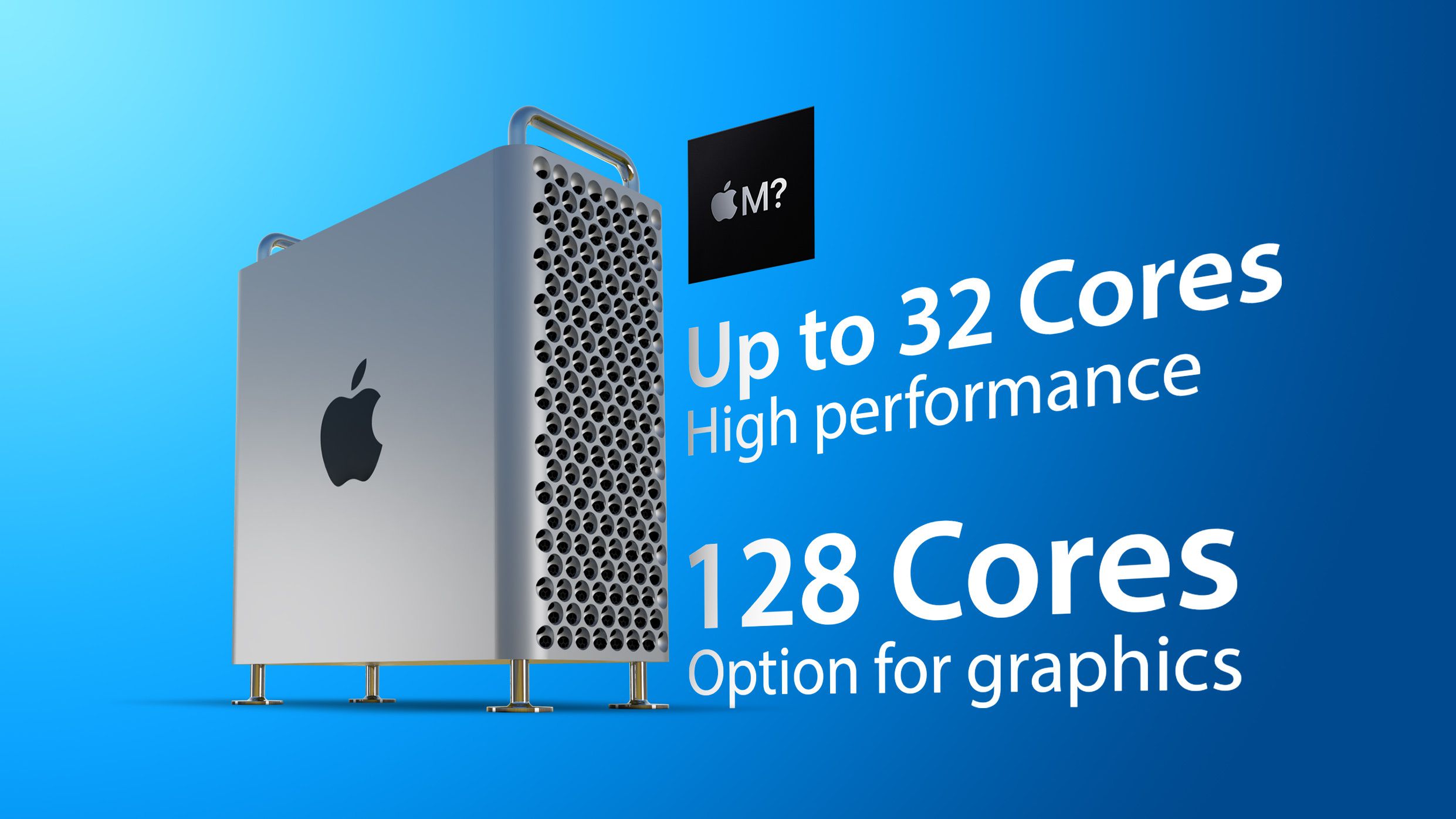
Bloomberg: Apple Silicon Mac Pro May Feature Up to 32 High Performance Cores, 128 Core Option for Graphics
Apple is working on an updated model of its Mac Pro that may feature an Apple silicon chip with as many as 32 high performance cores, and a 128 core option for graphics, according to a new report from Bloomberg's Mark Gurman. Bloomberg has reported in the past that Apple is working on an updated...
 www.macrumors.com
July 2022
" ... In an interview with YouTuber Max Tech, Gurman said that Apple likely held off on the M1 Mac Pro to wait for the more high-end and powerful version with the "M2 Extreme" chip set to launch later this year. Gurman predicts that a preview of the high-end Apple silicon Mac Pro will happen later this year with a launch in early 2023. Gurman notes Apple had originally planned to announce the Mac Pro during this year's WWDC but those plans obviously did not pan out. ..."
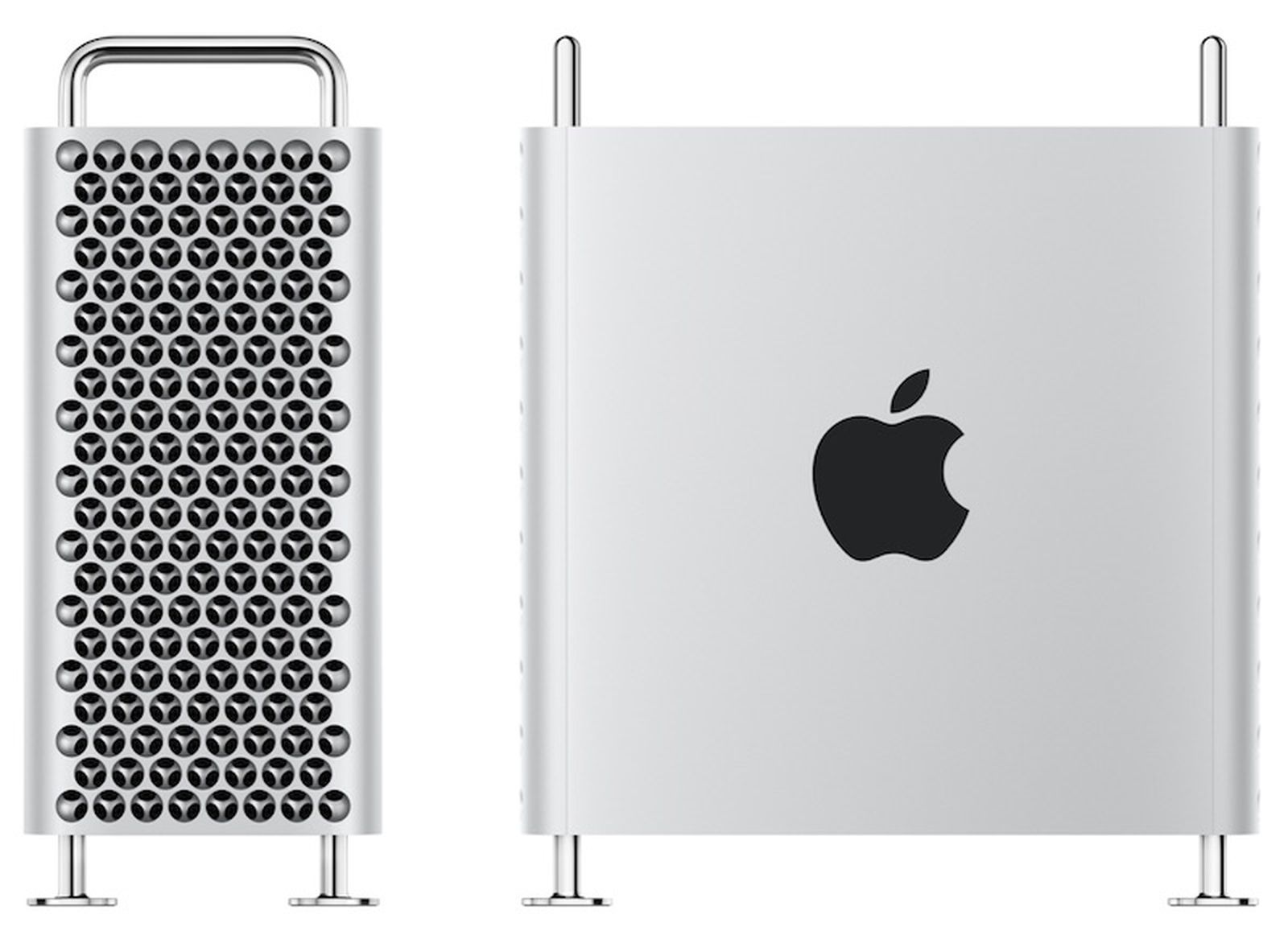
Apple Had M1 Mac Pro Ready to Ship Months Ago, Mac Mini Redesign Unlikely
Apple had a Mac Pro featuring the M1 Apple silicon chip ready to ship and launch to customers "months ago," but has ultimately decided to wait for the "M2 Extreme" Mac Pro later this year, Bloomberg's Mark Gurman has revealed. In an interview with YouTuber Max Tech, Gurman said that Apple likely...
www.macrumors.com
I'm a bit dubious there every was a M3 "extreme" at all. ( especially if there was an M1 generation one that imploded also. ). M3 gen was the bumpy ride onto TSMC N3B. There was enough drama with the fab process itself. Putting an "Extreme" package complexity into the mix seems like a foolhardy risky path. It also appeared that M3 Max for laptops was decoupled from. M3 with Fusion for Ultra ( since appeared so far apart. )
So maybe M3 Extreme is the 'new information'. (Maybe the original plan was a M1 extreme and M3 extreme. But gen 2 and gen 3 together doesn't smell right at all. Ultra on every generation barely makes sense. Extreme even less so. )
deconstruct60
macrumors G5
John Siracusa — sort of the chronicler of the first fifteen or so releases of MacOS X — regularly makes the case that Apple should pursue these “Extreme” chips for the same reason that automobile manufacturers release “supercars.”
The same automobile manufacturers that periodically need goverment driven bailouts and sweetheart deals to stay afloat. Apple Go down that path???
Also what’s the point in even being a trillion dollar company if you can’t be a little indulgent once in a while?
Apple has no where near a trillion dollars. Apple stockholders, not the company, have something close to a trillion.
Apple has about $64B in cash and about $85B in debt and a operating cash flow of $140B . At best, an order of magnitude off of a trillion.
Unregistered 4U
macrumors G5
Well, there’s no Extreme for one, that was made up by folks that assumed Apple was working on some 400W freezer cooled demon named “Extreme” because other chipmakers are doing the same. I’ve always thought that everything in a generation will be based on roughly the same single core performance and will differ just by how many cores, how much storage, how much RAM and how many ports. Intel and AMD have to battle over the FASTEST PC. Anything Apple ships that’s the fastest will always be the fastest Mac. 🙂Apple needs to come up with better terminology for these chips and more broadly its products. Is 'Ultra' considered better than 'Pro'? Is 'Extreme' better than 'Ultra'? What about 'Max'--does that apply to Apple Silicon chips or only to iPhones? I literally have no idea as these terms are arbitrary and incomparable.
Otherwise, just remember they’re arbitrary and just buy the one that does what you need it to do/has the ports you need. There’s a very good chance that whatever you get has more performance than you’ll need.
Unregistered 4U
macrumors G5
So, either the company that is currently shipping some of the most performant and efficient chips available shot themselves in the foot OR Gurman is making it up. And remember that Gurman knows Apple will never say, “Nope, that’s not what we were doing, that was what we leaked to ensure new members of the team wanted to be employed more than they wanted to be leakers.” So, I kinda lean towards the latter.To me it shows that Apple really shot themselves in the foot with their own silicon strategy. Not really thinking it through, by the looks of it. Or making assumptions that turned out to be simply wrong.
vantelimus
macrumors 65816
Also what’s the point in even being a trillion dollar company if you can’t be a little indulgent once in a while?
The point in being a trillion-dollar company is to return value to the shareholder. So, if all the private equity, mutual funds, and managed retirement accounts which own Apple want it to be indulgent, then it should happen. Hint: It'll never happen with the current set of owners.
Last edited:
Unregistered 4U
macrumors G5
People in general are more enamored with cellular phones, though. There was a time in the past when folks wanted a powerful computer, but the vast majority simply aren’t interested in something that will sit on a desk or not be used in as many places as their phone. They’re FAR more likely to see a folding phone as aspirational, then buy the base model than they are to care at all about a computer of any kind. The market has moved on even if Siracusa hasn’t. 🙂John Siracusa — sort of the chronicler of the first fifteen or so releases of MacOS X — regularly makes the case that Apple should pursue these “Extreme” chips for the same reason that automobile manufacturers release “supercars.”
Like, yeah, obviously (almost) nobody needs them, (almost) nobody can afford them, but the whole concept is just very glamorous and sexy and it’s fun to take a shot across the bow of the rest of the industry. “Here, this: this is the best of the best. You can’t afford it, but it exists. You can buy a poster and dream about it. NASA and Pixar each have one and their engineers fight over time on them.”
One could argue that Apple makes the best bang-for-the-buck computers (I do), and the best computers for most people (same), but nobody can argue that they make the fastest computers because nVidia GPUs still exist. An M5 Extreme would make that statement.
Also what’s the point in even being a trillion dollar company if you can’t be a little indulgent once in a while?