

Become a MacRumors Supporter for $50/year with no ads, ability to filter front page stories, and private forums.

MacRumors

macrumors bot
Original poster


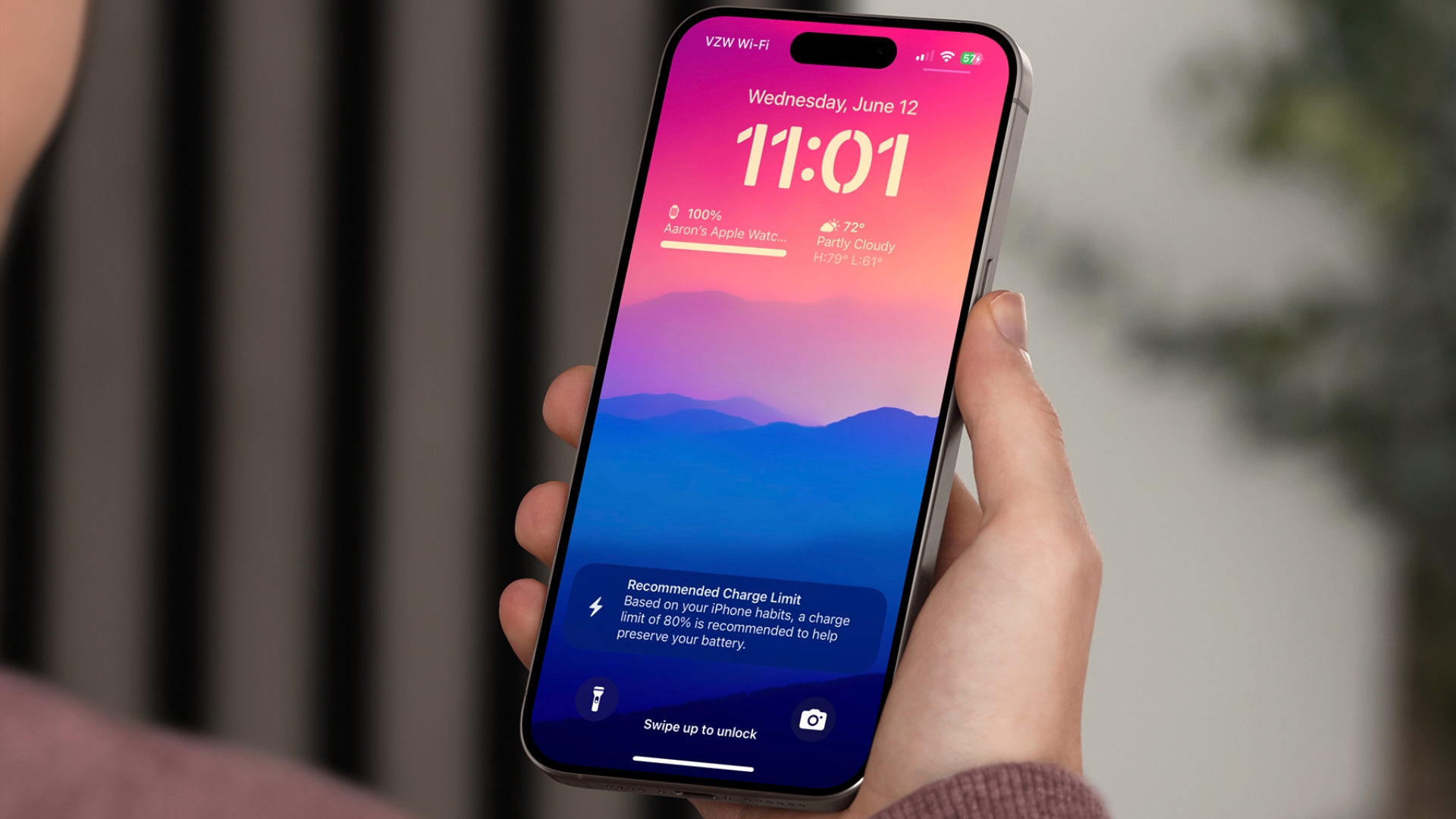
On iPhone 15 models, iOS 18 will recommend that users set a particular charging limit for their device based on their recent usage habits, with the aim of potentially improving their iPhone battery's lifespan by reducing the time that the battery is fully charged.
iphone-battery-charge-limit-ios-18.jpg

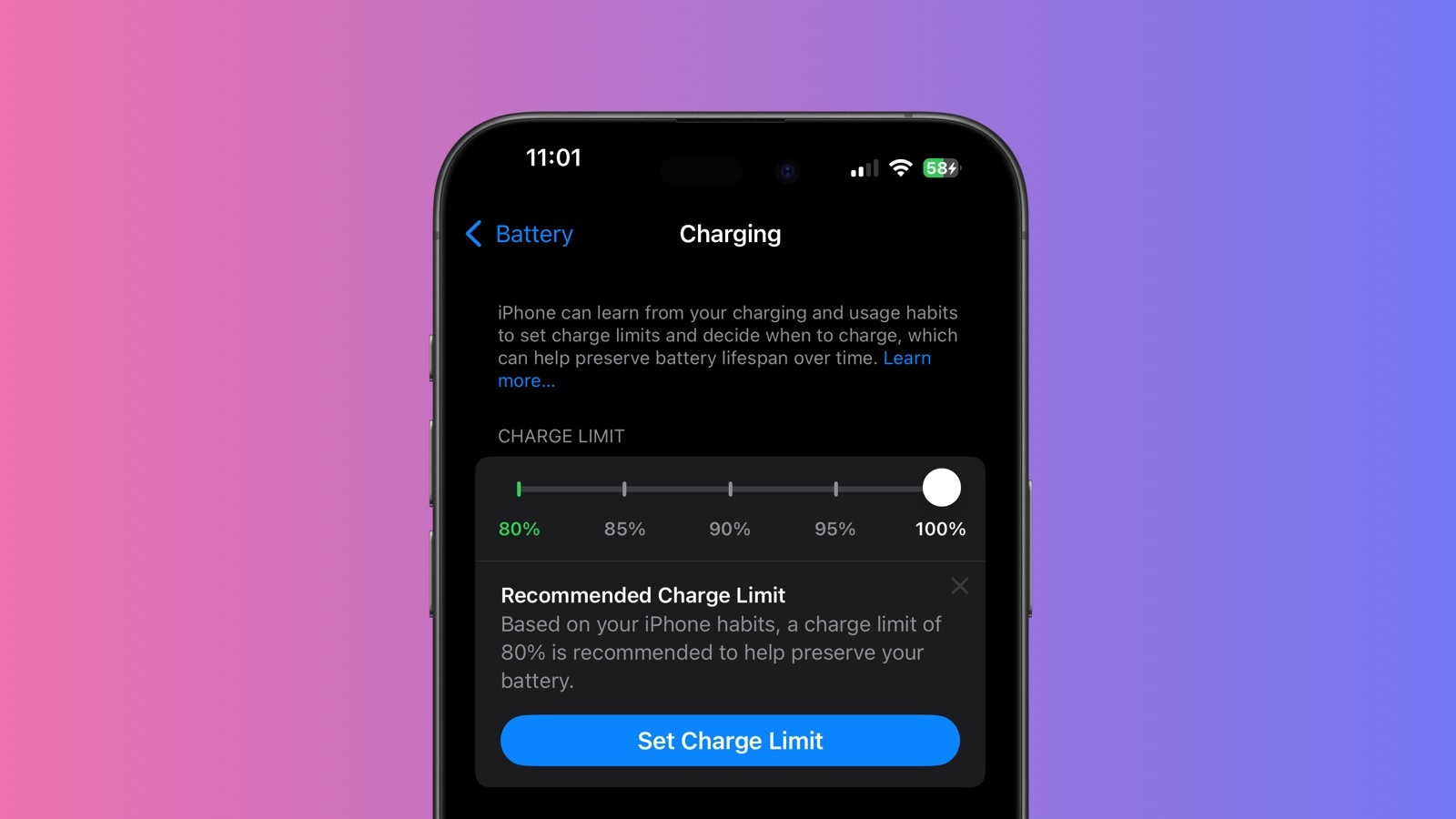
All four iPhone 15 models feature a setting that prevents the devices from charging beyond 80% while toggled on, and iOS 18 expands the feature by adding new 85%, 90%, and 95% charging limit options. With the new limit options, iOS 18 now takes a proactive approach to improving battery longevity by recommending a specific charging limit to users via a notification.

The recommendation also appears in the Settings app under Battery → Charging. The charging limit feature remains exclusive to the iPhone 15 lineup on the first iOS 18 beta, with the option not found on the iPhone 14 Pro or older.
ios-18-recommended-charge-limit.jpg

In a related change, anecdotal reports suggest that iOS 18 could be recalibrating some devices' maximum battery capacity percentage. In Settings ➝ Battery ➝ Battery Health, "Maximum Capacity" is a measure of battery capacity relative to when the device was new. Lower capacity can result in fewer hours of usage between charges.
The first iOS 18 beta is available for Apple Developer Program members, and a public beta will follow in July. After beta testing is complete, the update should be widely released to all users with an iPhone XS or newer in September.

Article Link: iOS 18 Actively Recommends Charging Limit Based on iPhone 15 Usage
 
Last edited:
This is looking more and more like something in the hardware of the iPhone 15 models that allows the charging limits as well as this new feature. Maybe something controlling the USB C port or the battery controller itself?
It’s hardware magic. It cannot be a business decision.
 
The next level is to set charging limits based on time of day or type of charger. For example, when charging overnight using my 12W charger and cable, I want the limit to be 90%. When charging anytime of day in my car on the Magsafe, I want the limit to be 80%. Charging using a high-speed charger between 3pm and 11pm should have no limit.
 
I do the 80/20 thing and rest
Of family doesn’t and battery health between us is 2% difference after 2 years. Not scientific but they use their phones more than I do.
 
you are telling me the iPhone 15 Plus is capable enough to know my charging habits but not powerful enough to remove an item from a photo with "AI"?
 
This is looking more and more like something in the hardware of the iPhone 15 models that allows the charging limits as well as this new feature. Maybe something controlling the USB C port or the battery controller itself?

All existing devices since iPhone 6S can do Optimized Battery Charging, which delays charging past 80%. All iPhones can pause charging when high temps are experienced. So we already know existing hardware is capable. This is confirmed by the fact jailbreaking can re-enable this artificially locked feature on iPhone 14 and older. This is a case of pure feature rationing.
 
If I charge my phone overnight and only sets to charge it to 80%, how is that supposed to be good for the battery if the phone is connected for hours? Will my phone actually be at 100% the next morning and only set to 80% by the software?
 
They’re getting to a point where people can hold onto their iPhones for five years. If I’m a shareholder, I’m asking what Tim is doing to replace the lost revenue from iPhone users who aren’t upgrading?
As a shareholder through Vanguard’s S&P 500 Index Fund, and as a citizen of planet earth, I’m ok with them making iPhones last longer to reduce their environmental impact. Plus you know, they have doubled the price of their phones since before the iPhone X and STILL price gouge on ram and SSD upgrades.
 
Register on MacRumors! This sidebar will go away, and you'll see fewer ads.