

Become a MacRumors Supporter for $50/year with no ads, ability to filter front page stories, and private forums.

MacRumors

macrumors bot
Original poster


Apple has started ramping up its supply chain for a new variable aperture camera system expected to debut in the iPhone 18 Pro and Pro Max this September, reports Korea's ETNews.
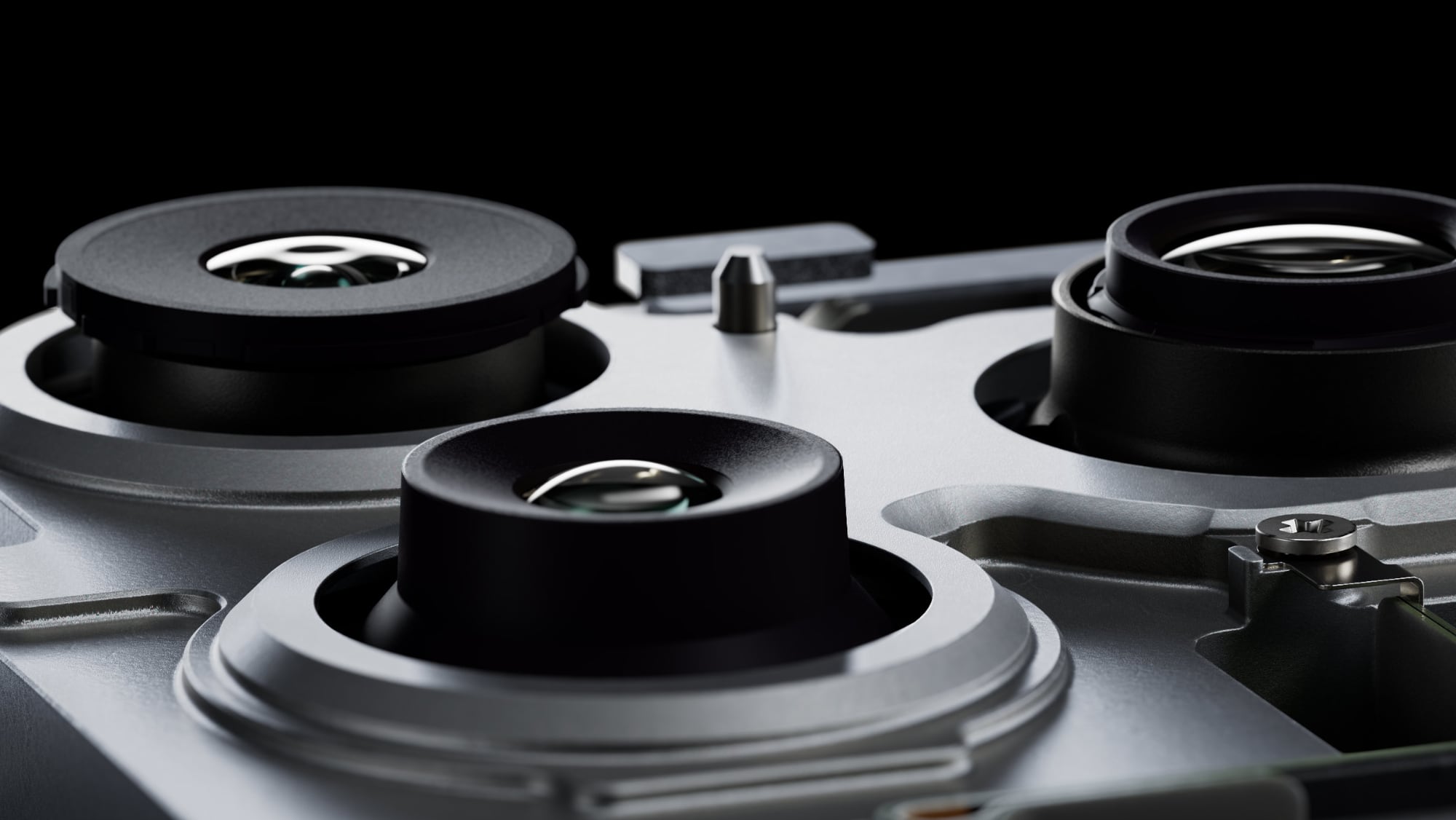
iphone-17-cameras-zoom.jpg

Apple has never implemented a variable aperture on an iPhone. From the iPhone 14 Pro through the iPhone 17 Pro, the main camera uses a fixed ƒ/1.78 aperture, meaning the lens remains fully open at all times when capturing images.

In contrast, a variable aperture lets the camera control how much light reaches the sensor. In low-light conditions, it opens to admit more light, while in bright scenes, it closes to avoid overexposure. This should also give users more control over depth of field.

In December 2024, Apple supply chain analyst Ming-Chi Kuo was first to say that that the main rear camera on both ‌iPhone 18 Pro‌ models will offer variable aperture. A report from October 2025 said Apple was moving ahead with plans to bring the technology to next-generation iPhones and was discussing components with suppliers.

According to industry sources cited by today's report, Chinese supplier Sunny Optical has already started producing the actuators that enable the aperture mechanism, while camera module assembly will follow in early summer. Apple's primary camera partner LG Innotek is said to be preparing to begin production around June or July, with dedicated equipment being installed at its Gumi facility in South Korea. Module makers such as Cowell are also expected to take part in the process.

LG Innotek is reportedly likely to take on a larger share of production for the main camera module due to the system's added complexity. A similar thing happened when Apple adopted a folded tetraprism zoom lens in the iPhone 15 Pro Max, where LG Innotek initially served as the sole supplier.
The ‌iPhone 18 Pro‌ and ‌iPhone 18 Pro‌ Max are expected to be announced alongside Apple's first foldable iPhone sometime around September.

Article Link: iPhone 18 Pro Variable Aperture Camera Enters Production
 
Last edited:
Sounds like a total gimmick to me. What kind of DOF difference are we even talking about with sensors this tiny?

> it closes to avoid overexposure

Not really an issue when you’ve got fully electronic shutters that can do absurdly short exposure times.
 
So, as a photography tech novice, genuine question, will this actually make any noticeable difference to the photos I take?
 
Sounds like a total gimmick to me. What kind of DOF difference are we even talking about with sensors this tiny?

> it closes to avoid overexposure

Not really an issue when you’ve got fully electronic shutters that can do absurdly short exposure times.
This is what I was thinking as well. Not sure there would be much of an improvement in DoF outside of close up or macro shots. The sensor size plus the lens-sensor distance is hard to overcome.
 
  • Like
Reactions: SFjohn and Biro
So, as a photography tech novice, genuine question, will this actually make any noticeable difference to the photos I take?
Unlikely! If you have a situation where there are 2 things you want to be in focus... 1. something very close to the camera and 2. something far in the distance; then in bright lighting this variable aperture would allow both to be more in focus than if you used a fixed, wide open aperture.

To be honest though I think focus stacking would be a smarter way to do this (I think Apple may already be doing this in the portrait mode?)
 
  • Like
Reactions: djviy
Using F stops to create a shallow depth of field is nice but it depends on there being enough available light to manage the trick in the first place, so, A – is this a faux variable aperture, just electronic trickery and B – will the point and click crowd just find the whole thing unnecessarily complicated
 
If I need a good camera, I will buy a camera. What most of ppl needs now is a stable friking OS. Personally, I can wait for the new phone but just give me stable and clear OS. What's the point of buying a new device when your keyboard is simply lagging… with broken glass skin. I swear to Hedgehog, if this state of iOS will not be fixed at least in iOS 28, I will switch to the Nothing Phone with closed eyes
 
Using F stops to create a shallow depth of field is nice but it depends on there being enough available light to manage the trick in the first place, so, A – is this a faux variable aperture, just electronic trickery and B – will the point and click crowd just find the whole thing unnecessarily complicated
No, the problem is that current cameras already shoot wide open (i.e. at max aperture), so you’re already getting the shallowest depth of field possible for the sensor size and lens.

Being able to change the aperture means you can now “stop down” (i.e. making the aperture smaller), which improves depth of field so that the background is less blurry.

The problem is (and someone else has already said this) is that current cameras have sensors so small that we almost have infinite depth of field already. The only time we don’t is for macro or near-macro photography, where we often get background blur.
 
I could potentially see some benefit for video supporting 180-degree shutter (2x video FPS) for smoother motion. This could be done by default automatically. Apple could also use multiple shots at different DOF for macro shots to determine more realistic additional blurring of out of focus areas.

I would personally stop down the lens in bright light as generally lenses get sharper with better contrast, especially towards the outer 1/3 of the image. But I realize this is not something others would care about, but it could provide a noticeable improvement to images taken with the ultra-wide lens.
 
Last edited:
  • Like
Reactions: Jensend
I also thought the variable aperture is completely useless for depth of field in photography, cause the microscopic lenses and sensors already picture in focus from here to South Africa.

But in another thread I learned, that for capturing video [edit] in very bright light conditions [/edit] it is advantageous to close down the aperture to get longer exposure times per picture frame and thereby introducing motion blur for the cinematic effect. That's the only reason I can imagine, where closing down the aperture is advantageous.
 
Last edited:
You know you can simply type that on ChatGPT right?
I did look into this prior to posting and it’s ambiguous as some work through digital manipulation rather than moving parts. I also thought isn’t a motor at risk of failing too easily. Anyway thanks for taking the time to post your reply
 
close down the aperture to get longer exposure times per picture frame and thereby introducing motion blur for the cinematic effect. That's the only reason I can imagine, where closing down the aperture is advantageous.
Yeah, you're right, that's the only plausible explanation I can think of too. Cramming a variable ND in there instead would probably be its own headache, rotating polarizer stack, added thickness, all that.

Niche feature either way, but probably a worthy addition for anyone shooting manual video on their phone (not me).
 
Sounds like a total gimmick to me. What kind of DOF difference are we even talking about with sensors this tiny?

> it closes to avoid overexposure

Not really an issue when you’ve got fully electronic shutters that can do absurdly short exposure times.
 
Last edited:
Yeah, you're right, that's the only plausible explanation I can think of too. Cramming a variable ND in there instead would probably be its own headache, rotating polarizer stack, added thickness, all that.

Niche feature either way, but probably a worthy addition for anyone shooting manual video on their phone (not me).
 
Last edited:
  • Like
Reactions: slatina
Register on MacRumors! This sidebar will go away, and you'll see fewer ads.