Quite possibly well north of that. The Mac Pro with 28 core Xeons and 1.5TB of RAM was around $60k. To be fair, it also had some beefy graphics cards but still.The men will be separated from the boys when the M5 Ultra price is announced for it with max memory and Apple storage.
My military discounted price for the maxed out M3 Ultra is $12,689 before taxes and Apple Care.
Could be closer to $20k. 😱

Got a tip for us?
Let us know
Become a MacRumors Supporter for $50/year with no ads, ability to filter front page stories, and private forums.
M5 Ultra Chip Coming to Mac Studio in 2026
- Thread starter MacRumors
- Start date
- Sort by reaction score
You are using an out of date browser. It may not display this or other websites correctly.
You should upgrade or use an alternative browser.
You should upgrade or use an alternative browser.

Spock
Contributor
I am not questioning the usefulness of the Mac Pro and the reasons it exists. I question why Apple continues to sell a 3 year old computer for $7k.People buy the Mac Pro over the Mac Studio when they need PCI slots for something like Fiber Channel networking.
There are studios that keep all their media on a Fiber Channel network.
I think there are other specialist uses for PCI.

JSRinUK
macrumors 6502a
I think you’re right. I have 128GB now. It’d need to be at least 256GB for under £4,000 for me to even look at it (even if it’s M5 Max instead of Ultra), but I’m honestly not expecting to upgrade for a minimum of three years.The base M5 Ultra might be that.
1TB will be at least £10,000. Probably 12,000 or so.
It’ll be interesting to watch.
Black Diesel
macrumors 6502
Where the hell are the new monitors? How about an updated 27" or 32" studio display already? We have numerous options for computers, but only one old ASD option for a display unless you are forking out for the 32" 6k. Come on Apple...bring it already.

BenRacicot
macrumors member
are we sure about this? I mean in name only or will it actually have that interposer?
This is unexpected and no previous rumors predicted this right?
But I thought the rumors and M5 did not have any interconnect.
If this is true then I guess that’s why it was “late”.
This is unexpected and no previous rumors predicted this right?
But I thought the rumors and M5 did not have any interconnect.
If this is true then I guess that’s why it was “late”.
NeonNights
macrumors 65816
That used to be the standard for decades but nowadays you see "in-between" capacities, such as 12GB RAM modules or 48GB sticks instead of the 8, 16, 32, 64 doubling. Even the M3 had 18/36GB memory configurations and M4 has 16/24GB options. All to say 768GB max RAM capacity is possible for the next Ultra chip.Usually memory size increases by a power of two. That means doubling to 1 TB of memory

Frantisekj
macrumors 65816
Is there chance that Apple could offer AI accelerator cards with AI cpu they develop for own AI servers? Or anything like was Afterburner card? It would not have the same access to Unified memory as CPU/GPU, I know....Sadly the Mac Pro is not a priority for Apple, and now that they’re all-in on integrated GPUs and memory, I don’t think expandability or modularity are either.


keksikuningas
macrumors 6502
just another M5 Max / Ultra on a bespoke card with a MPX connector maybe?Is there chance that Apple could offer AI accelerator cards with AI cpu they develop for own AI servers? Or anything like was Afterburner card? It would not have the same access to Unified memory as CPU/GPU, I know....

Rob__Mac
macrumors regular
The way Nvidia's GPU works requires that much power, but Apple Silicon is not the same beast, I don't think?The 5090 is a 600 W board. I don't think that kind of performance is going to fit in a studio. I don't think the market is big enough for a CPU dedicated solely to the Mac Pro.
Even the infamously power hungry dual G5 when fully loaded pulled less than than just the 5090.

Antony Newman
macrumors member
[Edit : The peak wattage used by the M3 Ultra was not 275w : It has been been reported that is more like 140-150watts - even though the power supply was updated to supply 480W of system power.
Some good comparisons of performance here : https://hostbor.com/mac-studio-m3-ultra-tested/ ]
If Apple’s M5’s (CPU and GPU unified architecture) performance per watt eclipses the Nvidia 5090 (plug in) GPU - is it only a matter of time before we see Apple Ultras overtake the single instance Nvidia GPU cards?
If the 275w for the M3 Ultra was used to power an M5 Ultra - it might still be 25-50% slower than a 575w Nvidia 5090.
If however, Apple’s M5 vapour chamber can keep the chip 5°C cooler - Apple has considerable headroom to increase the SoC power for the M5 Ultra.
Even if the M5 doesn’t overtake the 5090 - power lost to higher bandwidth communication, and higher CPU to GPU latency of plug in GPUs could be their achilles heel in the coming years unless there is a silicon photonic evolution.
Some good comparisons of performance here : https://hostbor.com/mac-studio-m3-ultra-tested/ ]
If Apple’s M5’s (CPU and GPU unified architecture) performance per watt eclipses the Nvidia 5090 (plug in) GPU - is it only a matter of time before we see Apple Ultras overtake the single instance Nvidia GPU cards?
If the 275w for the M3 Ultra was used to power an M5 Ultra - it might still be 25-50% slower than a 575w Nvidia 5090.
If however, Apple’s M5 vapour chamber can keep the chip 5°C cooler - Apple has considerable headroom to increase the SoC power for the M5 Ultra.
Even if the M5 doesn’t overtake the 5090 - power lost to higher bandwidth communication, and higher CPU to GPU latency of plug in GPUs could be their achilles heel in the coming years unless there is a silicon photonic evolution.
Last edited:

Dirk Pieters
macrumors 6502a
Impressive pieces of equipment. Sometimes I play with the configurator and my finger hovers over the mouse button.
But then I realise I can get my work done with a 15" Air.
But then I realise I can get my work done with a 15" Air.

tenthousandthings
Contributor
The names make it confusing but it is pretty simple. There are two tiers of Apple Silicon. They share core technologies in each generation but they are distinct from one another:are we sure about this? I mean in name only or will it actually have that interposer?
This is unexpected and no previous rumors predicted this right?
But I thought the rumors and M5 did not have any interconnect.
If this is true then I guess that’s why it was “late”.
[1] iPhone/iPad/iMac/MacBook tier: A14/M1, A15/M2, A16/A17 Pro/M3, A18/A18 Pro/M4, A19/A19 Pro/M5
The history of this core tier runs back to the A9/A9X in 2015 (the first iPad Pro and the first consumer products to use TSMC’s FinFET architecture.) Let’s call it the “Core” tier.
[2] MacBook Pro/Mac Studio/Mac Pro tier: M1 Pro/Max/Ultra, M2 Pro/Max/Ultra, M3 Pro/Max/Ultra, M4 Pro/Max, M5 Pro/Max/Ultra (expected)
This history of this tier begins with the M1 Pro/Max in October 2021, a year after the A14/M1. Let’s call it the “Max” tier.
All of the rumors about changes in M5 are focused on the Max tier. This has now been confirmed by the M5 itself. It follows precedent and fits neatly on the Core tier along with the A19 and A19 Pro. Think of the M5 as the “A19Z” (echoing the A12Z, the first Apple Silicon to run macOS in 2020) if that helps clarify what I’m talking about.
The Max tier is different. It uses the same core technologies found in the Core tier, but it uses a different, more “advanced” architectural framework. This difference is thought to be even more apparent in M5 Pro/Max/Ultra, which is rumored to use what are commonly known as chiplets (or “integrated chips” in TSMC’s terminology).
I hope this helps. To answer your questions about the UltraFusion interconnect and interposer, TSMC goes out of its way to state repeatedly that this type of “advanced packaging” is compatible with integrated chips, so there is every reason to expect M5 Ultra will again utilize UltraFusion, but no, we are not sure about this. It’s possible Apple will adopt a different approach to the M5 Ultra.
Dirk Pieters
macrumors 6502a
People might think the Pro is dead if Apple stops selling the current one. As things are now, there's still the possibility of an upgrade.I am not questioning the usefulness of the Mac Pro and the reasons it exists. I question why Apple continues to sell a 3 year old computer for $7k.
I would assume that Apple has sales numbers for that machine and know what they're doing.

CWallace
macrumors G5
Where the hell are the new monitors? How about an updated 27" or 32" studio display already? We have numerous options for computers, but only one old ASD option for a display unless you are forking out for the 32" 6k. Come on Apple...bring it already.
The first Apple Studio Display launched beside the first Mac Studio so I could see Apple announcing the replacement model with the M5 Mac Studio.
If Apple intends to update the Mac Pro with an M5-series SoC, then updating the Apple Pro Display XDR alongside it makes sense, as well. If the Mac Pro is just going to be allowed to fade away, then the new PDXDR can be launched with the ASD and Mac Studio.
tenthousandthings
Contributor
My belief is that that M3 Ultra went into production only because it was the most cost-efficient way to update the M2 Ultra Mac Studio, which couldn’t wait. M3 Ultra was built for that purpose.People might think the Pro is dead if Apple stops selling the current one. As things are now, there's still the possibility of an upgrade.
I would assume that Apple has sales numbers for that machine and know what they're doing.
M5 Ultra is the true “next generation” (after M2 Ultra) of the high-end silicon used in the Mac Pro and Apple’s custom Private Cloud Compute servers. We know for a fact that Apple is still producing M2 Ultra for Mac Pro and PCC hardware today. So most likely the Mac Pro isn’t dead, it’s just in limbo, awaiting rebirth.
tenthousandthings
Contributor
I’m leaning toward two 27" 5K being introduced in January or March, a Studio Display refresh and a Studio Display Pro (with a mini-LED backlight). I think it’s really strange that LG did not come out with a 5K “UltraFine evo” to go alongside the 6K they just released.The first Apple Studio Display launched beside the first Mac Studio so I could see Apple announcing the replacement model with the M5 Mac Studio.
If Apple intends to update the Mac Pro with an M5-series SoC, then updating the Apple Pro Display XDR alongside it makes sense, as well. If the Mac Pro is just going to be allowed to fade away, then the new PDXDR can be launched with the ASD and Mac Studio.
With regard to a potential 32" Pro Display update, I don’t know. I think the technology (especially with regard to contrast and color) is in flux as OLED matures. It’s really hard to say.
About time. This is what I am waiting for. Want to start running models locally the more power I have the better.
Apple doesn't release an "Ultra" variant for every Apple silicon chip, but the company is planning to debut an M5 Ultra chip in 2026, reports Bloomberg.
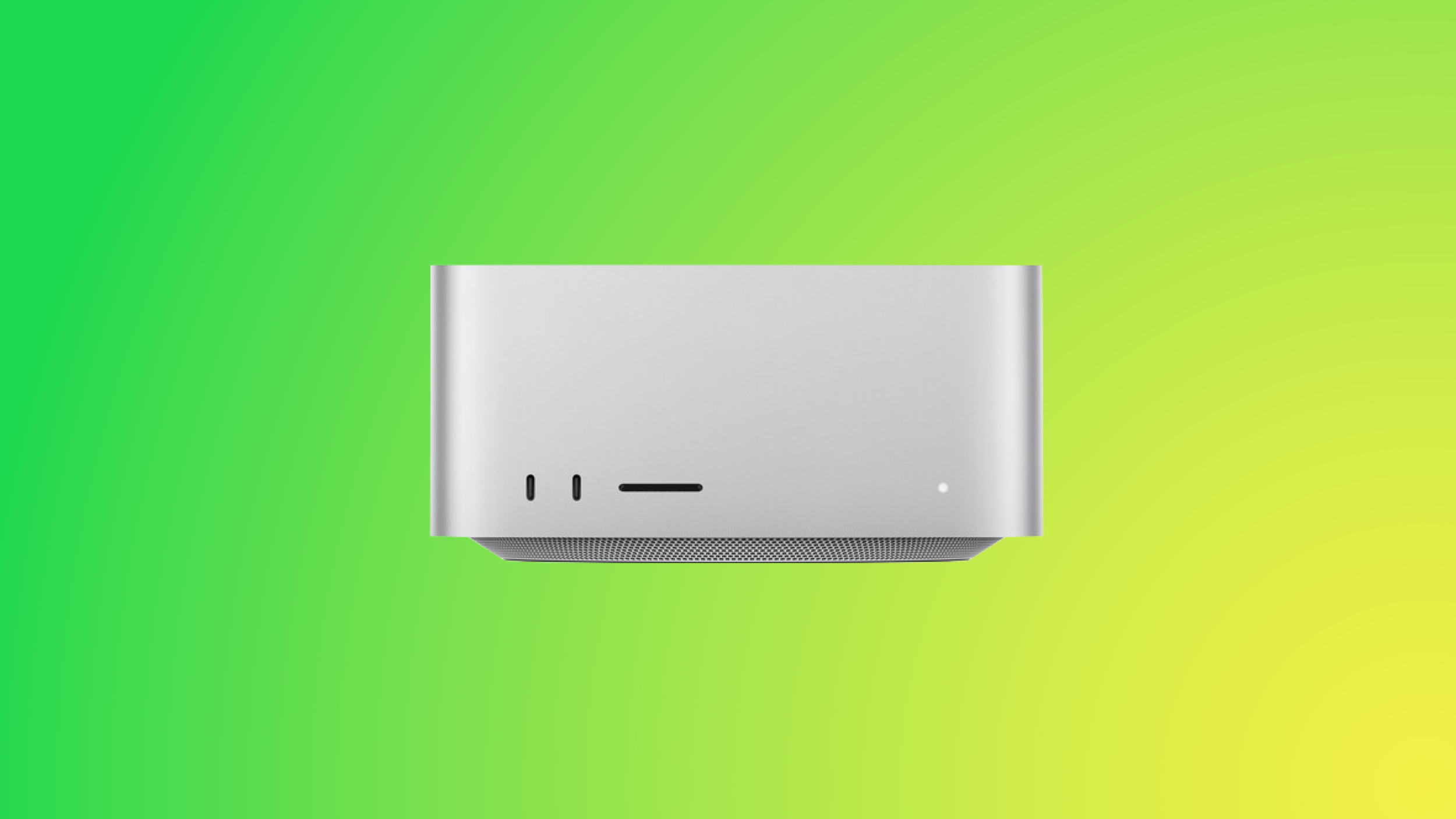
The M5 Ultra is slated for the Mac Studio, and it's also likely that Apple will use it in a Mac Pro update. There's no word on when the M5 Ultra might come out, but historically, Ultra chips have followed the Pro and Max chip variants.
Apple already debuted the M5 chip in the MacBook Pro, but we'll be waiting until early 2026 for the M5 Pro and the M5 Max. The M5 Ultra will likely come after that, perhaps in June or even September 2026.
Earlier this year, Apple decided to launch an updated Mac Studio with M4 Max and M3 Ultra chip options, making it clear there was no M4 Ultra. Ultra chips are two Max chips fused together with "UltraFusion" technology, but the M4 Max chip does not have the UltraFusion connector needed for an M4 Ultra chip.
Apple also made it clear that it did not plan to create a high-end Ultra chip for every M-series generation.
There are no other rumors of new features for the Mac Studio, so the M5 Ultra update might be focused on internal improvements. Apple is rumored to be developing a pair of new displays, and at least one of those could launch alongside the Mac Studio in 2026.
Article Link: M5 Ultra Chip Coming to Mac Studio in 2026


BOOMBA
macrumors 6502
I'm still on an M1 Ultra. how do you rate the performance difference between your M1 and M4? I'm trying to guess what a render time savings an M5 Ultra from M1 Ultra might be....I own two studio's, an M1 and M4. Best computers I have ever owned by far. I have stayed away from the glued together Ultras's are they have been hugely disappointing and expensive chips that basically become obsolete instantly with the Max Chips being so good for far less and the Ultras's incapable of scaling the double Max hack. I have a feeing this time may be different with the new packaging technology and as the M5's being so good. I may actually jump to the Ultra this time around as it seem highly probable the Ultra will finally reach Nvidia level GPU performance. And if that happens I will never own a Windows machine again.

chucker23n1
macrumors G3
If the 275w for the M3 Ultra
Probably closer to 140W.

rp2011
macrumors 68040
The M1 is amazing but with the M4 Max I can have it running full time generating test renders before sending them to the Windows 5080. I am hoping the M5 Ultra can start closing the gap.I'm still on an M1 Ultra. how do you rate the performance difference between your M1 and M4? I'm trying to guess what a render time savings an M5 Ultra from M1 Ultra might be....
I get how it’s not a priority from a business perspective — the market for such a machine is small. But the development cost for this can’t be all that significant for a company like Apple, and the Mac Pro serves a purpose. eGPU support would be appealing to users of some of their other models, too.Sadly the Mac Pro is not a priority for Apple, and now that they’re all-in on integrated GPUs and memory, I don’t think expandability or modularity are either.
chucker23n1
macrumors G3
But the development cost for this can’t be all that significant for a company like Apple, and the Mac Pro serves a purpose.
It’s significant enough.
Right now, all Apple Silicon devices, from as small as the Watch to as big as the Mac Studio (not counting the Mac Pro here for a second), can share the same traits: an SoC with various heterogenous CPU, GPU, NPU cores, memory packages directly connected, SSD controller built in if there is one, and so on, and critically,
- no additional memory, and
- no additional GPU.
This strategy serves Apple well because it doesn't just lead to fantastically high bandwidth/low latency, but also quite frankly production benefits. The iPhone's e-cores can scale up to the M series on the iPad and Mac, including eventually the M Ultra, just at a higher clock than on the A-series. And they can scale down to the S series on the Watch.
That goes for the software side as well. Once macOS no longer supports x86, which isn't long away any more, all their OSes can presume there's one GPU, there's integrated, Apple-controlled RAM, and so forth.
And then there's the Mac Pro where some of that is a downside. No upgrading the CPU, GPU and NPU cores. No upgrading the SSD controller to a faster spec. No adding additional memory. No adding an additional GPU. Or two. Or four. And as you point out, yeah, on multiple Macs, perhaps even on iPads (heck, possibly even on the Vision Pro), eGPU could be beneficial.
But is there cost to it? Absolutely. Not just in designing such an architecture, but also in retaining the complexity it implies, for many OS releases to come.
tenthousandthings
Contributor
The new Apple product that may be shaping this is Private Cloud Compute.It’s significant enough.
Right now, all Apple Silicon devices, from as small as the Watch to as big as the Mac Studio (not counting the Mac Pro here for a second), can share the same traits: an SoC with various heterogenous CPU, GPU, NPU cores, memory packages directly connected, SSD controller built in if there is one, and so on, and critically,
Even things like the SSD aren't managed through PCIe but through an Apple-specific interface. PCIe is relegated to more specific purposes such as Thunderbolt.
- no additional memory, and
- no additional GPU.
This strategy serves Apple well because it doesn't just lead to fantastically high bandwidth/low latency, but also quite frankly production benefits. The iPhone's e-cores can scale up to the M series on the iPad and Mac, including eventually the M Ultra, just at a higher clock than on the A-series. And they can scale down to the S series on the Watch.
That goes for the software side as well. Once macOS no longer supports x86, which isn't long away any more, all their OSes can presume there's one GPU, there's integrated, Apple-controlled RAM, and so forth.
And then there's the Mac Pro where some of that is a downside. No upgrading the CPU, GPU and NPU cores. No upgrading the SSD controller to a faster spec. No adding additional memory. No adding an additional GPU. Or two. Or four. And as you point out, yeah, on multiple Macs, perhaps even on iPads (heck, possibly even on the Vision Pro), eGPU could be beneficial.
But is there cost to it? Absolutely. Not just in designing such an architecture, but also in retaining the complexity it implies, for many OS releases to come.
M5 Ultra will be the first generation to factor that product architecture into the design from the beginning. That could, in turn, give the Mac Pro a distinct identity, beyond the current “Mac Studio with SSD and PCIe slots” — we’ll see.
I guess what I’m saying is I think if Apple develops an eGPU, then it will be derived from something designed for PCC and/or Mac Pro.
At minimum, I’d like to see an “Extreme” variant of their chip for the Mac Pro.It’s significant enough.
Right now, all Apple Silicon devices, from as small as the Watch to as big as the Mac Studio (not counting the Mac Pro here for a second), can share the same traits: an SoC with various heterogenous CPU, GPU, NPU cores, memory packages directly connected, SSD controller built in if there is one, and so on, and critically,
Even things like the SSD aren't managed through PCIe but through an Apple-specific interface. PCIe is relegated to more specific purposes such as Thunderbolt.
- no additional memory, and
- no additional GPU.
This strategy serves Apple well because it doesn't just lead to fantastically high bandwidth/low latency, but also quite frankly production benefits. The iPhone's e-cores can scale up to the M series on the iPad and Mac, including eventually the M Ultra, just at a higher clock than on the A-series. And they can scale down to the S series on the Watch.
That goes for the software side as well. Once macOS no longer supports x86, which isn't long away any more, all their OSes can presume there's one GPU, there's integrated, Apple-controlled RAM, and so forth.
And then there's the Mac Pro where some of that is a downside. No upgrading the CPU, GPU and NPU cores. No upgrading the SSD controller to a faster spec. No adding additional memory. No adding an additional GPU. Or two. Or four. And as you point out, yeah, on multiple Macs, perhaps even on iPads (heck, possibly even on the Vision Pro), eGPU could be beneficial.
But is there cost to it? Absolutely. Not just in designing such an architecture, but also in retaining the complexity it implies, for many OS releases to come.
I certainly understand that the added complexity is difficult and expensive to manage, but these flagship products serve a purpose, especially for certain buyers that have, historically, been very loyal to Apple since long before the cash cow that is the iPhone came along. Apple could treat the Mac Pro the way the Volkswagen Group treats development of the Bugatti lineup — a loss leader that attracts attention and spurs the development and testing of new, cutting edge technology. This sort of work would grant them supremacy in chips. There would be no advantage (except maybe cost) in choosing a machine with an AMD Threadripper over a Mac with the flagship chip — especially with the ARM versions of Windows and Linux that now exist. It’d be great if Apple could revive Bootcamp, too. I prefer macOS, but there are certain applications and certain tasks that still call for either Windows or Linux. I’d prefer to run it all on the same hardware.
CWallace
macrumors G5
Of course, Apple does not do "halo projects" that would lose them money. 😛
Speculation from, I believe Gurman, was that the "M1 Extreme" used two M1 Ultra / four M1 Max using dual Ultrafusion interposers but the yields were so miserable that it would have been a $10,000 BTO option.
Now with the new TSMC SoIC-mH packaging technology, this allows Apple to design SoCs with independent compute and graphics sections so this could allow Apple to scale both to extremely high core-counts while keeping yields high enough to not price them out of reach for almost anyone.
Speculation from, I believe Gurman, was that the "M1 Extreme" used two M1 Ultra / four M1 Max using dual Ultrafusion interposers but the yields were so miserable that it would have been a $10,000 BTO option.
Now with the new TSMC SoIC-mH packaging technology, this allows Apple to design SoCs with independent compute and graphics sections so this could allow Apple to scale both to extremely high core-counts while keeping yields high enough to not price them out of reach for almost anyone.