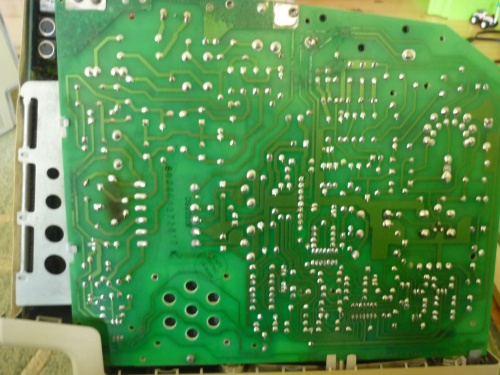
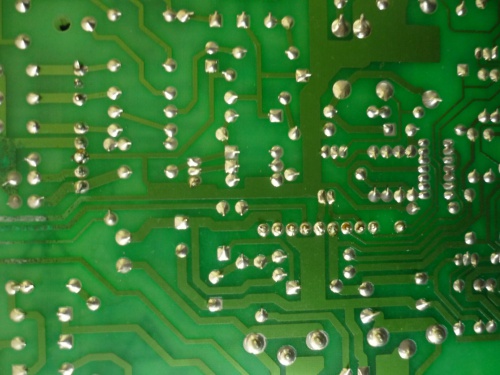
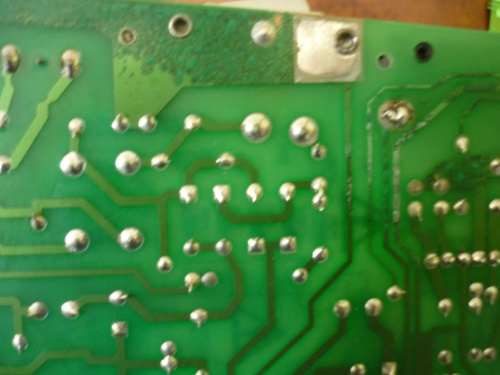
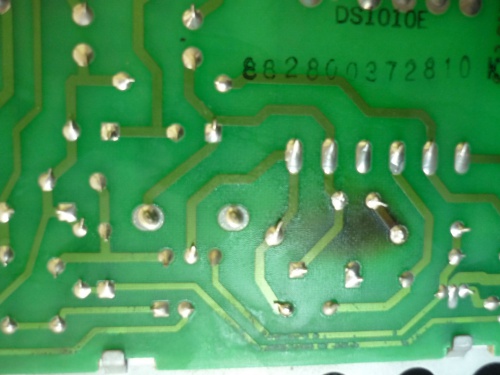
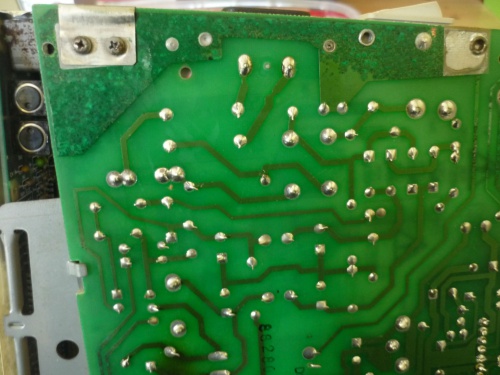
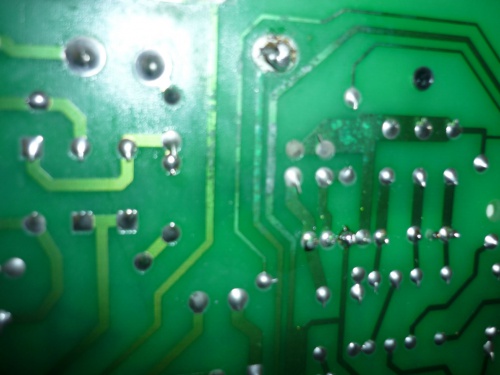
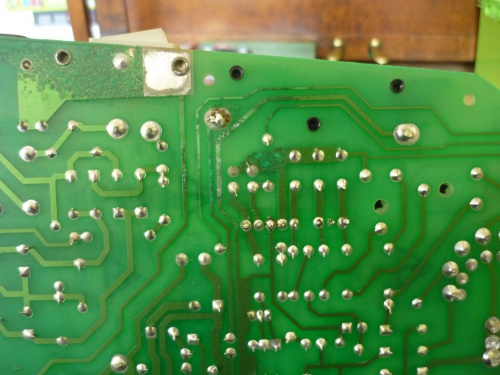
I'm afraid it doesn't look very good for this analog board. Everywhere on the tracks that you see dark spots (and clusters of spots), means that the copper tracks under the green lacquer are corroding. On thinner tracks, this can eventually etch a break in the track.
For longevity of this board, it needs some serious re-work, perhaps beyond your present skill level.
It would require removing the lacquer on affected copper, gently scraping back to nice shinny copper (rather than dull copper), probably soldering over the copper and even replacing the tracks with pieces of carefully shaped flat wire (often de-soldering braid works well). Also, other solder joints that are dull need to have all the solder removed, solder pads cleaned, the leads of the components cleaned and then resoldered. Finally, a new lacquer can be applied if desired.
It's very tedious work and over-heating tracks can cause bigger problems. Professional kits come with sections of track with solder pads that can be re-fitted.
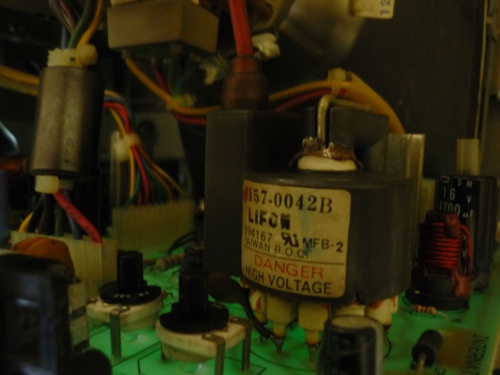
You may also need to pay careful attention to the trim-pots, as these are not terribly well sealed and could suffer oxidization, causing intermittent jitter.
The fault you originally had could be caused by corroded tracks, corrosion UNDER solder joints (impossible to see with the human eye) or oxidization in the trim-pots.
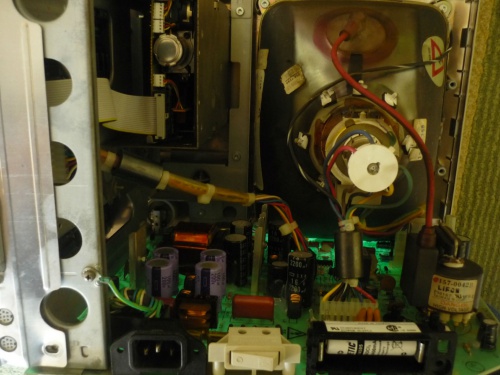
With this much corrosion, I wonder how the motherboard has fared.
Sorry to be the bearer of bad news, but I wouldn't like to give you false hopes.
Your soldering doesn't appear to have caused any shorts, but when resoldering, it's a good idea to either:
1. remove original solder and apply sufficient heat to the pad and component leg to allow new solder to flow over both ... or...
2. apply sufficient heat to re-flow (melt) the existing solder, and apply a small amount of new solder.
In your case, the first
is better, but you need better skills than a beginner to achieve it, and the use of de-soldering braid or a solder sucker.
With a board such as yours, often when removing the solder, you will see a dull copper color underneath. If that's the case, then the pad needs to be gently scraped back to bare copper. In other words, if you CAN'T remove the solder COMPLETELY, the new solder will 'take'. Conversely, dirty or oxidized copper will create a poor electrical join.
Sorry for the long-winded, bad news post.
🙁