
Got a tip for us?
Let us know
Become a MacRumors Supporter for $50/year with no ads, ability to filter front page stories, and private forums.
MacBook Pro to Receive 'Major Upgrade' by Early Next Year
- Thread starter MacRumors
- Start date
- Sort by reaction score
You are using an out of date browser. It may not display this or other websites correctly.
You should upgrade or use an alternative browser.
You should upgrade or use an alternative browser.
And this is why my grandfather's house never had air conditioning. He told me it was bad for the environment and just a fad. "They wouldn't put it in the Tribune if it weren't true."
Well your grandfather was right, still it is very useful for staying cool.

ajkoeltz
Contributor
I didn't go through and read all the comments so someone may have already said this but my hope is they put OLED in MacBook Pro's without touchscreen as well. Touchscreen would be "nice" but not something I've necessarily WANTED in my MacBook. Have a price point for the MacBook Ultra but also keep a price point for MacBook Pro's without the "Ultra" features, whatever those may be.
still need 5G modem in it to make me buy it, don't understand why apple can't include it
Apple supply chain analyst Ming-Chi Kuo today said the MacBook Pro will receive a "major upgrade" with an OLED display by early next year.
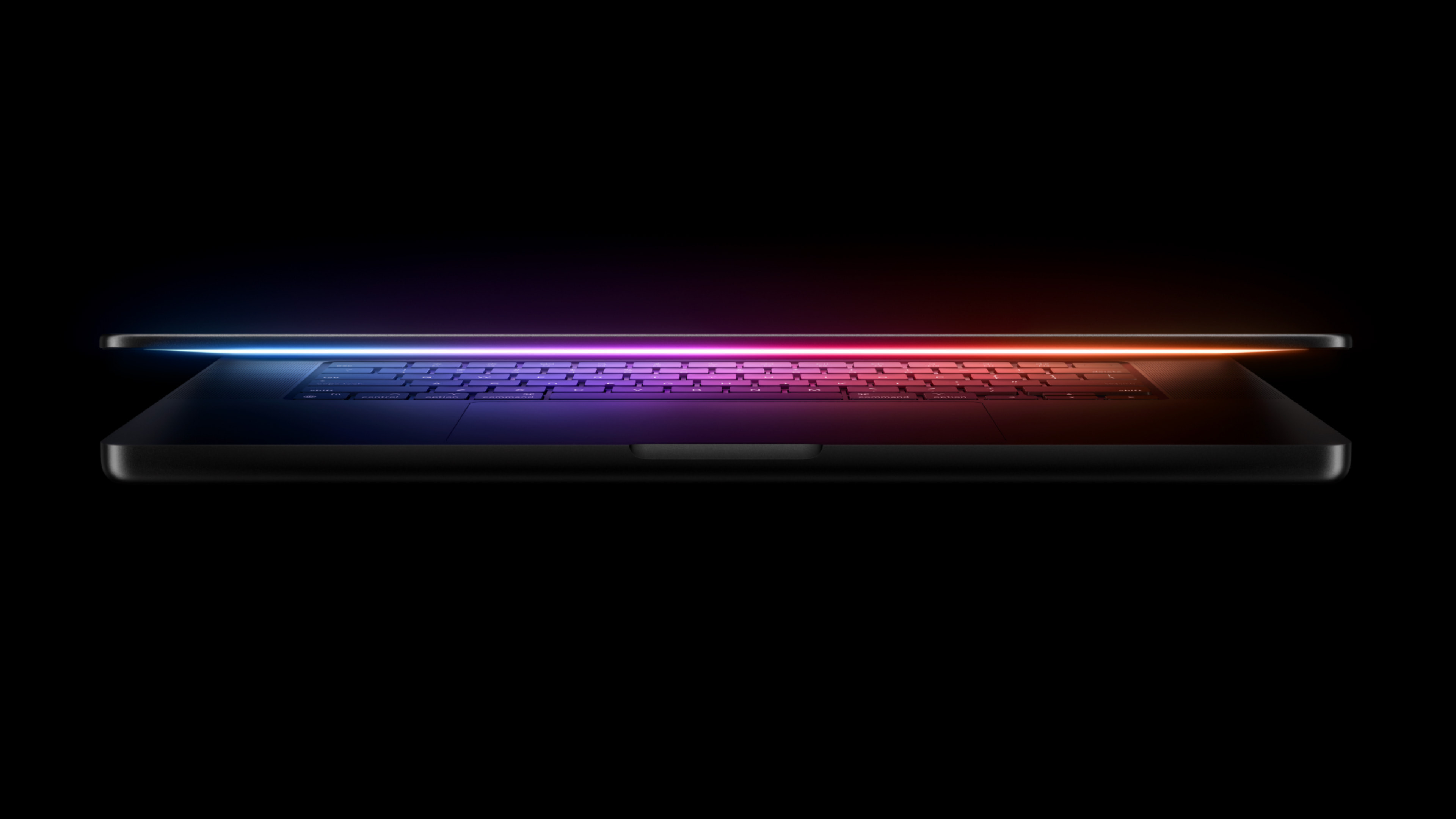
In a blog post, Kuo said the new MacBook Pro will be released between late 2026 and early 2027.
With an OLED display, the MacBook Pro would have better image quality compared to the current models with LCD displays and mini-LED backlighting. Advantages of OLED displays include more vivid colors, higher contrast ratio, and wider viewing angles, and they can be more power efficient depending on the content being displayed.
The next-generation MacBook Pro is expected to feature many other upgrades, including a thinner design, a touch screen, a Dynamic Island, and M6 Pro and M6 Max chips manufactured with TSMC's 2nm process. It has been rumored that Apple might even expand its C1X or C2 modem to the MacBook Pro for built-in cellular connectivity.
With all of these new features, higher prices are likely. For this reason, it was recently reported that the model with an OLED display might be a so-called "MacBook Ultra" that is positioned above the MacBook Pro in the lineup.
Kuo expects the MacBook Air to receive an OLED display as well, but not until 2028 or 2029.
Apple just released MacBook Pro models with M5 Pro and M5 Max chips, but if you are interested in bigger upgrades, it might be best to wait. The last MacBook Pro redesign occurred in 2021, so these moments do not come along too often.
Article Link: MacBook Pro to Receive 'Major Upgrade' by Early Next Year

MarkNewton2023
macrumors 6502a
Looking forward to it. The MacBook best upgrade ever! Patience is gold!
Apple supply chain analyst Ming-Chi Kuo today said the MacBook Pro will receive a "major upgrade" with an OLED display by early next year.
In a blog post, Kuo said the new MacBook Pro will be released between late 2026 and early 2027.
With an OLED display, the MacBook Pro would have better image quality compared to the current models with LCD displays and mini-LED backlighting. Advantages of OLED displays include more vivid colors, higher contrast ratio, and wider viewing angles, and they can be more power efficient depending on the content being displayed.
The next-generation MacBook Pro is expected to feature many other upgrades, including a thinner design, a touch screen, a Dynamic Island, and M6 Pro and M6 Max chips manufactured with TSMC's 2nm process. It has been rumored that Apple might even expand its C1X or C2 modem to the MacBook Pro for built-in cellular connectivity.
With all of these new features, higher prices are likely. For this reason, it was recently reported that the model with an OLED display might be a so-called "MacBook Ultra" that is positioned above the MacBook Pro in the lineup.
Kuo expects the MacBook Air to receive an OLED display as well, but not until 2028 or 2029.
Apple just released MacBook Pro models with M5 Pro and M5 Max chips, but if you are interested in bigger upgrades, it might be best to wait. The last MacBook Pro redesign occurred in 2021, so these moments do not come along too often.
Article Link: MacBook Pro to Receive 'Major Upgrade' by Early Next Year

Mrkevinfinnerty
macrumors 68040
Kuo expects the MacBook Air to receive an OLED display as well, but not until 2028 or 2029.
They are going to put the 120hz Mini LED on the Air in the meantime right? Imagine how tired the current Air display will be by 2029.
UK-MacAddict
macrumors 65816
The fact OLED hasn’t been standard in every single Mac for the last 5 years is a joke.
No, there isn’t a need for a “Macbook Ultra” tier just to include it at a higher price. Never heard such baloney in my life.
The only reason for the higher price is because Apple want it to be higher. Actual manufacturing costs probably increase a tiny portion since OLED has been around for years now,
No, there isn’t a need for a “Macbook Ultra” tier just to include it at a higher price. Never heard such baloney in my life.
The only reason for the higher price is because Apple want it to be higher. Actual manufacturing costs probably increase a tiny portion since OLED has been around for years now,
darngooddesign
macrumors Core
I’m going to go out on a limb and say that Tandem OLED is a lot more expensive than regular OLED.The fact OLED hasn’t been standard in every single Mac for the last 5 years is a joke.
No, there isn’t a need for a “Macbook Ultra” tier just to include it at a higher price. Never heard such baloney in my life.
The only reason for the higher price is because Apple want it to be higher. Actual manufacturing costs probably increase a tiny portion since OLED has been around for years now,


transpo1
macrumors 68000
Tim’s “There’s something for everyone” approach does wonders for us stockholdersIf this ends up being called Ultra, then we have 4 laptop lines, two (or more) of which come in two different sizes. I like choice, but this seems overly confusing.
transpo1
macrumors 68000
Apple having all the bugs worked out, that’s a good one! 🤣🤣Just hope the OS powering the new MBP will have all bugs worked out. Software is what's making me keep my M1Max and remain on Sequoia on sidelines for time being.

abowlby
macrumors 6502a
I enjoy my QD-OLED monitor. I suppose you can enjoy living in fear until Apple checks your closet for monsters. 🤷And I have read plenty of stories and seen photos of burn in still happening even on monitors with burn in protection.
TBH I'm more interested with LPDDR6
LPDDR5X vs. LPDDR6: Generational Efficiency & Power
If I were to wait for the targeted LPDDR6 device to replace my Current Fleet
LPDDR5X vs. LPDDR6: Generational Efficiency & Power
| Feature | Current (LPDDR5X) | 1st Gen LPDDR6 (M6/A20) | Change / Impact |
| Data Rate (Base) | 8.5 Gbps | 10.7 Gbps | +26% raw throughput |
| Max Data Rate | 9.6 Gbps | 14.4 Gbps | +50% ceiling for Ultra chips |
| Bus Width (per channel) | 16-bit | 24-bit | +50% more lanes per controller |
| Power Consumption | Baseline (100%) | ~80% (20% Reduction) | Significant thermal headroom |
| Performance per Watt | 1.0x | ~1.6x to 1.7x | Massive efficiency gain for AI/8K |
| Process Node | 10nm-class (1b) | 10nm-class (1c) | SK hynix's most advanced node |
If I were to wait for the targeted LPDDR6 device to replace my Current Fleet
| Device | Current Memory Type | Memory Bandwidth | Estimated Power (Memory Only) | Performance per Watt (Relative) |
| iPhone 16 Pro Max | LPDDR5X (8.5 Gbps) | ~68 GB/s | ~1.5W | 1.0x (Baseline) |
| iPhone 18 Pro Max | LPDDR6 (10.7 Gbps) | ~128 GB/s | ~1.2W | ~1.5x |
| --- | --- | --- | --- | --- |
| 2018 iPad Pro 11" | LPDDR4X (4.2 Gbps) | ~34 GB/s | ~2.5W | 0.2x |
| Future iPad Pro (M6) | LPDDR6 (14.4 Gbps) | ~230 GB/s | ~1.8W | ~1.8x |
| --- | --- | --- | --- | --- |
| 2018 MacBook Air | LPDDR3 (2.1 Gbps) | ~17 GB/s | ~2.0W | 0.1x |
| Future MB Air (M6) | LPDDR6 (10.7 Gbps) | ~171 GB/s | ~1.4W | ~2.1x |
| --- | --- | --- | --- | --- |
| 2019 MBP 16" (i7) | DDR4 (2.6 Gbps) | ~42.7 GB/s | ~5-8W | 0.05x |
| 2028 MBP 16" (M7 Max) | LPDDR6 (14.4 Gbps) | ~921 GB/s | ~3-4W | ~20x |
Last edited:


roklanhavok
macrumors regular
I wonder if there's even actual evidence of this aside from Apple will obviously use OLED displays at some point.

trusso
Suspended
Not sure if I’m supposed to be pleased or insulted, but… okay. 😕I legitimately appreciate how much this "minor" aesthetic matters to you. I have been raging against fingerprint prone materials on electronics for years. I would 100% be investing heavily in anti-fingerprint material science if I ran a tech company. One of many reasons I don't, but still.
And that MB Ultra better have 2 Max chips, otherwise this would be even “more” overly confusing …If this ends up being called Ultra, then we have 4 laptop lines, two (or more) of which come in two different sizes. I like choice, but this seems overly confusing.


conmee
macrumors 65816
Only one problem with the tests. They compared the M5 Max in a 14” MBP chassis to the M4 Max in a 16” MBP chassis. Without the additional thermal headroom of a 16” chassis (35% larger heatsink and larger fans), the M5 Max in this case is at a disadvantage vs the M4 Max. Not saying the results would be earth-shatteringly different, but the M5 Max would extend its performance lead over M4 Max by a few more percentage points in an apples to apples comparison.Slightly long post, but I think people should really wait for this new one, rather than buying a M5 Max MPB today. Notebookcheck says:
"Our initial tests for the new M5 Pro and M5 Max CPUs are mixed."
To me, the big news is the M6 Max chip will be manufactured with TSMC's 2nm process. The new gen iPhone 18 technology will make it to the Macs without a wait! Probably a big upgrade, as the new iPhone is supposed to be 15% faster and have more memory bandwidth.
Note the M5 Max is barely faster than the M4 Max when it comes to CPU.
We also know the current MBP chassis is inadequate for the M5 Max chip. This means significant throttling, leaving unused performance on the table.
"During [Notebookcheck] tests, we saw a maximum consumption of 75 Watts for the CPU, but neither the MacBook Pro 14, nor the MacBook Pro 16 were able to maintain this value. The smaller 14-inch model had issues to maintain 50 Watts, while the 16-inch MacBook Pro maintained 62 Watts in High Powermode."
View attachment 2612301
A thinner chassis is always a welcome bonus, maybe lighter, but the big change is that the new chassis design is likely designed with higher power chips in mind. After all, the old chassis has been in use since M1 days. So it probably has much better cooling, vital for Max chips.
Next, a well-configured 14" M5 Max MBP *already* costs $5,700. 18 CPU cores, 128GB RAM and the 40 GPU cores. Plus 4TB SSD. The reason to go for a M5 Max is always compute power, actually, portable compute power.
View attachment 2612310
A M6 Max almost certainly will be significantly faster, core redesign perhaps, maybe more than 18 CPU cores + die shrink, also maybe thermally better, with the new chassis better tuned to something > 50W. So, the jump in performance between M5 Max and M6 Max will be bigger than the tiny jump to M5 Max from M4 Max.
OLED touch not a big deal to those who crave and can easily soak up extra portable compute power, people like myself. Last night, I was thinking my compute-heavy code (which I naturally write in single-threaded and multi-threaded variants) could easily use extra multithreading speed from those CPU cores, hopefully, a few more than the 18 cores in M5 Max.
Suppose, the OLED touch itself adds $600 to the cost. Suppose then a well-configured new chassis 14" M6 Max MBP goes for $6,300. Hell, make it $6,500. If you (or your sponsor) can afford $5,700, a stretch to $6,500 is fine.
P.S. as for the M5 Max Studio coming soon, maybe the thermals will be fine in the Studio chassis, can dissipate easily 75W, so the M5 Max Studio could be significantly faster than the M5 Max MBP. If there is a M5 Ultra Studio, the M6 Max is unlikely to beat it, due to the sheer number of cores.
DickieSmith
macrumors member
I'm not convinced by the MacBook Ultra name, its too confused with the SoC naming.
MKBHD raised the point that the ProDisplay XDR is now the StudioDisplay XDR, There's a Mac Studio getting regular updates but the Mac Pro has been lagging behind and could well be killed off.
The theory being that Apple will drop the Pro name from their computers and replace it with Studio.
Instead you'll have MacBook Neo, Air & Studio alongside iMac, Mac Mini and Mac Studio, with the names Pro, Max and Ultra reserved for SoC tiers.
It would avoid some messy naming in their current line up. No more - MacBook Pro with an MX Pro vs MacBook Pro with a MX Max... Or the odd situation of having a Mac Mini MX Pro while an actual Mac Pro is languishing on old SoCs.
MKBHD raised the point that the ProDisplay XDR is now the StudioDisplay XDR, There's a Mac Studio getting regular updates but the Mac Pro has been lagging behind and could well be killed off.
The theory being that Apple will drop the Pro name from their computers and replace it with Studio.
Instead you'll have MacBook Neo, Air & Studio alongside iMac, Mac Mini and Mac Studio, with the names Pro, Max and Ultra reserved for SoC tiers.
It would avoid some messy naming in their current line up. No more - MacBook Pro with an MX Pro vs MacBook Pro with a MX Max... Or the odd situation of having a Mac Mini MX Pro while an actual Mac Pro is languishing on old SoCs.
abowlby
macrumors 6502a
No offense meant. I meant it as a compliment - kind of a "kindred spirit on the issue of aesthetics" thing. Does the notch really matter where the rubber meets the road? Do fingerprints? No. And yet...they do.Not sure if I’m supposed to be pleased or insulted, but… okay. 😕

chars1ub0w
macrumors 6502a
Yes, they mentioned the cooling difference between the 14" and 16".Only one problem with the tests. They compared the M5 Max in a 14” MBP chassis to the M4 Max in a 16” MBP chassis. Without the additional thermal headroom of a 16” chassis (35% larger heatsink and larger fans), the M5 Max in this case is at a disadvantage vs the M4 Max. Not saying the results would be earth-shatteringly different, but the M5 Max would extend its performance lead over M4 Max by a few more percentage points in an apples to apples comparison.
"The smaller 14-inch model had issues to maintain 50 Watts, while the 16-inch MacBook Pro maintained 62 Watts in High Power mode."
The case redesign for later this year probably addresses the cooling issues. The current chassis doesn't use any of the latest tricks for cooling. Has only a single heat pipe, no vapor chamber cooling etc. The latest iPhone has better cooling tech than the flagship MacBook Pro.
Doing this will unlock more way more performance. So, it's worth waiting for. I used to have the Macbook Pro 15" with Core i9. Totally inadequate chassis, but it was designed way before Intel Core i9 came on the scene. It was horrible to see it thermal throttling within seconds. I tried putting it in the freezer, but it didn't really help. Components are packed so tight, it's effectively insulation.
Last edited:
conmee
macrumors 65816
True, they mention it but it will affect the performance of the M5 Max in their testing. And my point is their test results in the chart are skewed and reflect the performance of an M5 Max in a 14” chassis. If they run the tests again with a 16” M5 Max, the gap between M5 Max and M4 Max will widen. All that said, I do agree with general assessment and my opinion is that the Pro is the sweet spot in term of performance/thermals for the MBP form factor and the Max has much more thermal headroom in the Studio.Yes, they mentioned the cooling difference between the 14" and 16".
"The smaller 14-inch model had issues to maintain 50 Watts, while the 16-inch MacBook Pro maintained 62 Watts in High Power mode."
The case redesign for later this year probably addresses the cooling issues. The current chassis doesn't use any of the latest tricks for cooling. Has only a single heat pipe, no vapor chamber cooling etc. The latest iPhone has better cooling tech than the flagship MacBook Pro.
Doing this will unlock more way more performance. So, it's worth waiting for. I used to have the Macbook Pro 15" with Core i9. Totally inadequate chassis, but it was designed way before Intel Core i9 came on the scene. It was horrible to see it thermal throttling within seconds. I tried putting it in the freezer, but it didn't really help. Components are packed so tight, it's effectively insulation.
View attachment 2612749
chars1ub0w
macrumors 6502a
I agree with you but I believe they simply didn't have both M5 Max laptops. Otherwise, I'm sure they would have compared them.If they run the tests again with a 16” M5 Max, the gap between M5 Max and M4 Max will widen. All that said, I do agree with general assessment and my opinion is that the Pro is the sweet spot in term of performance/thermals for the MBP form factor and the Max has much more thermal headroom in the Studio.
Assuming the Studio was designed for the Ultra, so I'm sure there is more than enough headroom to handle the M5 Max edition that is coming (without a redesign). Recall years ago, someone did a water-cooled Mac Studio. No difference in performance, so it wasn't throttling at all.