Become a MacRumors Supporter for $50/year with no ads, ability to filter front page stories, and private forums.
I never care about how many nits it hits when outside because auto brightness is off always I want max brightness so I never get the higher nits, the iPad had tantrum OLED without a vapour chamber while the iPhone still can’t
Tantrum OLED. Tantric OLED. Tanning OLED.

Y’all out here inventing new types of OLED 😂
 
This is gonna blow your mind, but there is considerable variety in people’s eyesight, AND there’s changes to people’s vision as they age. 🙂

Having a phone that *can* go brighter outdoors is a net benefit, even if you wouldn’t personally take advantage of it (just like access to emergency satellite connectivity is a net benefit, even if you’re not stuck at the bottom of a ravine waiting to be rescued).
It's a fair point but the article isn't about that. Accessibility features also exist
 
I guess that’s bad news for people wanting brighter screens. I’m over here asking for dimmer screens because the brightness burns into my brain with headaches. 17PM loves to brighten up for YouTube HDR content and I find myself turning the brightness right back down.
 
  • Like
Reactions: NicosAccount
Plenty to gain:

• Longetivity: OLED still suffers from long-term burn-in in ways that LCD and microLED displays do not. MicroLED gets you the deep, perfect blacks of OLED with the longetivity and stability of LCD.

• Efficiency: MicroLED uses less power than OLED.

• Performance: MicroLED is *significantly* brighter than OLED, leading to superior HDR and outdoor performance.

The problem with MicroLED is scaling the manufacturing techniques, and reducing cost. They can’t make enough of them (yet), they can’t make the panels large enough (yet), and they can’t make them at a reasonable cost (yet).

MicroLED remains the holy grail of display technologies that’s always “five years away”, every damn year. 🥲
none of those are an issue for me or have been. You ever seen burn in on an iphone? Id have to see microled to see if theres a difference, but i turn my oled tv pixel brightness way down (20%) cause it hurts my eyes otherwise so i cant see a case for a screen with that much brightness anyway.
 
none of those are an issue for me or have been. You ever seen burn in on an iphone? Id have to see microled to see if theres a difference, but i turn my oled tv pixel brightness way down (20%) cause it hurts my eyes otherwise so i cant see a case for a screen with that much brightness anyway.
Good for you, I guess?

If *Apple* didn’t think microLED was the future and something that offered a competitive advantage to whoever gets there first, they wouldn’t have bought microLED developer LuxVue, nor would they have set up a skunkworks microLED test fabrication line in Taiwan, or invested $300 million+ *to date* to pursue successful commercialization.

It’s a hard problem to solve, which is why they’re taking a break until the tech matures further, but *everyone* is chasing this tech. When it’s ready and the kinks are ironed out, you’ll be able to make microLED panels by depositing them on a display substrate like an inkjet printer. That’ll be vastly simpler than current OLED production methods, which are convoluted, supply-constrained, and at risk from both geopolitical tensions and natural disasters in Asia (vital industrial equipment for making OLED panels is only manufactured by a single company in Japan).

Your individual experience and personal satisfaction with OLED is, I’m sorry to say, utterly irrelevant. 🙂

Technology is always moving forward, capitalism by its nature always has corporations chasing something superior to gain an advantage, and engineers and accountants *much* smarter than you or I have decided this is the way forward.

Them’s the facts.
 
  • Like
Reactions: pdoherty
Plenty to gain:

• Longetivity: OLED still suffers from long-term burn-in in ways that LCD and microLED displays do not. MicroLED gets you the deep, perfect blacks of OLED with the longetivity and stability of LCD.

• Efficiency: MicroLED uses less power than OLED.

• Performance: MicroLED is *significantly* brighter than OLED, leading to superior HDR and outdoor performance.

The problem with MicroLED is scaling the manufacturing techniques, and reducing cost. They can’t make enough of them (yet), they can’t make the panels large enough (yet), and they can’t make them at a reasonable cost (yet).

MicroLED remains the holy grail of display technologies that’s always “five years away”, every damn year. 🥲
If MicroLED is the holy grail, then why are there so many rumors of OLED Macbooks coming in the future? Don't MBPs use MicroLED? I'm not trying to be argumentative, just curious.
 
Good for you, I guess?

If *Apple* didn’t think microLED was the future and something that offered a competitive advantage to whoever gets there first, they wouldn’t have bought microLED developer LuxVue, nor would they have set up a skunkworks microLED test fabrication line in Taiwan, or invested $300 million+ *to date* to pursue successful commercialization.

It’s a hard problem to solve, which is why they’re taking a break until the tech matures further, but *everyone* is chasing this tech. When it’s ready and the kinks are ironed out, you’ll be able to make microLED panels by depositing them on a display substrate like an inkjet printer. That’ll be vastly simpler than current OLED production methods, which are convoluted, supply-constrained, and at risk from both geopolitical tensions and natural disasters in Asia (vital industrial equipment for making OLED panels is only manufactured by a single company in Japan).

Your individual experience and personal satisfaction with OLED is, I’m sorry to say, utterly irrelevant. 🙂

Technology is always moving forward, capitalism by its nature always has corporations chasing something superior to gain an advantage, and engineers and accountants *much* smarter than you or I have decided this is the way forward.

Them’s the facts.
Yeah good for me. Im just speaking about my preferences so. Cool stuff about things the industry is chasing. Industries will chase whatever might increase profit and destroy the earth, it's not news. It's gonna come down to price vs quality for most people and it all just sounds like pretty marginal gains to me. Thanks also about the lesson on capitalism, never heard of it. Tell you what though, people will be more inclined to agree or have more space to consider what you say if you dont come out and tell them their experience is utterly irrelevant.
 
I think most people probably don't realize how bright the current iPhones can be. If you move that slider up to the top it's overwhelming, and burns a ton of battery.
 
they can’t make the panels large enough (yet)

*cough* How big are you expecting the iPhone to be? 😉

I have tandem-OLED in my M4 iPP . . . if the Manu-Co's can make 11" screens at-scale, what is it that makes things so difficult for smaller-sized screens to be produced with the same ease?

What makes more challenging than ?
 
Will be good if the 20th anniversary iPhone gets a brighter display. On my 17 Pro Max, display does not get dim on bright outdoors but it is something that I have noticed frequently on my 15 Pro Max.
In the new IPhone XX we’ve increased the brightness to 100m nits we hope its bright enough.
 
I am not sure I care, to be honest. I am more interested in how Apple can build a lighter, thinner phone with all the resources we need. Brighter displays are interesting but unless they result in a phone that is easier to carry, lasts longer and does not self destruct when dropped I am some what reticent to get excited.
 
*cough* How big are you expecting the iPhone to be? 😉

I have tandem-OLED in my M4 iPP . . . if the Manu-Co's can make 11" screens at-scale, what is it that makes things so difficult for smaller-sized screens to be produced with the same ease?

What makes more challenging than ?
Powerful processors in smaller devices have more concentrated thermals that need to be distributed across a smaller body vs a much larger body in larger devices. Add in brighter OLED screens and they thermal throttle in order to keep the overall device temperature down.
 
I really want to see who is out here thinking the displays aren't bright enough. Are people using these phones on the sun?
Lots of places around the world are very sunny and using the iPhones at noon is horrible in the summer. Especially if the brightness goes down after a few minutes in the sun because of the heat.


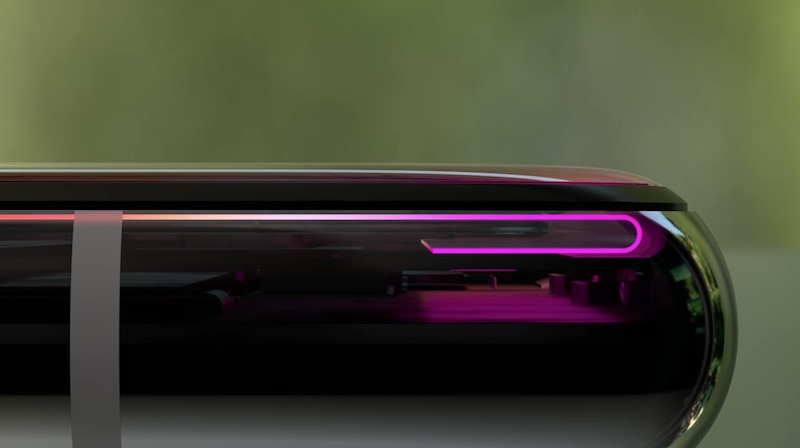
Chinese leaker "Instant Digital" today said the iPhone 18 Pro will not feature dual-layer OLED technology, adding that Apple's current thermal management approach remains a limiting factor for sustained outdoor brightness on Pro iPhones.

iphone-x-flexible-oled-display.jpg

In a new post on Weibo, Instant Digital commented on a question about when dual-layer OLED would arrive on iPhone, saying simply: "In any case, the 18 Pro definitely won't have it." The leaker had earlier this week reflected on last year's predictions, noting that the iPhone 17 Pro made little meaningful progress in maintaining peak brightness levels outdoors. Instant Digital suggested that without a change to Apple's thermal throttling strategy, dual-layer OLED is the only path to a significant real-world brightness improvement.

The assessment aligns with what has been rumored elsewhere. A report from last August indicated that Apple has set a two-year production plan for tandem OLED to be adapted for the iPhone, but that Apple had yet to decide whether to develop the panels with Samsung Display or LG Display, pointing to an arrival no earlier than sometime after 2028.

The report also noted that the variant Apple is reviewing differs from the full tandem OLED used in the iPad Pro. Rather than stacking two complete RGB layers, Apple is said to be evaluating a "simplified tandem" design that doubles only the blue sub-pixel layer while keeping red and green on a single layer.

For the iPhone 18 Pro, the display upgrade on the table is said to be a move to LTPO+ technology. As reported earlier this month, Apple is expected to finalize panel approvals for the iPhone 18 Pro and Pro Max with Samsung Display and LG Display, with China's BOE reportedly closed out of the premium tier due to quality and yield issues with its own LTPO+ technology. The upgrade from the standard LTPO used in the iPhone 17 Pro should improve battery efficiency by enabling finer control of OLED light emission, but it does not address peak brightness or the thermal throttling that limits sustained outdoor luminance.

Dual-layer OLED would address both matters. Since each emissive layer operates at lower intensity to achieve a given brightness target, the display generates less heat, reducing the thermal pressure that causes Apple's current panels to throttle under sustained use. The M4 iPad Pro was the first Apple product to adopt the technology. Instant Digital's comments suggest iPhone customers will have to wait considerably longer.

Article Link: Much Brighter iPhone Display Still Years Away, Leaker Suggests

My experience with iPhone screens is that they’re always to bright at night even when on lowest setting.

And during the day, they’re perfectly fine at a brightness level of about 2/3.

I live in the UK so super bright direct sunlight is less of an issue here.

But as far as my phone goes, I don’t think I’ve ever had it drop it’s own brightness due to thermal constraints?

Either because I never push my phone hard enough or I just don’t notice day to day.

A better display is always welcome but I wouldn’t say they need to be any brighter.
 
My experience with iPhone screens is that they’re always to bright at night even when on lowest setting.

And during the day, they’re perfectly fine at a brightness level of about 2/3.

I live in the UK so super bright direct sunlight is less of an issue here.

But as far as my phone goes, I don’t think I’ve ever had it drop it’s own brightness due to thermal constraints?

Either because I never push my phone hard enough or I just don’t notice day to day.

A better display is always welcome but I wouldn’t say they need to be any brighter.
To help with night, I found that turning on reduce white point can help.
 
  • Like
Reactions: thelion7
Powerful processors in smaller devices have more concentrated thermals that need to be distributed across a smaller body vs a much larger body in larger devices. Add in brighter OLED screens and they thermal throttle in order to keep the overall device temperature down.

But, "MicroLED" . . . if MicroLED is less power-hungry than OLED (as @moiety states)--and the adoption rate of such is merely limited by scale--shouldn't such use in hand-helds be easily attainable?
 
  • Love
Reactions: Andy_2341
Register on MacRumors! This sidebar will go away, and you'll see fewer ads.