Become a MacRumors Supporter for $50/year with no ads, ability to filter front page stories, and private forums.

MacRumors

macrumors bot
Original poster


Roughly a month after the release of the latest flagship iPhone models, it's looking the new iPhone Air isn't selling as well as Apple had hoped for, and that's leading to significant production cuts as Apple seeks to balance supply to meet demand.
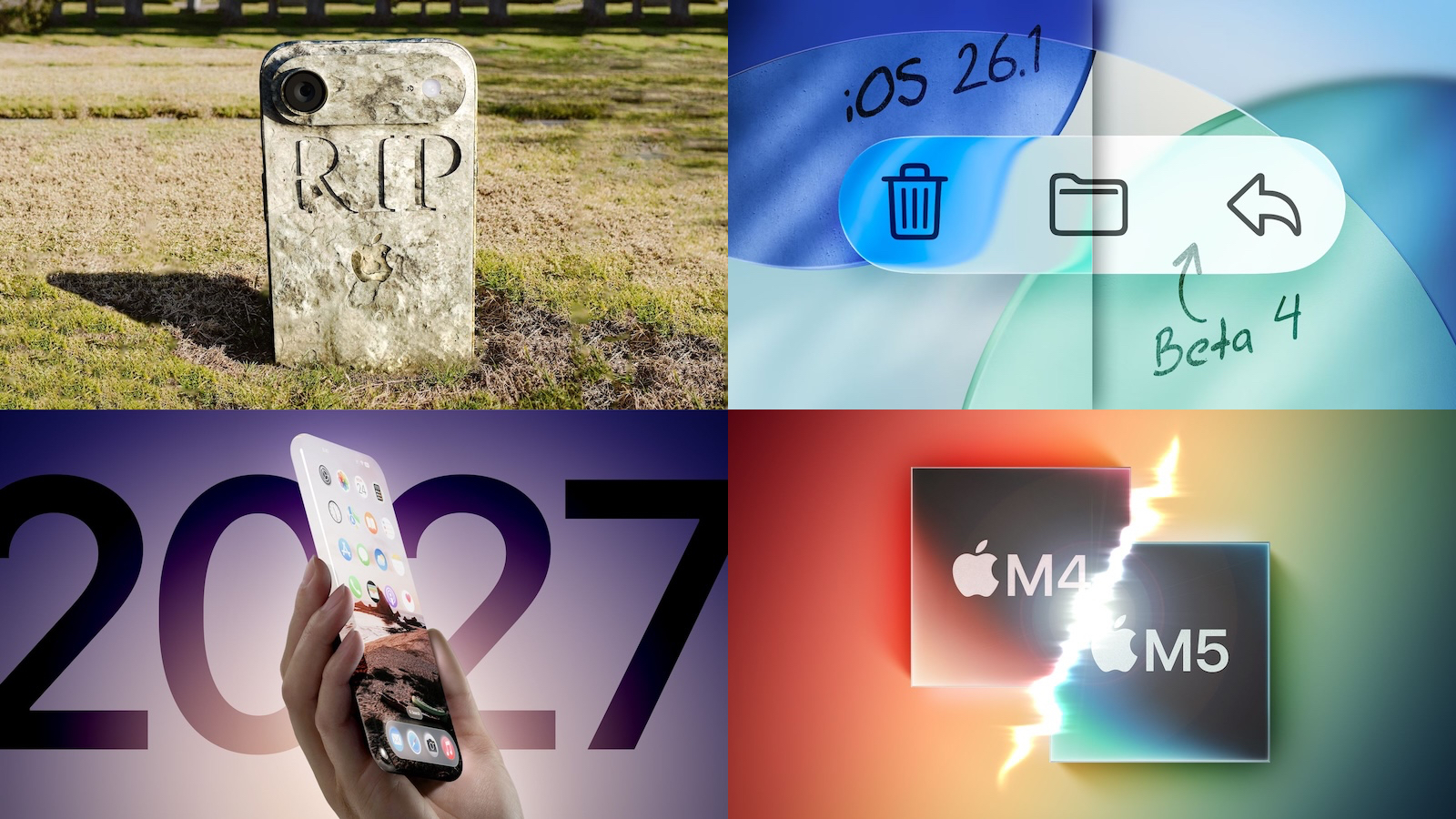
top-stories-2025-10-25.jpg
 
Apple's "thin, thin, thin" innovation trajectory was always going to end in tears.

People have been questioning this obsession for years, especially at the expense of battery life and other key features. The iPhone Air is a perfect example of how that obsession eventually creates untenable compromises that even the most loyal fans and early adopters can't abide.

All that said… I find it interesting that the MacBook Airs are NOT "thin, thin, thin" anymore, but instead are just feature-stripped versions of the Pros.
 
I am going to have to object to the "Iphone Air flops" title. It sold astoundingly well in China and its still too early to determine that. Very unfair to Apple.
"It sold astoundingly well in China" is based on what exactly, a MR post? Where are the numbers? There are none.

How do we know Apple or its retail partners didn't try to create hype around it by artificially limiting product availability?

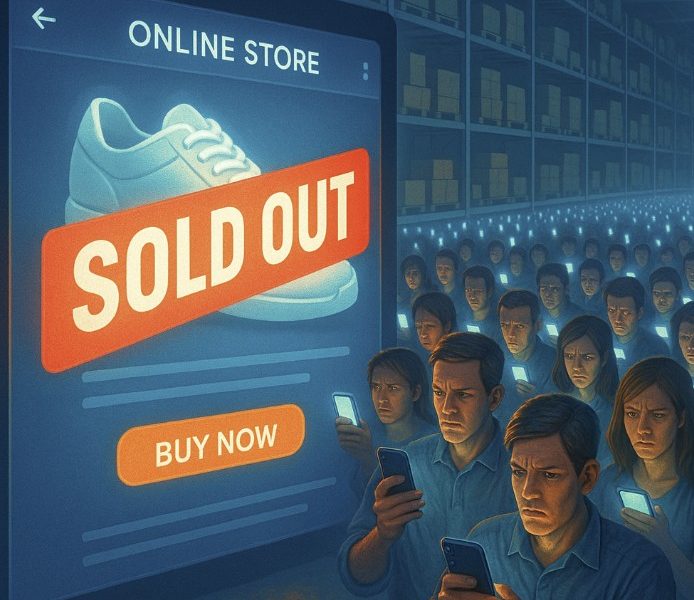
This is an actual business strategy. Companies will tell us something is "Sold Out" or "Out of Stock" to create a sense of urgency so people will frantically try to find one and run out to buy it.


Two little words that send customers into a frenzy. What used to be a disappointment has become a marketing tool and increasingly, a deliberate one. From small-batch creators to billion-dollar retailers, more businesses are realizing that scarcity sells. The harder something is to get, the more people want it. And some brands are taking that logic to the extreme, strategically going out of stock to spark desire.

It’s called the “sold out” strategy, and it’s quietly shaping modern retail psychology. The tactic is simple: limit inventory or pretend to. When customers see an item disappear, they assume it’s valuable. They rush to buy it next time. They set notifications, join waitlists, even sign up for newsletters just to be “first to know” when it comes back. Scarcity creates urgency and urgency converts. In a world where everyone has too many choices, “unavailable” feels like the ultimate endorsement.

We’ve seen this play out most famously in sneaker culture. Nike and Adidas have built entire ecosystems around artificial scarcity releasing limited quantities, then leveraging resale markets as proof of popularity. Streetwear brand Supreme made “sold out in seconds” a part of its mythology. The result is a generation of customers conditioned to chase what they can’t have. But it’s not just hype brands doing this anymore. Everyday products from skincare to supplements to kitchenware are now adopting the same psychology. DTC companies like Glossier, Stanley, and Function of Beauty have all leaned on “restock” campaigns that blur the line between genuine sellouts and engineered marketing events. Even mega retailers like Target and Amazon have been accused of quietly “pausing” availability on high-demand products to build hype before re-releasing them.

The result is a digital environment where “out of stock” often doesn’t mean what it used to. Sometimes the product isn’t really gone it’s just being strategically withheld. And customers, knowingly or not, are participating in the illusion. The psychology behind this is old-school it’s the same principle that drives FOMO. People want what they can’t easily have. Behavioral economists call it the scarcity effect: when perceived limitation increases value. Social media has only amplified it. Every “back in stock!” post feels like a mini event. Influencers unbox limited drops with countdown timers. Even the disappointment of missing out feeds the loop because when it finally returns, people buy faster and in greater quantities.
 
My sympathies to Sam Sung. I bought my first Surface tablet from a Microsoft kiosk set up in a mall. The sales employee was named Bob, and his name tag clearly identified him as Microsoft Bob.
 
The Samsung Galaxy S25 Edge is also a very poor seller. Consumers would rather have better battery life and more features for the money. The only person shedding tears over these thin phones failing in the marketplace is Jony Ive.
 
I suspect that people were scared away from the Air because of all the media fear-mongering about the battery life.

I went for the Air and absolutely love it. Battery life….not an issue at all.
it’s great having a phone with me that doesn’t feel like a boat anchor..

I also liked the IPhone mini when it first came out. Hopeful that Apple doesn’t kill the Air but I suspect the Air is the first foray into thin designs, especially if they want to have a foldable. Can you imagine the bulk and awkwardness of a foldable where each half is based on an iPhone 17?
Doesn’t matter though, I am keeping the Air until another similarly thin/lightweight device with better features comes on the scene.
 
Define “flop”. Several iPhones have been called flops in the past (like the SE) but when actual sales numbers are available we find their “flops” outsold competitors.

The Pixel is the real definition of a flop. Apple sells as many iPhones in their slowest quarter of the year as Google has sold Pixels in the past 7 years combined.
 
  • Like
Reactions: Apple-achian
I have never seriously considered a GM vehicle at any time. I bought a new vehicle last year and there was no GM on my list of shopping candidates.

We have an Equinox EV. It’s been flawless over the 40,000kms (24,000mls) we put on it during our first year (we do a lot of road trips including several >1,000mls).

We’re buying the GMC Sierra EV to tow our RV. Yes it’s expensive but it will more than pay for itself with gas savings over its lifetime (I estimate almost $90K fuel savings). Yes we travel a lot.
 
The iPhone Air is perfect. Large and lightweight, the air MagSafe charger since purchase has let me never plug in my phone to charge. I just set it on the battery wherever I want. Then when you use it you set the battery aside.

So sad Steve no longer does the tutorials on stage of how to use the products, no one knows how to use a battery extender.
 
As far as the Air goes: once you put it in a case, is it really that thin? Is it worth the lower battery life if it is twice as thick in the case vs a little thicker with a better camera and battery?

For me, the answer is no. For others, yes. I am sure there are plenty people who like it that way, just like a smaller form factor.

So is it a "flop"? Not for the people who want that form factor, perhaps Apple overestimated the number of people who value "thin" vs batter or camera etc. but I guess time will tell what Apple does.
 
  • Like
Reactions: Apple-achian
I don’t think it was just the compromises that caused the phone to “flop.” I think it was the price. Apple priced the thing way too high for what it was, and people saw right through it. It’s a sad misfire, but one I think they’ll rebound from next time.
 
Last edited:
I am going to have to object to the "Iphone Air flops" title. It sold astoundingly well in China and its still too early to determine that. Very unfair to Apple.
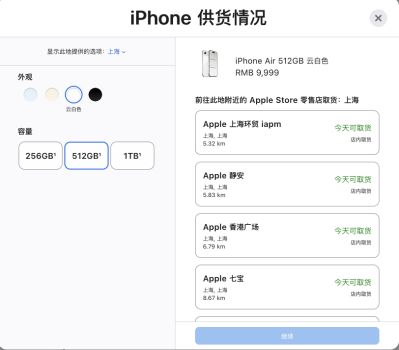
It sold so "astoundingly" well that virtually all stores have it in stock for immediate pickup.

It's been 72 hours since Air was made available in the country.


Screenshot 2025-10-25 at 10.36.45 AM.png


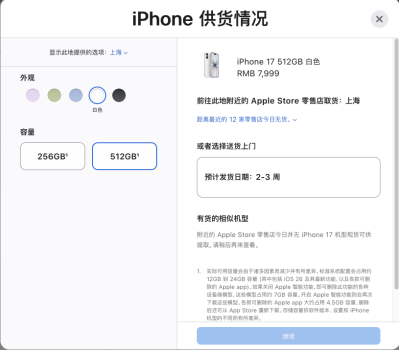
You know what's really selling well? iPhone 17 base. Every color and storage option is out of stock.

Screenshot 2025-10-25 at 10.41.32 AM.png
 
  • Like
Reactions: EugW
Register on MacRumors! This sidebar will go away, and you'll see fewer ads.