
Got a tip for us?
Let us know
Become a MacRumors Supporter for $50/year with no ads, ability to filter front page stories, and private forums.
Spoilers What Book Are You Reading?
- Thread starter Huntn
- Start date
- Sort by reaction score
You are using an out of date browser. It may not display this or other websites correctly.
You should upgrade or use an alternative browser.
You should upgrade or use an alternative browser.

Scepticalscribe
macrumors Haswell


rhett7660
macrumors G5
Reading two books right now, well one is actually a graphic novel and one is a book.
The Last Coyote (Bosch Book 4)

And also Usagi Yojimbo - Volume 1
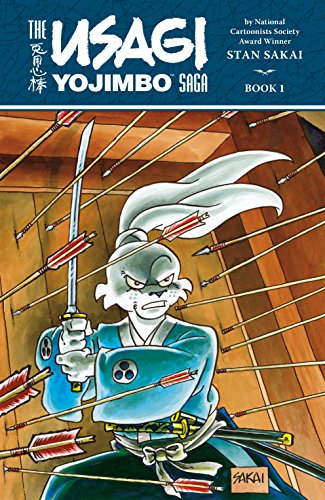
Volume 1 actually covers the very first editions of Stan Sakai tales with includes the TMNT. Which at the time were also very new and just finding their own.
The Last Coyote (Bosch Book 4)
And also Usagi Yojimbo - Volume 1
Volume 1 actually covers the very first editions of Stan Sakai tales with includes the TMNT. Which at the time were also very new and just finding their own.


LizKat
macrumors 604
Finished David Ignatius' Body of Lies. Creepy idea, taken for an interesting spin. Could maybe have let a screenwriter do the love angle details... differently? LOL or maybe that is what happened anyway. I heard there was a movie but that the book was far better. On plot lines I imagine that's quite true, I couldn't it put the book down as things began to get sorted out. I found the writing a bit uneven though. Not my favorite of his books.
One more of Ignatius's books left now, The Increment (2009), set in an "imagined" Iran... not imagined without a bit of immersive experience and other research. Coasting to the holiday weekend on it, unless it turns out I can't put this one down either.
One more of Ignatius's books left now, The Increment (2009), set in an "imagined" Iran... not imagined without a bit of immersive experience and other research. Coasting to the holiday weekend on it, unless it turns out I can't put this one down either.

RootBeerMan
macrumors 65816
Just started reading Gregory Benford's "The Berlin Project", an alternate history of the creation of the atom bomb in WW2. Haven't gotten too far into it yet, but I do like the characters and the in depth looks at them.


BeefCake 15
macrumors 68020
A short book synopsis would be nice. The daily progress report with nothing other than chapter or verse is a bit tedious.The Bible, NKJV
Today's reading...Lamentations 1-3
Scepticalscribe
macrumors Haswell
Still reading Robert Jackson Bennett (The Divine Cities) and learned yesterday that Guy Gavriel Kay - one of my favourite fantasy authors - plans to have a new book published next May.
rhett7660
macrumors G5
I have read this a couple of times both for classes and for personal reasons. Not a bad book.
Today's reading... River of Stars Chapter VII-IX 🙄... 🙁The Bible, NKJV
Today's reading...Lamentations 4-5
Scepticalscribe
macrumors Haswell
Today's reading... River of Stars Chapter VII-IX 🙄... 🙁
Which book is that? Or, rather, is that the book of that name by Guy Gavriel Kay (who is a terrific author of fantasy)?
An excellent book, if it is.
Yep, enjoying it so far. I do feel like I've read it before though it's so similar to Laura Joh Rowland's Sano Ichiro series.Which book is that? Or, rather, is that the book of that name by Guy Gavriel Kay (who is a terrific author of fantasy)?
An excellent book, if it is.
I apologize for my sarcasm to UCFGRAD as he continues his tedious daily progress reports 😀!
Tom
Scepticalscribe
macrumors Haswell
Yep, enjoying it so far. I do feel like I've read it before though it's so similar to Laura Joh Rowland's Sano Ichiro series.
I apologize for my sarcasm to UCFGRAD as he continues his tedious daily progress reports 😀!
Tom
There are a few subtle grace notes which tie in with the two books of The Sarantine Mosaic - which occurred, in Gay Gavriel Kay's work, around a thousand years earlier.
I love almost all of Guy Gavriel Kay's books, and did enjoy that particular one.
I bought all 6 of his Mosaic series but was going to read River of Stars, Under Heaven, and Ysabel first. I enjoy that genre.There are a few subtle grace notes which tie in with the two books of The Sarantine Mosaic - which occurred, in Gay Gavriel Kay's work, around a thousand years earlier.
I love almost all of Guy Gavriel Kay's books, and did enjoy that particular one.
BeefCake 15
macrumors 68020
I have read this a couple of times both for classes and for personal reasons. Not a bad book.
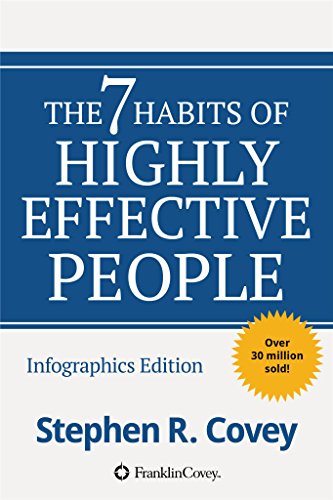
Funny I was having a conversation about books and someone spontaneously told me they didn't like Stephen Covey because his book is just common sense....you can tell a lot by people's analysis of books.
Scepticalscribe
macrumors Haswell
I bought all 6 of his Mosaic series but was going to read River of Stars, Under Heaven, and Ysabel first. I enjoy that genre.
The Sarantine Mosaic series has only two books "Sailing to Sarantium" and "Lord of Emperors", and River of Stars is in roughly the same world - or parts of the same world - around a thousand years later.
Song for Arbonne, Last Light of the Sun, and The Lions of Al-Rassan are also in that world, but at a considerable remove in time and place.

ucfgrad93
macrumors Core
Just started reading Gregory Benford's "The Berlin Project", an alternate history of the creation of the atom bomb in WW2. Haven't gotten too far into it yet, but I do like the characters and the in depth looks at them.
Thanks for sharing this, I've downloaded a sample to my Kindle.
RootBeerMan
macrumors 65816
It's a pretty good read, so far. It's currently dealing with the minutia of the buildup to producing uranium for a bomb or reactor. If you don'y like science in your science fiction, then this one isn't for you. Lots of easy to digest science and lots of familiar Manhattan Project/A-Bomb scientists.Thanks for sharing this, I've downloaded a sample to my Kindle.
The Sarantine Mosaic series has only two books "Sailing to Sarantium" and "Lord of Emperors", and River of Stars is in roughly the same world - or parts of the same world - around a thousand years later.
Song for Arbonne, Last Light of the Sun, and The Lions of Al-Rassan are also in that world, but at a considerable remove in time and place.
The article I saw listed all 6 as part of the Mosaic series: Lord of Emperors, Sailing to Sarantium, The Last Light of the Sun, The Lions of Al-Rassan, A Song for Arbonne, and Tigana. Either way I'm sure I'll enjoy them all.
I really enjoyed Laura Joh Rowland's series, reading 16; but towards the end she got pretty mystical and my interest waned. I'll probably return now and read the last 2 in the series: The Shogun's Daughter, and The Iris Fan.
https://www.goodreads.com/author/show/10987.Laura_Joh_Rowland
Scepticalscribe
macrumors Haswell
The article I saw listed all 6 as part of the Mosaic series: Lord of Emperors, Sailing to Sarantium, The Last Light of the Sun, The Lions of Al-Rassan, A Song for Arbonne, and Tigana. Either way I'm sure I'll enjoy them all.
I really enjoyed Laura Joh Rowland's series, reading 16; but towards the end she got pretty mystical and my interest waned. I'll probably return now and read the last 2 in the series: The Shogun's Daughter, and The Iris Fan.
https://www.goodreads.com/author/show/10987.Laura_Joh_Rowland
The article, I feel obliged to point out, is not accurate (I have read all of these books).
The Sarantine Mosaic comprises two books (Sailing to Sarantium, Lord of Emperors), roughly analogous to Constantinople (later Byzantium) in the time of an alternate Justinian and Theodora (fifth century CE/AD).
The closest direct link to that pair of books is River of Stars, which is set in an alternate world - the exact same alternate world as that of the Sarantine Mosaic, , but a thousand years later, - based on the Adriatic Sea, and also taking in Sarantium (Constantinople) a quarter of a century after its fall (in 1453) to Asharite (Islamic) forces.
Apart from Tigana, which is not really part of that world, the other books are tangentially connected with it, - geographically you know that it is the same world, but (apart from a fleeting grace note in Last Light of the Sun) are separate worlds, distant in time and space.
Thus, Lions of Al-Rassan is set in an alternate Spain at the time (11th century) of an alternate El Cid; A Song for Arbonne is set in an alternate Provence during the 13th century; Last Light of the Sun is set in an alternate Wales, England and Viking lands during the ninth century).
Tigana - which is an excellent book - isn't a part of this world at all, apart from the reference to two moons.
Anyway, it may simply be a publicists desire to find common links between the respective books; I think you'll enjoy them all, and I certainly hope that you do.
Last edited:
The Sarantine Mosaic comprises two books (Sailing to Sarantium, Lord of Emperors), ....
Thanks for the info; after River of Stars I'll read those two .......
Tom
ucfgrad93
macrumors Core
I apologize for my sarcasm to UCFGRAD as he continues his tedious daily progress reports 😀!
Just sharing my daily reading plan with any fellow believers here on MacRumors.