Become a MacRumors Supporter for $50/year with no ads, ability to filter front page stories, and private forums.
This already exists, it’s the MacBook Air. The OLED version should be coming by the end of next year. This thing look and feel cheap and slow by comparison. If you’re the type of person to look for excuses to buy more tech, the Air will be better in every way, especially when it gets OLED.

I’m hoping on the 2nm process that Apple will be able to offer the M6 Pro in the MacBook Air, kinda like they do with the Pro chip upgrade option on the Mac mini. Idk if the M6 Pro will go up to 64GB of memory, but if it does, having that in a 15” Air would be incredible. I’m finally to the point where the latest Max chips are beyond my needs, but I do a lot of multitasking.

Some people definition of cheap differs.

An OLED MacBook Air is not going to be "cheap" in the context of a market where plenty of sub 1000 dollar devices exist. If you're an Air or Pro buyer - this device is not aimed at you really.

It's aimed at the millions of people who thought getting into a MacBook was too expensive and previously bought crappy Windows laptops or Chromebooks instead. There's a huge user base there who have previously been buying total junk.
 
This already exists, it’s the MacBook Air. The OLED version should be coming by the end of next year. This thing look and feel cheap and slow by comparison. If you’re the type of person to look for excuses to buy more tech, the Air will be better in every way, especially when it gets OLED.

I’m hoping on the 2nm process that Apple will be able to offer the M6 Pro in the MacBook Air, kinda like they do with the Pro chip upgrade option on the Mac mini. Idk if the M6 Pro will go up to 64GB of memory, but if it does, having that in a 15” Air would be incredible. I’m finally to the point where the latest Max chips are beyond my needs, but I do a lot of multitasking.
I really doubt it, as nice as that would be. The Mini has a fan, and the Pro version definitely uses it

If M6 is 2nm people are still going to want to see a performance improvement over M5, so I’m guessing it won’t run significantly cooler and will still need a fan. Heck the iMac hasn’t even gotten the Pro chips yet :/
 
I really doubt it, as nice as that would be. The Mini has a fan, and the Pro version definitely uses it

If M6 is 2nm people are still going to want to see a performance improvement over M5, so I’m guessing it won’t run significantly cooler and will still need a fan. Heck the iMac hasn’t even gotten the Pro chips yet :/

Yeah, I suspect the Pro devices/chips will always have a fan. Its a compromise pro users are willing to make to get things done faster.

No point in putting a high end SOC in there to get better performance and not running cooling on it. trying to do so will just mean down-clocking it and throttling under sustained load, which is what the pro machines try to avoid.

If you want fan-less, buy an SOC aimed at that thermal envelope. Which is the baseline M part.
 
  • Like
Reactions: sleep/to/dream
If it’s gimped like the original 12” MacBook, who is this for? If portability is someone’s thing, there’s three varieties of iPads to consider already. Another MacBook rung in the sales ladder doesn’t compute in my head, but who knows, maybe there’s good money to be made in the convoluted space?
 
The RAM is part of the SoC so Apple should be relatively isolated from memory cost increases. This can help them be more price competitive if they choose
That's not quite accurate. While the RAM is part of the overall chip package it's not part of the SoC die itself. The RAM itself is just standard LPDDR5X chips from suppliers like SK Hynix or Samsung that are mounted directly on the SoC die instead of using separate cards and busses like SO-DIMMs. So while the RAM is heavily integrated with the SoC it still comes from third party suppliers and would thus be subject to many of the same market pressures as DIMM/SO-DIMM RAM modules for conventional PCs.
 
That's not quite accurate. While the RAM is part of the overall chip package it's not part of the SoC die itself. The RAM itself is just standard LPDDR5X chips from suppliers like SK Hynix or Samsung that are mounted directly on the SoC die instead of using separate cards and busses like SO-DIMMs. So while the RAM is heavily integrated with the SoC it still comes from third party suppliers and would thus be subject to many of the same market pressures as DIMM/SO-DIMM RAM modules for conventional PCs.
Thanks for the info, I didn’t know that! So the LPDDR5X chips other manufacturers use on their RAM modules, or are soldered on the main PCB, are exactly the same as those two we see sitting side by side on chips such as the M2 or M4? Same size, same pins, same everything? Interesting … if that’s the case, then yeah, price increases could affect upcoming Macs…
 
If it’s gimped like the original 12” MacBook, who is this for?
It won’t be gimped. The original 12in MacBook was a compromised concept when the tech wasn’t yet ready. Now the the tech exists and it needn’t be compromised.

Except in the used market Apple doesn’t have a quality laptop under $1000 or $799 US. Now they will. It doesn’t have be on par with current M4-M5 MacBook Air performance when equivalent M1-M3 performance will already embarrass mainstream Windows machines.
 
  • Like
Reactions: Tagbert
If this new MacBook is at least as good as the current M1 MacBook Air it’ll be good for more than kids. It will be a very good general purpose laptop.
One would think, oh just take the M1 MBA shell and drop an updated chip may it be another M series or an A series. Unfortunately Apple has to overcomplicate things.
 
It won’t be gimped. The original 12in MacBook was a compromised concept when the tech wasn’t yet ready. Now the the tech exists and it needn’t be compromised.

Except in the used market Apple doesn’t have a quality laptop under $1000 or $799 US. Now they will. It doesn’t have be on par with current M4-M5 MacBook Air performance when equivalent M1-M3 performance will already embarrass mainstream Windows machines.
When a tablet is running a desktop class silicon with a mobile OS and a laptop running a mobile class silicon running a desktop OS, one has to wonder if we are or Apple is living in the Upside Down.
 
  • Like
Reactions: Galas
If it’s gimped like the original 12” MacBook, who is this for? If portability is someone’s thing, there’s three varieties of iPads to consider already. Another MacBook rung in the sales ladder doesn’t compute in my head, but who knows, maybe there’s good money to be made in the convoluted space?

Perhaps the K-12 education market. An iPad would require an additional keyboard that kids which would detach and lose.
 
  • Like
Reactions: Eddie Beeps
If it's significantly smaller than the 13" Air and there is an upgraded model that has a 5G option, I'm all in.
I'm curious about your need for a cellular option, don't you have a phone you are already on a plan for? Why do you want your hardware and cellular costs to go up?

I've been on Visible (owned by Verizon) for about two and a half years at $20 a month unlimited everything including hot spotting. That's the all inclusive price, no additional taxes or fees, and they even allow credit card payment. I looked today at their site to see if anything has changed (I had been expecting a price bump after 24 months that hasn't happened), and yes, new customers get the base plan for $19 a month. Terminate any time, but they guarantee pricing for 24 months.

They have some upgraded plans, primarily about data speed (and still less monthly than other carriers) but my basic plan has speeds 3 times what is promised.

Anyway, not trying to be a shill (I'm retired and have never worked in the industry), just a good deal, and way better than a second cell plan to keep data going on my laptop. I use it a lot, Spectrum and AT&T are down a lot in my small town (I share a plan with a neighbor - I need a network for my Next thermostat and sleep monitor - otherwise I could ditch home based ISPs altogether.
 
If it’s gimped like the original 12” MacBook, who is this for? If portability is someone’s thing, there’s three varieties of iPads to consider already.
Um, if you add a keypad to an iPad, it weighs more and has more pieces making it significantly more clunky, plus it doesn't run MacOS making normal computer tasks significantly harder to manage. I looked at them before a 6 month self supported bicycle tour of New Zealand (where counting every ounce and physical size is important), but iPads were simply not up to my needs weighing more and taking up more space with reduced functionality compared to my 12" MacBook.
 
When a tablet is running a desktop class silicon with a mobile OS and a laptop running a mobile class silicon running a desktop OS, one has to wonder if we are or Apple is living in the Upside Down.
This isn’t going to be a tablet. This will be a full on laptop running Mac OS. Most people don’t buy iPads with keyboards. The exceptions are those who want a specific use case for it. Yes, you can do a lot on an iPad, but the moment you start adding a keyboard and maybe other accessories it becomes cumbersome. I’m talking specifically about base iPad and iPad Air customers. The Pros are a somewhat different level, but similar reasoning.

Do I buy an iPad Pro with keyboard or a MacBook Pro? Do I buy an iPad Air with Keyboard or a MacBook Air? Now there will be do I buy an iPad 11 or a MacBook SE (or whatever it’s called)?

But this isn’t aimed at Apple’s own iPad lineup, though it might cannibalize some of those sales. This is aimed right at the mainstream general purpose market of laptops currently running Intel i3-i7 and AND Ryzen 3-7 chips. Apple should put no less than 12, but preferably 16gb in this particularly since the RAMpocalypse is driving crappy PC machines up in price. They couldn’t have picked a better time to introduce this device and bring more people into the Apple ecosystem.
 
If it’s gimped like the original 12” MacBook, who is this for? If portability is someone’s thing, there’s three varieties of iPads to consider already. Another MacBook rung in the sales ladder doesn’t compute in my head, but who knows, maybe there’s good money to be made in the convoluted space?
For people who want the ultimate portable macOS machine.

Who wants to do actual work on iPadOS where everything feels like a struggle?
 
  • Like
Reactions: Galas
I have an early 2015 13” MacBook Air with macOS Monterey (12) I will wait for low cost MacBook before I purchase another Apple laptop.
 
When a tablet is running a desktop class silicon with a mobile OS and a laptop running a mobile class silicon running a desktop OS, one has to wonder if we are or Apple is living in the Upside Down.
Eh, I never got into the whole "iPads are running desktop chips" thing. The base M chips are direct descendants of the A#X chips used in prior iPad Pros, with each one being scaled up from the corresponding A chip just like how the A12X was scaled up from the A12. The M1 is what a hypothetical A14X would have been, just marketed as a Mac chip. Does that make it a tablet chip in a desktop/laptop or a desktop chip in a tablet?

I would suspect when Apple launches this low cost MacBook they will not refer to the chip an A18 Pro, they'll likely come up with an M-series moniker like M4e or M4 Mini, even though it's likely the same chip underneath (unless they need to tweak the I/O capabilities).

Either way it's a testament to Apple's engineering prowess that they're able to take the exact same core microarchitecture designs and scale them from the A chips powering iPhones to the Max and Ultra chips powering Mac Studios.
 
This isn’t going to be a tablet. This will be a full on laptop running Mac OS. Most people don’t buy iPads with keyboards. The exceptions are those who want a specific use case for it. Yes, you can do a lot on an iPad, but the moment you start adding a keyboard and maybe other accessories it becomes cumbersome. I’m talking specifically about base iPad and iPad Air customers. The Pros are a somewhat different level, but similar reasoning.

Do I buy an iPad Pro with keyboard or a MacBook Pro? Do I buy an iPad Air with Keyboard or a MacBook Air? Now there will be do I buy an iPad 11 or a MacBook SE (or whatever it’s called)?

But this isn’t aimed at Apple’s own iPad lineup, though it might cannibalize some of those sales. This is aimed right at the mainstream general purpose market of laptops currently running Intel i3-i7 and AND Ryzen 3-7 chips. Apple should put no less than 12, but preferably 16gb in this particularly since the RAMpocalypse is driving crappy PC machines up in price. They couldn’t have picked a better time to introduce this device and bring more people into the Apple ecosystem.
May have misunderstood what I was trying to convey.

One ca purchase budget Chromebooks with touchscreen, if this A series laptop is unable to compete on price and features within a margin it will be short lived.


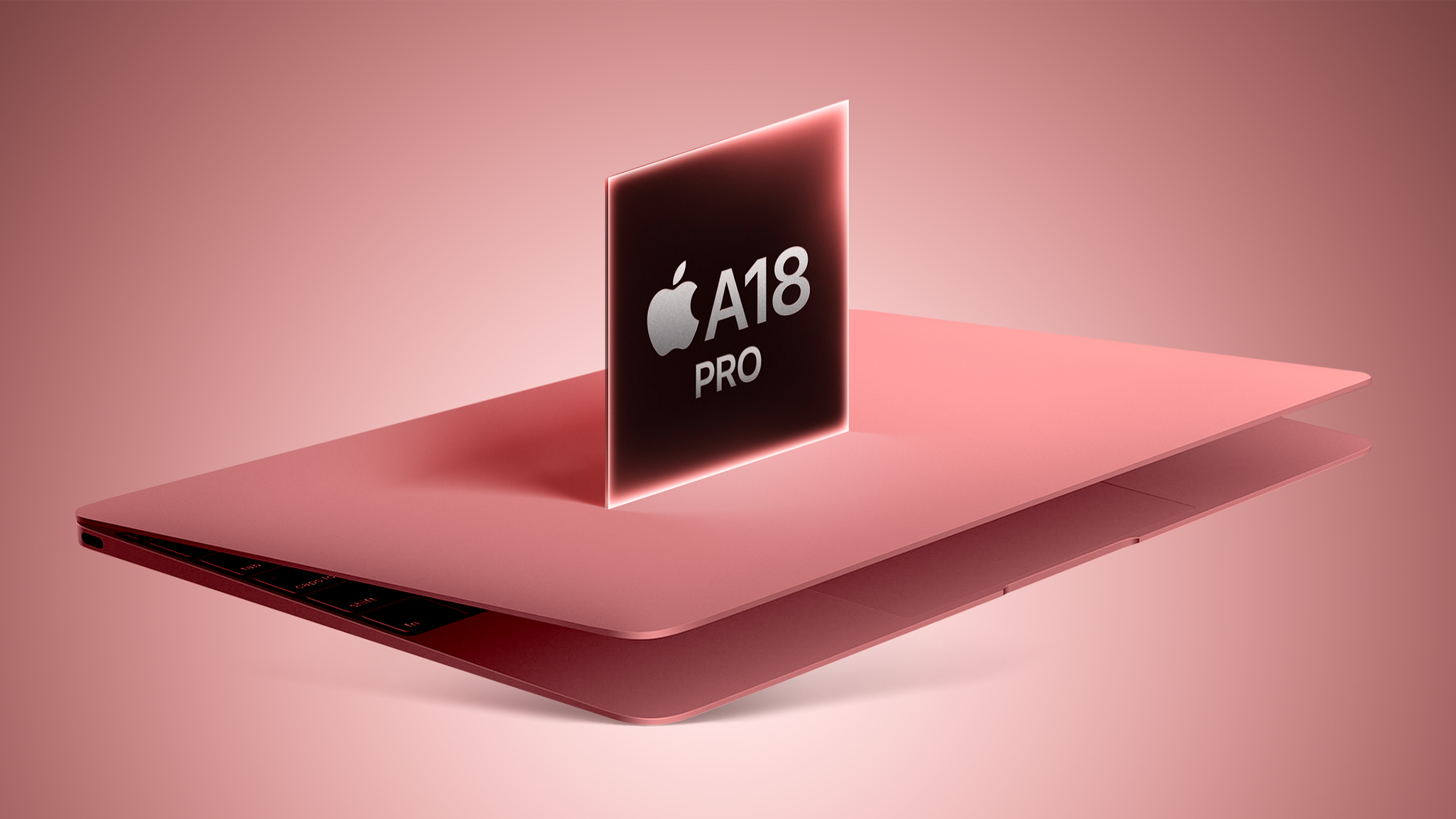
Apple is planning to release a low-cost MacBook in 2026, which will apparently compete with more affordable Chromebooks and Windows PCs. Apple's most affordable Mac right now is the $999 MacBook Air, and the upcoming low-cost MacBook is expected to be cheaper. Here's what we know about the low-cost MacBook so far.

Low-Cost-A18-Pro-MacBook-Feature-Pink.jpg

Size

Rumors suggest the low-cost MacBook will have a display that's around 13 inches in size. The MacBook Air has a 13.6-inch display, so the more affordable MacBook will likely be slightly smaller. It's sounding like it won't be too far off from the 13-inch MacBook Air, though.

There are no details on how thick it might be, but Apple probably won't prioritize a thin design for a machine optimized for a low price, even though some people are hoping that it will also be ultra thin. Ultra thin usually means more engineering work and higher-cost components for the display and other parts, but it can also sometimes be achieved by removing features. A thinner enclosure isn't entirely out of the question if Apple cuts features to reduce costs, but at the same time, reducing size leads to lower battery life, and Apple probably wants to have decent battery to compete with or outmatch cheap Windows laptops.

Since the MacBook Air can run fine with an M-series chip and no fan in an enclosure that's 0.44 inches thick, there's no real reason for the MacBook to be any thicker than that, unless Apple wants to add a bigger battery.

Design and Display

The low-cost MacBook will have a standard LCD display with no mini-LED technology or ProMotion refresh rate. It won't be able to compete with higher-end laptops in terms of brightness or HDR support. It's probably best to think of it like the low-cost iPad, which offer excellent performance but uses much older display technology.

Apple could make the low-cost MacBook in bright colors like the iMac to appeal to children and to clearly position it as a lower-cost device. There are no rumors of this, but it would also make some sense for Apple to return to the plastic casing of some of its original MacBook models.

Rumors suggest the low-cost MacBook Pro could come in colors like silver, blue, pink, and yellow.

A-Series Chip

Apple is planning to use its A18 Pro chip in the MacBook, which is a chip that was first used in the iPhone 16 Pro. The A18 Pro is built on Apple's second-generation 3-nanometer process, featuring 8GB RAM and support for Apple Intelligence.

It's fast and efficient, and more than capable of handling day-to-day tasks. In Geekbench 6 benchmarks, the A18 Pro offers single-core CPU performance scores at the level of the M3 Ultra, and multi-core performance scores higher than the M1 chip that Apple used in the first Apple silicon MacBook Air. Metal scores that measure GPU performance are also similar to the M1 chip Metal scores.

The A18 Pro will be equivalent to the M1 for some tasks, and faster for other tasks. Apple no longer sells the M1 MacBook Air from its own store, but it has offered the machine through Walmart at a $599 price point.

Capabilities

With the A18 Pro chip, the low-cost MacBook would be able to do anything that can be done on an iPhone 16 Pro. It would be a suitable replacement for the low-cost iPad paired with a keyboard, and it would also support Apple Intelligence features.

As of now, an iPad is essentially the only option for a low-cost portable device that can serve as a computer, but the low-cost MacBook will add a solution that runs macOS instead of iPadOS.

Tasks like browsing the web, watching videos, creating documents, editing photos, and even light video editing would be no problem. A low-cost MacBook with A18 Pro chip could play all of Apple's iPad and iPhone games, including Apple Arcade titles, but it would not work well with high-end system intensive games.

It would also likely run apps like Final Cut Pro, but speeds for things like exporting video would not be as quick as with a more powerful Mac.

Apple probably won't go all out on ports, and the MacBook is likely to get just a single USB-C port, though two like the MacBook Air is also possible.

The A18 Pro chip is efficient, and there's a lot of space inside a 13-inch enclosure for a battery, so we could be looking at MacBook Air-level battery life or better. The MacBook Air's battery lasts for up to 18 hours when watching videos, or 15 hours when browsing the web.

Price

There are no specific details on price as of yet, but Bloomberg claims it will cost "well under $1,000." The MacBook Air is priced starting at $999, so the MacBook will need to be priced lower than that.

Apple has a 13-inch iPad Air that has a display in the same range rumored for the low-cost MacBook, and it's priced at $799. The iPad Air has a higher-end M-series processor though, so the low-cost MacBook could be priced below the iPad Air.

The closest iPad approximation for the chip is the iPad mini, which has an A17 Pro and is priced at $499. A price somewhere between $499 and $799 could make sense looking at Apple's existing product lineup.

Launch Timing

Apple is expected to launch the low-cost MacBook in the first half of 2026. Updates are planned for the MacBook Air in early 2026, and the low-cost model could launch sometime in that same timeframe.

If you're thinking about picking up a computer for lightweight tasks like document editing, web browsing, watching videos, and doing homework, you might want to wait to see what Apple has in store before buying a MacBook Air, an iPad, or a more affordable Windows machine or Chromebook.

Read More

For more information on Apple's cheap MacBook, we have a dedicated guide.

Article Link: Apple's 2026 Low-Cost A18 Pro MacBook: What We Know So Far

When you hear well under $1000, given Apple's focus on profit margin, expect $899.
 
Eh, I never got into the whole "iPads are running desktop chips" thing. The base M chips are direct descendants of the A#X chips used in prior iPad Pros, with each one being scaled up from the corresponding A chip just like how the A12X was scaled up from the A12. The M1 is what a hypothetical A14X would have been, just marketed as a Mac chip. Does that make it a tablet chip in a desktop/laptop or a desktop chip in a tablet?

I would suspect when Apple launches this low cost MacBook they will not refer to the chip an A18 Pro, they'll likely come up with an M-series moniker like M4e or M4 Mini, even though it's likely the same chip underneath (unless they need to tweak the I/O capabilities).

Either way it's a testament to Apple's engineering prowess that they're able to take the exact same core microarchitecture designs and scale them from the A chips powering iPhones to the Max and Ultra chips powering Mac Studios.
“Desktop class” chip is Apple’s marketing, I believe many forum members felt it was absurd to label these as such but Apple’s marketing wheel never fails to stretch.
 
May have misunderstood what I was trying to convey.

One ca purchase budget Chromebooks with touchscreen, if this A series laptop is unable to compete on price and features within a margin it will be short lived.
Apple’s laptops not having a touchscreen hasn’t really hurt them. Laptops with touchscreens are largely meh begause it’s not as intuitive or comfortable to keep reaching your arm out to touch the display. It’s even worse if you’re using a desktop OS like Windows and MacOS. And touchscreen laptops aren’t as popular as they were about five or so years ago. Back then they were seemingly everywhere, but now not so much. People figured out using a laptop isn’t like using a tablet—it’s just different. Some like it, but most don’t care for it on a laptop.

Now we have to talk about what constitutes “budget.” In Canada the mainstream general purpose laptop market is in $500-$1000 range. Some Chromebooks creep up into the $500-$600 bracket, but the vast majority of Chromebooks and Cloudbooks are under $500 ($200-$500). Those are budget devices in Canada. This is whats bought when you’re either really cheap, cynical or simply can’t afford more. The new MacBook isn’t playing in this bottom dwelling sandbox.

The current MacBook Air is $1399 CAN. You might call it a mainstream general purpose laptop, but it smokes pretty much anything priced near it and absolutely everything priced under it. Up here this is a premium device, and unlike MacBook Airs before Apple Silicon it really is premium and delivers the goods.

The thinking is the new entry level MacBook will be $599-$699 US. That translates to about $829-$949 CAN. Thats not budget territory, not in Canada. I’m hoping it will price $799-$899 CAN, but I won’t hold my breath. But even it were $999 thats still $400 more affordable than the $1399 MacBook Air and will be really appealing and tempting to those looking for an alternative to $600-$1000 Windows laptops, particularly those with elevated prices for very mediocre hardware specs.
 
“Desktop class” chip is Apple’s marketing, I believe many forum members felt it was absurd to label these as such but Apple’s marketing wheel never fails to stretch.
You dont think the base M4 is a desktop class chip?
 
Thanks for the info, I didn’t know that! So the LPDDR5X chips other manufacturers use on their RAM modules, or are soldered on the main PCB, are exactly the same as those two we see sitting side by side on chips such as the M2 or M4? Same size, same pins, same everything? Interesting … if that’s the case, then yeah, price increases could affect upcoming Macs…
The overall packaging of the RAM might differ based on the OEMs specifications but the core silicon of the RAM itself itself would be identical.

The key is that many types of RAM (LPDDR5X, DDR5, GDDR7, HBM) use similar if not the same process nodes, which is why we're seeing massive price spikes; manufacturers are shifting finite production capacity to RAM types used in AI servers like HBM which leaves less capacity and therefore constrained supplies for consumer grade RAM types.
 
  • Like
Reactions: Populus
Register on MacRumors! This sidebar will go away, and you'll see fewer ads.